42 A History of Chinese Archaeological Museums in Three Case Studies
Abstract
This chapter examines the evolution of Chinese archaeological museums through three case studies: the Nantong Museum, the Xi’an Banpo Museum, and the National Archaeological Site Park (NASP) of Yangshao Village. The trajectory of museum development in China underscores the intricate interplay between these institutions and social development. Despite challenges like the COVID-19 pandemic, the museum sector has demonstrated remarkable resilience and even new development. This study explores the historical roots of Chinese museums, tracing their origins back to the influence of Western missionaries in the 19th century and the establishment of the Nantong Museum by Zhang Jian in 1905. The Xi’an Banpo Museum is analysed as an early example of an archaeological site museum. The historical development ends with the contemporary concept of archaeological site parks, which integrate museums within the natural landscapes of the archaeological site. This integration represents a departure from traditional Western-style museums, emphasising a holistic experience that combines cultural heritage with the natural environment. The chapter argues that these parks reflect specific Chinese museological characteristics, such as the integration of culture within a living landscape and a focus on patriotism. It highlights the evolution of Chinese museums from imperial artefact collections to a broader public engagement with archaeology. The examples highlight an evolution from educational missions aimed at national salvation to contemporary educational goals within a broader cultural and natural context.
Keywords: museum studies, history of museums, archaeological museum, archaeological site park, Yangshao Culture, museum development, Chinese museums
Subject: Chinese Archaeology, Archaeology.
Series: Oxford Handbooks
Collection: Oxford Handbooks Online
The historical origins and growth of museums in China highlight an important interplay between sociopolitical changes and cultural innovations. The rise in the number of museums in the last six years is striking: there were 5,354 museums in 2018,5,535 in 2019,5,788 in 2020,6,183 in 2021, and 6,565 in 2022 (Guojia Wenwuju 2023), an approximately 23% increase. Notably, this surge was sustained and even amplified during the CoVID-19 pandemic years. Despite the ongoing pandemic, in 2020 the Shanxi Archaeological Museum山西考古博物館 and the Luoyang Archaeological Museum洛陽考古博物館 opened their doors to the public, the Zhengzhou Archaeological Museum鄭州考古博物館 did the same in 2021, and the Shaanxi Archaeological Museum陕西考古博物館 and the Chinese Archaeological Museum中圆考古博物館 in Beijing opened in 2022 and 2023, respectively. The resilience of museums and archaeological heritage in the face of a global health crisis speaks eloquently of the high status of museums in contemporary China.
Analysis shows that the inception of the modern museum in China is deeply rooted in cross-cultural interaction. Western missionaries introduced the museum concept in 1829 with the establishment of the British Museum China Branch in Macao. At the time, during the late 19th century the Self-Strengthening and Reform Movements were ascendant, and their members championed the cause of Western-style museums. They contended that such institutions could serve as vehicles to illuminate the intellect of the masses'. In this milieu,1905 saw the creation of China's first indigenous modern museum, the Nantong Museum南通博物苑, spearheaded by Zhang Jian 張騫 (1853-1926).
Despite the relatively recent introduction of formal museum structures, the Chinese predilection for antiquarian collecting dates back to the Bronze Age. Until the Song dynasty (960-1279 CE) artefact collections were the exclusive domain of the royal lineage but antiquarian collecting spread to the intellectual elites during that period. Consequently, the upper echelons of the gentry began to amass personal collections; many of the accumulated artefacts still survive. As the last stage in this development from private to public collections, museums are now becoming part of National Archaeological Site Parks (NASPs).
This chapter reviews the historical development of the modern museum in China from the late 19th and early 20th centuries to today. It will briefly explain the development of the idea of parks' as archaeological heritage destinations, and especially how the concepts of recreation and education relate to it. Three case studies will be presented to show the historical development of these concepts: the Nantong Museum, often acclaimed as China's first museum; the X'an Banpo Museum西安半坡博物能, a pioneering archaeological site museum; and the Yangshao Village NASP, a flagship site museum in contemporary China. These three cases have been selected as the earliest-established examples of their type, showing development over time.
The most recent stage in this development, the archaeological site park, shows distinct divergence from the earlier museum idea. It is understood as an exhibition space as well as a specific public space, combining the concepts of space' and activity' with the Chinese idea of bolan博覽(which can be translated as extensive or broad view'). This is a change from the European idea of a museum to a more complex integration between museums and sites as exhibitions become explicitly connected to localities, shedding the traditional focus on objects separated from their contexts, with the site itself becoming the focus of the museum. This development raises questions about whether and how this form of display and engagement with the remains of the past has acquired distinct Chinese characteristics. Arguably, the museums incorporated within archaeological site parks have similarities with Western concepts of museums but they also show differences, such as the emphasis on the setting of cultures within a living landscape as in Chinese gardens) and patriotism.
Collections of cultural objects in China extend back to at least the Song dynasty, with the emergence of Chinese ‘antiquarianism’ (Yang 2014; Grimberg 2022, 2024). In some respects, this is analogous to the development of the ‘cabinet of curiosities’ in Renaissance Europe, with collections formed and kept by the aristocracy. In Europe, it was not until the 18th century that the concept of a public museum was realised, with the founding of the British Museum in London in 1753. Antiquarianism involves the gathering and preserving of objects from ancient and historic periods for study and aesthetic appreciation. This was similarly the case in China and the emergence and history of Chinese antiquarianism have been extensively studied (Yang 2014).
Modern Chinese museums, understood here as collections of natural and cultural objects curated and displayed for a general public as well as for researchers rather than the more exclusive imperial and private collections of earlier periods, are the product of processes of political, social, and cultural modernisation that took place during the early 20th century. The date of the earliest museum in China is subject to debate (Du and Li 2022; Guojia Wenwubu 1985), partly due to a lack of clear distinctions between private collections and public museums. Rogério Miguel Puga, for instance, argues that the British Museum China Branch in Macao (founded in 1829) was the earliest museum in China (Puga 2012: 575–586). Others hold that the earliest museums were the Zikawei Museum (founded in 1868 or 1872 by French missionaries) and the Shanghai Museum of the North China Branch of the Royal Asiatic Society founded in 1874 by the British (Fu 1957: 340; Guojia Wenwubu 1985; Lu 2014). Whether or not these were, in fact, the earliest museums, it is clear that they introduced the concept of the public museum and inspired the establishment of further museums to China (Wang 2000). In their foundational philosophies, these Chinese museums reproduced Western concepts (Fu 1957; Liu 2018; Geng et al. 2018). This meant they were initially collections of both natural history and cultural objects, represented objects as examples of cultures separately from their contexts, and saw their collections as having educational purposes.
Jiang Fan has added a critical dimension to this established account (Jiang 2022: 88–89). Jiang argues that the early Western-established museums in China were primarily tools for Westerners to carry out various activities in China, including research. They did not prioritise the establishment of museums for the public, and nor did they view exhibitions as their primary task. This suggests that the early Western museums in China may not have had the same objectives as museums in Western countries. Jiang, therefore, argues that these museums served the interests of the West; they were mainly aimed at a Western audience albeit with occasional access for certain sectors of Chinese society. These observations make the development and evolution of Chinese museums especially important. While they may have initially replicated Western ideas, they have undoubtedly evolved to incorporate Chinese perspectives, narratives, and audiences.
The development of the concept of ‘site museum’ constitutes the next distinct stage. Site museums have two principal functions: the display of materials from a particular site and ‘displaying’ the site itself. This new approach to museums opened up and challenged the previous focus on the museum’s educational agenda and also created more diverse forms of physical and intellectual engagement. In Europe, site museums have a long history going back to the Renaissance period and they were developed further in the 19th and 20th centuries, but they were not and are not conceptualised as parks. In China, the conservation of large sites in the form of parks can be traced back to the 1950s. In 1958, the Xi’an Banpo Museum (hereafter Banpo Museum) in Shaanxi province was built on the site of the archaeological excavation of the Banpo site, dating to 7000–6000 years BP. The establishment of Banpo Museum marks the birth of the modern ‘site museum’ in China (Geng et al. 2018: 85). The development of museums in China was severely disrupted by the Second Sino-Japanese War (1937– 1945), and the subsequent civil war in China until the foundation of the People’s Republic of China in 1949. Banpo Museum is amongst the first generation of archaeological museums established after this period.
The local practice of building site parks' underwent further development in the 1980s, coinciding with increased attention from Chinese authorities towards urban construction and cultural tourism. In the context of rapid urbanisation and inspired by the conservation of the Yuanmingyuan archaeological site (An 2022), a group of site parks was established. For instance, in 1987 the Yinxu Ruins Site Park was built in Henan Province and in 1997 the Hanyang Mausoleum Site Park was built in Shaanxi Province. In 2013, the Zhejiang Cultural Heritage Administration brought this concept to the next level and set a precedent by announcing the first group of eight provincial-level archaeological site parks.
The most recent phase is the national archaeological site park. For the National Cultural Heritage Administration(NCHA), a NASP refers to a specific public space with important archaeological sites and their background environment as the main display, having scientific research, education, recreation, and other functions. They act as a national model for archaeological site protection and display with the purposes of “interpretation, utilisation, and cultural inheritance' (Guojia Wenwuju 2022a). Thus, the function of the NASP comprises those of a museum, an archaeological excavation, display in its original context, recreation, and tourism which involves tours, sightseeing and various activities. The Yangshao Village NASP exemplifies this development.
This most recent development is interesting in terms of the increased official interest both in the development of such sites and in using them to promote elements of official ideology, such as the age of China's civilisation (An 2022). The concept of a 'NASP' was proposed by the NCHA in 2009 and in 2010 the first group of 12 archaeological site parks recognised at the national level by the NCHA and 23 approved projects were proposed. The concept received strong backing from the NCHA and by the end of 2022,55 archaeological parks had been established (Guojia Wenwuju 2022b). In a sense, archaeological site parks seem to have become the upgraded' form or model of the archaeological site museum.
The role of museums within these parks is noteworthy. Huang Zi黄滋, vice chairman of the Chinese Association for Conservation Technology of Cultural Heritage, suggested in 2023 that there was a symbiotic relationship between museums and NASPs, and he expounded on the indispensability of a museum within each park. Museums, acting as stewards of historical relics, offer a conduit for preservation, research, and exhibition. Conversely, archaeological parks offer an authentic spatial narrative, enabling visitors to engage with the geographical tapestry that once framed historical events and ancient civilisations. Above all, the museum takes on a central role in interpreting the site and objects for the visitors. One might say that a NASP aims to put the site itself (as part of the landscape) as well as its associated artefacts (the latter in a museum) on display.
Since the emergence of public museums in China, which arguably started with the founding of the Nantong Museum in 1905, there has been an explicit focus on education with a particular interest in the moulding of school students. Recently, there has been a shift from a regional focus to following the precepts of the central government, including with regards to the ideological significance given to particular sites
When the People's Republic of China was founded in 1949, its 25 museums (including nine run by foreigners) had survived almost two decades of external and civil war(Geng et al.2018:69).In 1951, the Ministry of Culture issued the statement Opinions on the Policy, Mission, Nature, and Development Direction of Local Museums', which stated:“ The general tasks of the museum are to carry out revolutionary patriotic education; to make the public correctly understand history, understand nature, and love the motherland; and to improve political consciousness and foster enthusiasm'(Geng et al.2018:69). This concept of patriotic education and its promulgation in government policies remains significant today. It was strengthened in the late 1990s, when, in 1997, the Publicity Department of the CCP Central Committee named Banpo Museum one of the first group of ‘National Demonstration Bases for Patriotic Education’ (全國愛國主義教育示範基地) (Zhang 2018).
Since 1997, there has been an official policy to develop these Demonstration Bases for Patriotic Education (Yang 2014). The Neolithic Yangshao Culture has been included in this through being identified as the earliest ‘Chinese culture’ (cf. Andersson 1923) and therefore the base from which later Chinese culture developed. Hence, the Chinese government sees the Yangshao Culture as useful for promoting unity and patriotism in the current political context; this message was reinforced by the promotion of the Yangshao Village NASP to a national-level institution in 2017.
Here, the concept of the museum as a civilising space is clearly expressed. The connection between the earliest recognition of this national political potential of museums and the current position of the Chinese archaeological museum was cemented when General Secretary Xi Jinping visited the Nantong Museum on 12 November 2020. He decreed that the Nantong Museum should be included in the list of National Demonstration Bases for Patriotic Education to educate businesspeople and schoolchildren in the values of social responsibility (Du and Li 2022: 11, 15). As a result, in 2021, on the occasion of the 100th anniversary of the founding of the Communist Party of China, the Publicity Department of the CCP Central Committee named the Nantong Museum (including the Zhang Jian Memorial Hall) one of the National Demonstration Bases for Patriotic Education (Xu 2021). The Yangshao Culture Museum was named one of the Henan Provincial Patriotic Education Bases in 2021. The excavations by J. G. Andersson and Yuan Fuli at Yangshao in 1921 have generally been accepted as the first modern archaeological excavations in China (Hou 2020); the centenary of this work was used as an occasion to congratulate archaeologists on their work over the past 100 years and encourage them for the future. Xi Jinping personally wrote a letter of congratulations to ‘Chinese archaeology’.
In the following section, three museums will be used to exemplify the development of museums in China. The main physical differences between them are summarised in the table below (Table 42.1).
| Cases | Nantong Museum |
Xi'an Banpo Museum |
NASP of Yangshao Village | |
|---|---|---|---|---|
| Yangshao Culture Museum |
Archaeological Site Park of Yangshao Village |
|||
| Year opened | 1905 | 1958 | 2011 | 2017 (approved by NCHA); 2022 (recognized by NCHA) |
| Size of gallery | 3,500 m² | 4,500 m² | 4,700 m² | 945 m² (conservation hall with stratigraphic sections) |
| Museum building | 3 halls | 3 parts | 3 halls + 1 hall (office building) |
many parts |
| Architecture | European & Chinese | Chinese functionalism | Post modern symbolism | Post modern symbolism |
| Area of exterior | 72,100 m² | 71,600 m² (107.4 acres) |
28,700 m² | 1,898,900 m² (189,89 ha) |
| Number of objects | app. 50,000 with some 400 on display (2,973 initially) | app. 30,000 with some 300 on display (18,000 initially) | app. 800 with some 695 on display (263 initially) | Locations of four excavations |
| Philosophy | culture and nature | period + site | period + site | ‘national’ + archaeological site park |
| Elements | museum, gardens, pond | museum, gardens, pond, in-situ archaeology, conservation hall | museum, gardens, pond, ‘culture wall’ | museum, gardens, pond, in-situ conservation hall of stratigraphic sections, archaeological sites, cultural squares, locations of periods’ excavation, small agricultural plots, reservoir |
The rst stage in the development of museums in China is Nantong Museum in Jiangsu Province. It was founded amid the Reform Movement that began at the end of the 19th century. While advocating the abolition of imperial examinations, running schools, setting up newspapers, and translating books in various languages deemed to be potentially useful for the self-strengthening of modern China, reformists also proposed the establishment of museums (Du and Li 2022; Wang 2001). This idea was promulgated by other sectors of society as well, such as the Qiangxuehui 強學會 (Self-strengthening Society), founded in 1895–1896, which sought a roadmap for building a rich and powerful country (Fu 1957: 341; Wang 2001) made up of a society of citizens educated in Chinese national history and culture. The founder of the Nantong Museum, Zhang Jian was a member of the Self-strengthening Society. These influences can be found in how the museum, in addition to the traditional role of collecting and displaying natural and cultural remains, concerned itself with education (Chen 2006; Du and Li 2022). From the creation of this museum onwards education was a major rationale for museums in China.
Founded in 1905, the Nantong Museum was the rst public museum in China. It is also important to stress that it was founded by a Chinese person (Zhang Jian) rather than the foreign institutions that had previously constructed museums in China (Du and Li 2022). Zhang Jian was an intellectual and an educator, philanthropist, poet, and famous patriot and social activist, as well as an industrialist who served as Minister of Industry and Commerce and Minister of Agriculture and Forestry in the Republic of China. He was a pioneer of China’s early modernisation who—inspired by a visit to Japan in 19031 —advocated for the establishment of museums in China. In 1905, he wrote a ‘Proposal to Prime Minister Nanpi Requesting the Construction of an Imperial Museum in the Capital’ (上南皮相國請京師建設帝國博覽館議) and a ‘Proposal to the Ministry of Education Requesting the Construction of a Museum’ (上學部請設博物館議) in which he suggested that the Qing dynasty government build a bolanguan 博覽館 in the capital to serve as a model for new institutions in the provinces, which would combine the functions of museums and libraries as they had developed in Beijing (Geng et al. 2018: 60). His proposal was not adopted, so he decided to personally build a museum in Nantong using his private money.
Zhang Jian named the complex comprising the rst Nantong Museum the Nantong Bowuyuan, which can be translated as ‘garden for displaying extensive or broad objects.’ In this way, the ideas that led to the development of the archaeological park were present from the very beginning of Chinese museums. In her study of the Nantong Museum and Zhang Jian, Lisa Claypoole (2015) discusses the importance of the concept of bolan for the further development of museums. It was first used by Zhang Jian in his report on the bolanguan to the Qing Government in 1903. It comprises the concepts of bo 博 (‘extensive’ or ‘widely’) and lan 覽 (‘seeing’ or ‘viewing’). Thus, the purpose of a museum, according to Zhang Jian, was to provide the public with a means of ‘seeing everything’ with reference to China’s early and dynastic past as well as the natural environment. Hence, in this first museum founded by a Chinese person, the external space was conceived as an integral part of the display. Thus, although there was no specific concept of a ‘site museum’ or an ‘archaeological site park’, there was already an incipient idea of including the site beyond the buildings, and thus an emphasis on the garden or grounds as part of the exhibitions.
As a reflection of this idea, the museum was architecturally a mixture of the styles used in imperial Chinese architecture and gardens and Western styles (Du and Li 2022). It consisted of the Central Hall, the Southern Hall, the Northern Hall, and the Haonan Villa, all built of red brick but in different styles. The Southern, Central, and Northern Halls were placed on a central axis and were integrated into the garden design (Figure 42.1). The Haonan Villa was placed to the west of this central design. The Central Hall, the Northern Hall, and the Haonan Villa were all designed by the famous architect Sun Zhisha 孫支廈 (1882–1975). An important modern Chinese architect, Sun bridged traditional and modern building techniques (Sun 1987). The museum complex included traditional garden arrangements and outdoor displays (Du and Li 2022: 14).
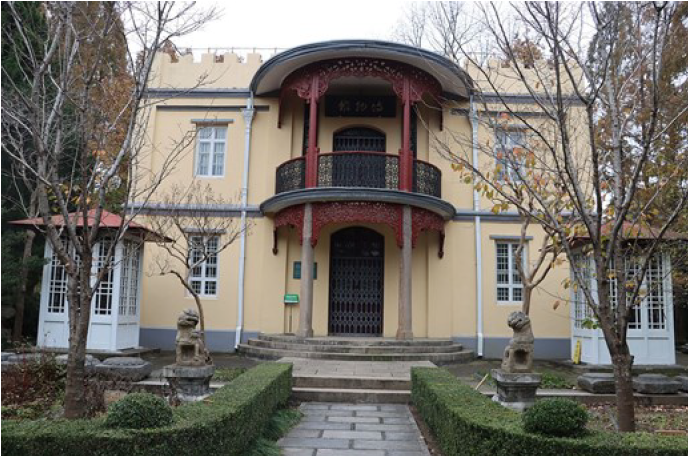
Figure 42.1. The Southern Hall of the Nantong Museum, 2022. Photo by the author.
According to the records of the Nantong Museum, the Central Hall, originally named the Observation Institute 測候所, was used as a meteorological observatory. Built in 1906, it is the earliest building within the compound. After the Observatory was moved out in 1914, Zhang Jian renamed it the Central Hall 中館. At this point, a twostorey tower roofed in a Western style was added at the centre of the hall, giving it its present form (Yang 1996). The Southern Hall was the main exhibition hall. It was built in 1906 and was ofcially known as the ‘Museum’. The two-storey building is of British style, having a crenelated roof-line similar to a Western castle, but with a central front porch in a Chinese style. A large wooden board named the building Bowuguan 博物館 in traditional Chinese running calligraphy written by Zhang Jian himself. It was the main building for displaying most of the artefacts under the four categories of nature, history, fine art, and, later, education (Li 1987; Du and Li 2022: 21). The Northern Hall was built in 1911 as a two-storey building. It also mixes Chinese and Western stylistic elements, although neither are as striking as in the Southern Hall. The Haonan Villa, built in 1914, was used as Zhang Jian’s residence. It is overall a three-storey building with Chinese-style brickwork and a balcony around the entire third floor but with Western detailing in the windows and on some of the columns along the balcony and entrance porches. It is now a part of the Nantong Museum, showing exhibitions on Zhang Jian’s life and achievements as well as later uses of the building. The Guoxiu Tan 國秀壇, which was constructed in 1907, is a combination of rockery, flower bed, and bamboo forest. It was constructed to show the characteristics of the Chinese garden (Du and Li 2022). In addition to its cultural historical resonances, the garden, as an outdoor living exhibit, communicates regional scientific botanical knowledge, as demonstrated by the selection of representative regional species of flowers and trees.
Nantong Museum covered the full range of cultural and natural specimens integrating ancient Chinese garden design with the Western concept of a museum. In the early stage of the museum, the collection was curated by Zhang Jian and displayed in three parts: natural (including animals, plants, and minerals), historical (for example stone, jade, ceramics, and rubbings), and ne arts (painting, calligraphy, and sculpture), with a separate section concerned with education added later (Fu 1957: 341; Li 1987; Geng et al. 2018: 60; Du and Li 2022: 21). The latter included objects aimed at the education of visitors on various practical topics by providing instructive models related to matters such as shipbuilding, agricultural machinery, and weaponry. Objects directly related to education, such as teaching aids that could be used in schools, were also emphasised. Unfortunately, during the war of resistance, the Japanese army used the Nantong Museum as a barracks, and most of the cultural relics, specimens, and architectural facilities were looted or destroyed.
Zhang Jian’s strong interest in the social role of museums was clearly part of the rationale for this museum. He believed that museums were important social and educational institutions that could be used in educating the masses as a complement to formal school education (Wang 2001; Du 2022). He explicitly stressed the parallels between schools and museums, stating that the museum was ‘constructed as a village school to teach and to more fully know the names of birds and beasts, grasses and trees’ (設為庠序學校以教,多識鳥獸草木之名) (Zhang 1931: 99; Du and Li 2022: 23–24). Moreover, he regarded museums as part of a necessary ‘national salvation’ project with the goal of ‘enriching the country and strengthening it’ (Du and Li 2022: 6, 186) by enlightening the minds of the people. Claypool has referred to Zhang Jian explicitly using museums as ‘civilizing spaces’ (Claypool 2005: 576) and stresses the departure from the ideas behind the early museums of the Jesuits in China. They saw the museum as ‘functioning dually to recraft the Jesuit tradition in China and also to remake their own order’ (Claypool 2005: 575); Zhang Jian instead focused on the collection and conservation of relics. She points out that this departure complicates an interpretation of the new Chinese museum space as a straightforward imitation of colonial museums (Claypool 2005: 576).
The explicit focus on the social role of museums meant that the Nantong Museum played a signicant role in increasing expectations of museums as having a responsibility to spread knowledge and educate the public. This expectation was incorporated into the political movements of the early 20th century and is expressed in the growing number of new museums. Amongst the individuals involved was Cai Yuanpei 蔡元培 (1868–1940), a revolutionary democrat, educator, and scientist. In the 1920 and 1930s, he was the rst person to explicitly explain the social educational value of museums. After the Nantong Museum, others followed, due in part to the advocacy of intellectuals like Li Yuying 李煜瀛 (1881–1973), Kang Youwei 康有為 (1858–1927), and others (Li 2010). For instance, in 1934, during the Republican period, there were, according to the Chinese Museum Statistics (1921–1942) 250 museums in China, including 121 museums of history and archaeology (Fu 1957: 343). In 1957, eight years after the People’s Republic of China was established, there were 73 museums in China (Fu 1957).
The Nantong Museum and related museums founded by Zhang Jian are still in use today. Although many have been modified over time, these early museums made fundamental contributions to the development of Chinese museums. Since its completion, the Nantong Museum has actively cooperated with school education and propagated scientific and cultural knowledge. In recognition of this, the Nantong Museum was named by the provincial Communist Party as one of Jiangsu’s Provincial Patriotic Education Bases as early as 1997.
In summary, the Nantong Museum is testament to the 20th century’s commitment to preserving and showcasing China’s vast and diverse history. It is recognised as the first public museum in China, laying the foundation for the establishment and growth of many other museums. Although the museum’s design was not as a ‘site museum’ or specifically an ‘archaeological museum’, it furthered the concept of experiential and immersive learning in Chinese museum culture. The Nantong Museum paved the way for the development of a museum culture within China.
Banpo Museum is located on the eastern side of Xi’an. It was the rst museum dedicated to a prehistoric settlement in China. It is also worth pointing out that Banpo Museum is one of the first museums to be built after the founding of the People’s Republic of China. Su Donghai, a noted archaeologist, once commented: ‘At that time, no other country built such a grand construction as Banpo Site Museum to scientifically cover archaeological sites, thus creating the first integration of museum and site environment’ (Zhang 2018: 128).
The site was discovered in 1953, and five large-scale excavations were conducted between 1954 and 1957 by the Institute of Archaeology of the Chinese Academy of Sciences. There are remarkably well-preserved settlement remains including a residential area with houses and cooking pits, a pottery-making zone, and a burial area.
In March 1956, a number of senior administrators from various ministries discussed what could be made of the Banpo excavation site and proposed that a museum should be built there. The museum’s records show that in the following month vice-premier Chen Yi paid a visit to the excavation. Zheng Zhenduo, director of the Cultural Relics Bureau of the Ministry of Culture, proposed to Chen Yi that a museum should be established. This was immediately agreed, with 300,000 yuan allocated for construction and management. Construction began the following year and on 1 April 1958 Banpo Museum was officially opened to the public. It was presented as the rst archaeological site museum in China. This narrative has been disputed, for example by Liu Shuguang, the president of the Chinese Museum Association (Zhongguo Bowuguan Xiehui 中國博物館協會 2022), who considered that the earliest iteration of the site museum was the Chinese Ape Man Showroom 中國猿人陳列室 in Zhoukoudian, Beijing, which was opened in 1953 (Liu 2022: 11).
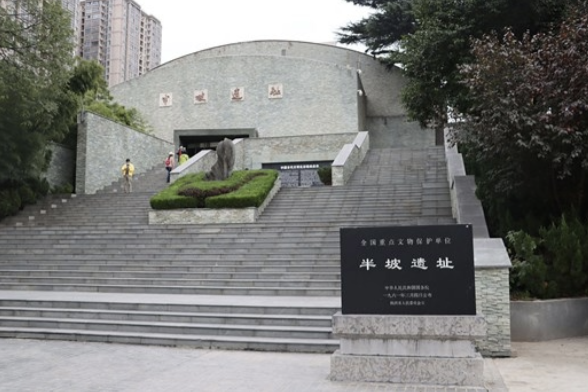
Figure 42.2. The front of the Conservation Hall erected over the Banpo site, Xi’an Banpo Museum, 2022. Photo by the author.
Banpo Museum consists of a large, enclosed compound constructed around three parts. The first is a geometrical arrangement of four houses, two on each side of the central axis that runs from the entrance to the Conservation Hall (Figure 42.2), visually reflecting a notion of progression. Between the two sides are geometrically arranged gardens and a central pond. The Conservation Hall is the main focus with the path leading up to it. Architecturally, the various components of the site do not show explicit Western influences but rather a partial shift to international practices and ideas, such as the use of glass and metal beams in the construction of the dome of the Conservation Hall.
The museum archives show that the original Banpo Museum was designed by the Xi’an Architectural Design Bureau in 1957 (Li Qiang, director of the Banpo Museum, pers. comm., and Zhang Jun, Archives Office of the Banpo Museum, pers. comm. 2022). The architecture of the roof of the Conservation Hall is based on elegant long-span rounded arches. It was considered not only a conservation building but also a showcase (Zhang 2018: 133). It covers the in situ remains of houses, burials, groups of urn burials, remains of ditches, pottery kilns, and other remains (He 2006: 98). To improve the conservation of the site, a new Conservation Hall, designed by Pang Zhan 龐嶄 and others from the Xi’an University of Architecture and Technology, was opened in 2005. This became what is now known as Banpo Museum. It is known for its smooth lines and integration with the natural environment. The entrance to the compound, a gable-like structure that looks like wood but is made of cement, acts as a signpost to Banpo Neolithic Village.
There are two parts to the exhibition in Banpo Museum. One permanent exhibition hall, ‘Exhibition of Excavated Relics of Banpo Site’, contains finds from the site and another temporary exhibition hall includes material pertaining to contemporary patriotic education. The permanent exhibition hall, using current technology with a combination of audio and visual representations of the site’s river and eld environment, together with lighting to represent day and night, presents a reconstruction of the life and work of the Banpo people. This emphasis is also seen in the Banpo Ancient Cultural Village. In the beginning it was a simple collection of replica houses and artefacts but over time it has grown. Today it is presented as a space that offers visitors a glimpse into the daily life and culture of the inhabitants of Banpo focused on tangible exploration (such as pottery making) and physical experiences and sensations.
Banpo Museum shows the change in approach from the earlier museum, in which objects were displayed largely divorced from their original contexts, to one in which the context (i.e., the site) becomes the focal point. It was the first real archaeological site museum in China and one of the earliest archaeological site museums in the world, creating a precedent for the construction of Chinese site museums (Huang 2015). Since the establishment of Banpo Museum, the ‘Banpo Model’ has been used as a standard in the development of Chinese archaeological site museums. In terms of the wider development of museums in China, it is worth pointing out that this kind of museum, focused on excavation sites, became specific to archaeology, distinguishing archaeological museums from museums dedicated to, for example, crafts, art, or natural history.
The most recent phase in the development of the concepts and practices of archaeological museums in China is the ‘archaeological site park’. The Yangshao Village NASP exemplifies this development. The Yangshao Village Site refers to the site where the Yangshao Culture was first discovered by J. G. Andersson in 1921 and where three subsequent excavations have taken place. The site was developed by the central government. The park is composed of several elements, including the museum, in situ archaeological remains under various covers, several observation platforms, activity areas (for example for making Yangshao-style pottery), and a variety of elaborate garden designs.
The NCHA’s design and interpretation policies play a crucial role in the development of the NASP. These policies guide the overall planning, presentation, and visitor experience within the parks. The following points provide a summary of the policies implemented for design and interpretation in the Yangshao Village NASP.
The park adheres to strict principles of preservation and conservation to protect archaeological remains, using methods like protective covers and controlled environmental conditions to ensure the long-term preservation of the site. The policy for interpretation emphasises a contextual approach, with interpretive signage, audio guides, and multimedia presentations providing visitors with information about the historical, cultural, and archaeological significance of the site. This helps visitors understand the broader context in which the Yangshao Culture existed. The park adheres to a policy of authenticity, decided upon by NCHA, so that reconstructions of structures, such as dwellings and workshops, are based on an interpretation of the archaeological evidence to help visitors comprehend the daily life and activities of the ancient inhabitants. This policy extends to the design and interpretation of the park, which aims to create a multisensory experience for visitors, including interactive exhibits, hands-on activities, and immersive displays that engage visitors through several senses. As a part of this policy, the park also provides education programs catering to different age groups to enhance visitors’ understanding and appreciation of the Yangshao Culture. The policy governing the visual appearance of the park aims to provide visitors with a visually appealing and immersive experience that integrates the archaeological remains, museum, and landscape design into a harmonious environment. Finally, the park operates a policy of making the site and its interpretation accessible to a diverse range of visitors by providing facilities for people with disabilities, clear signage, and multilingual information.
The rst element forming the Archaeological Site Park was the museum. The NCHA and the Henan Provincial Government approved the Yangshao Culture Museum in January 2009, and it was completed in October 2011. Guan Zhaoye 關肇鄴 (1929–2022) from the Architectural Design and Research Institute of Tsinghua University led the design of the building. Guan’s architectural style attaches great importance to the combination of individual architectural features and the environment. He was deeply versed in knowledge of modern architecture, both Chinese and Western. His building for the Yangshao Culture Museum has several parts, of which the four conjoined large exhibition and administrative halls and the tower-like stairwell are the visual focal points (Figure 42.3). The buildings are made of yellow-brown plastered cement or similarly coloured bricks, with the colour making a visual reference both to Neolithic pottery and to the hue of the loess soil. The stairwell, the most unusual and eye-catching element, looks like a slightly conical tower composed of two detached but overlapping semicircular ‘sheets’ which together give the impression of two parts of a broken pot. The allusion to pottery, apart from the overall impression of shape and colour, is further provided by the ‘cracking’ of the wall and the lack of windows. The style of the museum uses symbolism derived from Yangshao Culture itself rather than using elements from either traditional Chinese or Western architecture.
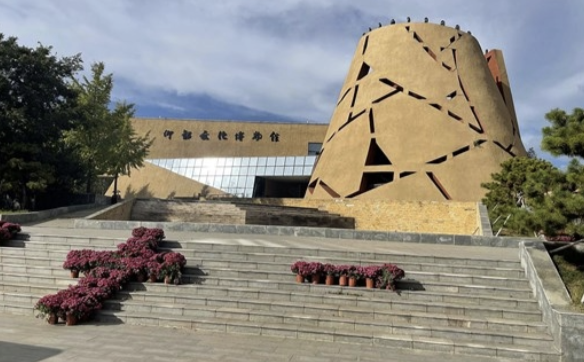
Figure 42.3. The ‘stairwell’ at the Yangshao Culture Museum, 2022, Photo by the author.
The museum was intended to display the Yangshao material culture, deriving from the excavations conducted in the area, but it does not display any of the archaeological site itself. Its exhibition stresses the importance of the site within the history of archaeology in China as well as the contribution from scientific research. There are three exhibition halls. The first hall exhibits the main results of the excavations at the Yangshao Village site. The second hall displays the main archaeological activities of Andersson, the discoverer of the Yangshao Village site and other sites, stressing that Chinese archaeology was collaborative and international from its beginning. The third hall displays interpretations of social life in Yangshao Culture. The three halls altogether currently display 695 objects (Hou 2020: 113).
In 2011, a Conservation Hall over a long in situ stratigraphic section was erected in the middle of the site (Figure 42.4). Large glass windows in the brick and concrete structure allow the preserved stratigraphy to be seen from outside or they can be studied more closely from a wooden walkway that runs along the section. Here the visitors can observe the densely distributed remains of buildings and the material associated with them (Hou 2020: 27).
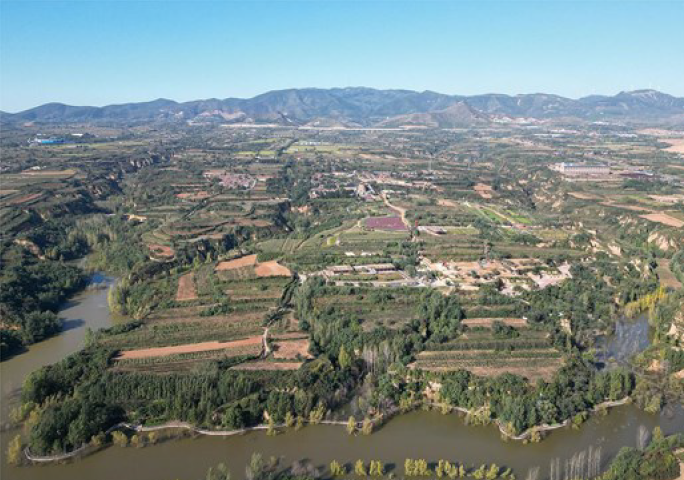
Figure 42.4. A birds-eye view of the Yangshao Village NASP. Image provided by Wang Yu, Yangshao Culture Museum, Mianchi Administration of Culture and Tourism.
In 2017, the plan for the Yangshao Village NASP was approved by the NCHA,2 extending over the protection zone around the Yangshao Village site. The park was designed by Beijing Guowenyan Cultural Relics Protection and Development Co., Ltd 北京國文琰文物保護發展有限公司 according to the principles for archaeological site parks discussed above.The Yangshao Village archaeological site is present within the park both through in situ remains which are on display and through celebrations of archaeological work. The latter includes modern sculptures memorialising the four excavations. These make a public statement about the significance of the practical fieldwork and present the archaeologists as scientists responsible for the discovery and recovery of the past—popularising and publicising the development of Chinese archaeology as a heroic endeavour. This is further evidence of how the archaeological park aims to move beyond the straightforward presentation of archaeological artefacts as visitors are encouraged to make an emotional and phenomenological engagement with the origin of the Chinese nation. In one area of the park, visitors can participate in an actual archaeological excavation and have their finds displayed in an exhibition space. The park also uses sculptural installations to convey information as well as stimulate engagement. These make visual references to the decorations on Yangshao pottery, such as gigantic pots made of painted cement or metal structures with cutouts in the shape of motifs painted on the pottery, and the 88 m long and 1.5 m high ‘culture wall’ embellished with depictions of elements used in the decoration of Yangshao pottery.
The landscape setting of the Yangshao Village NASP is also of some significance beyond its link to an actual archaeological site. By keeping much of the natural vegetation, the landscape gives an impression of a romantic countryside, and these features have been accentuated through additional planting, such as flower beds and small agricultural plots and the paths weaving through the park. These additional features make the park more colourful than a historic landscape would usually be, thus adding a sense of its distinctive character. The reservoir in the southern and southwestern part of the park is an additional important feature. It was specifically built to reflect the positioning of many Yangshao Culture sites near water. To allow visitors to maximise their contact with the natural environment, a combination of forest walking, sightseeing, and other activities has been developed.
Through these three cases, certain trends in the development of archaeological museums in China can be traced. Some aspects relate to the idea of the functions and rationales for museums, other aspects are reflected in the architectural forms and the associations brought to the buildings, and a third theme relates to the shifting roles of the sites themselves versus the museum as a repository for decontextualised finds.
Over time, the area of the exhibition space itself and the area of the ‘museum’ compound tend to increase as more of the site’s setting comes to be considered relevant to the function of the museum. This includes the change from the idea of a ‘garden’ associated with a museum to the concept of an entire landscape ‘park’ that would replace the museum. Generally, the number of objects held by museums and used in their exhibits has also changed. The small number of objects on display in the Yangshao Culture Museum is noteworthy and is in part a consequence of the dispersal of collections from the earlier excavations to other institutions (including provincial, national, and foreign institutions) before the current Yangshao Culture Museum was constructed. But it is also a result of shifting emphasis from the object per se to wider visual representations. This is in line with the general trends of museum developments internationally. The architectural style has changed in line with contemporary cultural and sociopolitical trends within China, changing from the initial mix of traditional Chinese and Western architectural forms to postmodernism, in which the architecture does not need to be constrained either by previous architectural styles or by a need to express functionalism.
Overall, the philosophy guiding the museum as an institution developed throughout this period and was subject to many different influences including changing cultural and sociopolitical concerns. The founding idea of the educational purpose of a museum was already expressed in the Nantong Museum but we see how this was realised in diverse ways through the later museums, with increased attention given to active involvement, for example through the pottery making section at the Yangshao Village NAST. One can discern ideas similar to those circulating internationally, but one can also trace how these ideas were shaped around significant issues in China. For example, in the case of museum education, similar concepts and ideas around the role and significance of museums, common in Europe and America, have also made their way to China. However, they have been adapted and reshaped to suit Chinese contexts and concerns.
The traditional museum exhibiting one or more collections still exists and new ones have recently been opened, such as the Shanxi Archaeological Museum and Luoyang Archaeological Museum in 2020, the Zhengzhou Archaeological Museum in 2021, and the Shaanxi Archaeological Museum and the Chinese Archaeological Museum in 2023, but the NASP represents an additional and recent development in Chinese museum philosophies. Moreover, unlike the well-established international form of the site museum, the NASP can be viewed as a distinctive Chinese construction. It includes the ‘site museum’ but reaches beyond that to cover both cultural and natural elements and adds garden designs and iconic sculptural signposts. Both the site museum and the archaeological site park are intended ‘to protect and study the nonmobile cultural heritage and natural heritage left by human history’ (Sun 1989). This makes these later museums different from the Nantong Museum in their aims. However, all three case studies are public and educational institutions that protect and display cultural heritage to share scientific, historical, and cultural knowledge to the public—albeit using different techniques and with changing understandings of how archaeology can inform a broad general public.
More than 100 years ago the modern idea of the museum, in contrast to palace or cultural elite collections of relics, was introduced to China from Europe. Since then, there has been considerable development in the Chinese concept, practice, and methodology of museums. Archaeology and heritage (as an expression of attitudes to the past in the present) intersect in diverse ways in the objects, sites, practices, narratives, and performances articulated in the displays of the three cases and illustrate shifts in and a consolidation of the Chinese museum idea over time. At the first stage we find Zhang Jian and his sense of individual responsibility and how this led him to establish his museum for the public. This was a museum with a mission of education with the aim of saving the country. When comparing Nantong with the recently constructed Yangshao Village NASP, one can discern both the same underlying focus on education but also changes in what that education aims at and the means of providing it. A new milestone for 'museums' has been created through such NASPs providing a basis for rethinking the purpose and in particular the format of the traditional museum.
Subsumed within the Yangshao Village NASP, the Yangshao Culture Museum has significantly shaped the idea of an archaeological museum. In particular, the form and function of the museum have been updated from a building with solely interior exhibitions to a complete landscape showing ancient remains in their natural environment. In this way, the opening of the Yangshao Village NASP to the public in 2022 represents a significant point in the history of archaeological museums in China, but it also raises the question of where this development wil lead and how it may influence the idea of the archaeological museum in the future.
The research underpinning this paper is part of the project 'Yangshao Culture: 100 Year Research History and Heritage Impact' at the McDonald Institute for Archaeological Research, Department of Archaeology, University of Cambridge, funded by the Beifang International Education Group. I am grateful for support from Mr. Hou Junjie, cultural consultant (of the Yangshao Village NASP) for the People's Government of Mianchi County, formerly director of Sanmenxia Municipal Administration of Cultural Heritage; Mr. Fan Linping, deputy director of the Mianchi Bureau of Culture and Tourism; Mr. Yang Shuanchao, administrator of the Yangshao Cultural Research Centre of the Chinese Academy of Social Sciences; Mr. Li Qiang, director of the Xi'an Banpo Museum, and Mr. Du Jiale, director of the Nantong Museum.
1. An, Lei 安磊.2022. Guojia kaogu yizhi gongyuan fazhan licheng huigu 國家考古遺址公園發展歷程回顧 [Review of the Development History of National Archaeological Site Parks]. Guojia Wenwuju國家文物局. http:/www.ncha,gov.cn/art/2022/4/15/art_ 722_173817.html. Created 15 April 2022. Accessed 15 October 2022.
2. Andersson, Johan Gunnar. 1923. An Early Chinese Culture. Bulletin of the Geological Survey of China 1:1-68.
3. Chen, Weiping 陳衛平. 2006/ Kexuey u renwen zai bowuguan wenhua de rongtong-xuexi Zhang Jian bowuguan Sixiang yide 科學與人文在博物館文化的融通—學習張騫博物館思想一得 [The Mingling of Science and Humanities in Museum Culture: Insights from Studying Zhang Jian’s Thinking about Museums]. Bowuguan yanjiu 博物館研究 (3):10-13+59.
4. Claypool, Lisa. 2005. Zhang Jian and China’s First Museum. The Journal of Asian Studies 64 (3):567-604.
5. Du, Jiale 杜嘉樂.2022. Zhang Jian bowuguan linian dui dangxia bowuguan gongneng fahui de jiejian yiyi 張騫博物館對當下博物館功能發揮的借鑒意義[The Significance of Zhang Jian's Concept of the Museum to the Contemporary Museum]. Yishu bowuguan 藝術博物館 3. https:/weibo.com/ttarticle/p/show?id=2309404798823573881860. Created 4 August 2022. Accessed 18 October 2023。
6. Du, Jiale 杜嘉樂 and Li Wanwan 李萬萬.2022. Nantong Bowuyuan 南通博物苑[Nantong Museum]. Beijing: Zhongyang Bianyi Chubanshe 中央編譯出版社.
7. Fu,Zhenlun傅振倫. l957.Bowuguanxue gailun博物館學概論 [An Introduction to Museum Studies]. In Zhongguo bowuguanxue lishi wenxian中國博物館學歷史文獻 [Documents on the History of Chinese Museology], edited by Chen Jianming陳建明,pp. 336-427. Beijing: Wenwu Chubanshe文物出版社.
8. Geng Chao耿超,Liu Di劉迪,Lu Qingsong陸青松,Peng Zhicai彭志才,and Lu Xin魯鑫. 2018. Bowuguanxue lilun yu shijian博物 館學理論與實踐[The Theory and Practice of Museology]. Beijing: Kexue Chubanshe科學出版社.
9. Grimberg, Phillip. 2022. Before Archaeology. Antiquarianism, Collecting, and "Evidential Scholarship" in Late Imperial China-The Case of the Yongzheng Emperor and His Illustrated Inventory of Ancient Playthings (Guwantu). PhD diss., FAU Erlangen- Nuremberg.
10. Grimberg, Phillip. 2024. Guwantu: The Yongzheng Emperor's (r. 1723-1735) 'Illustrated Inventory of Ancient Playthings'(1729) and Imperial Collecting in Eighteenth Century China. Transactions of the Royal Historical Society 2: 63-80.
11. Guojia Wenwuju國家文物局.1985.Zhongguo bowuguanxue gailun中國博物館學概論[An Introduction to Chinese Museology]. Beijing:Wenwu Chubanshe.文物出版社.
12. Guojia Wenwuju國家文物局. 2022a. Guanyu gongbu 'Guojia kaogu yizhi gongyuan guanli banfa' de tongzhi關於公佈《國家考 古遺址公園管理辦法》的通知 [Notice of the Promulgation of 'Measures for the Administration of National Archaeological Site parks']. http://www.gov.cn/zhengce/zhengceku/2022-04/02/content_5683110.htm. Created 2 April 2022.Accessed 18 October 2022.
13. Guojia Wenwuju國家文物局. 2022b. Guojia Wenwuju guanyu gongbu disipi guojia kaogu yizhi gongyuan mingdan he lixiang mingdan de tongzhi國家文物局關於公佈第四批國家考古遺址公園名單和立項名單的通知 [National Cultural Heritage Administration Announcement on the Publication of the List of the Fourth Group of Archaeological Site Museums]. http://www.gov.cn/zhengce/zhengceku/2022-12/29/content_5734102.htm. Created 29 December 2022. Accessed 18 March 2023.
14. Guojia Wenwuju國家文物局. 2023. Xinhua Source: China Opens382 New Museums in 2022. http://english.scio.gov.cn/pressroom/2023-05/19/content_85400128.htm. Created 19 May 2023. Accessed 28 August 2023.
15. He, Zhoude何周德.2006.2002-2005 nian Banpo yizhi kaogu Faxian 2002-2005年半坡遺址考古新發現 [New Archaeological Discoveries at Banpo Site for the Years 2002-2005]. In Shiqian yanjiu [Studies in Prehistory], edited by Xi'an Banpo Bowuguan西安半坡博物館and Sanxingdui Bowuguan三星堆博物館,pp.98-l02. Xi'an: Shaanxi Shifan Daxue Chubanshe陝西師範大學出版社.
16. Hou, Jianxing侯建星. 2020. Zhongguo shiqian yizhi bowuguan: kaogu shengdi (Yangshao juan) 中國史前遺址博物館:考古聖地 (仰韶卷)[China's Prehistoric Site Museums: The Holy Land of Archaeology (Yangshao)]. Xi'an: Shaanxi Kexue Jishu Chubanshe陝西科學技術出版社.
17. Huang, Yang黃洋. 2015. Yizhi bowuguan de qiyuan yu yanbian shulue遺址博物館的起源與演變述略 [An Account of the Origins and Evolution of Site Museums]. Zhongguo bowuguan中國博物館34 (4): 39-43.
18. Jiang,Fan 蔣凡. 2022. A Study on the Types, Purpose and Orientation of Natural History Museums Established by Westerners in Modern China. Journal of Natural Science Museum Research (2):82-90.
19. Li, Huaxing李華興. 1987. Jindai Zhongguo bainian shi cidian近代中國百年史辭典[A Dictionary of China's Modern Century]. Hangzhou:Zhejiang Renmin Chubanshe浙江人民出版社.
20. Li, Yunpeng 李雲鵬. 2010. Jin qishinian lai Zhongguo bowuguan jiaoyu yanjiu shuping 近七十年來中國博物館教育研究述評 [A Review of Museum Education Research in China over the Last 70 Years]. Anyang Gongxueyuan xuebao 安陽工學院學報 (5):114-117.
21. Liu, Yi 劉毅. 2018. Xu 序 [Preface]. In Bowuguanxue lilun yu shijian 博物館學理論與實踐 [The Theory and Practice of Museology], edited by Geng Chao 耿超, Liu Di 劉迪, Lu Qingsong 陸青松, Peng Zhicai 彭志才, and Lu Xin 魯鑫, pp. 1–3. Beijing: Kexue Chubanshe 科學出版社.
22. Liu, Shuguang 劉曙光. 2022. Kaogu yizhi bowuguan de shidai dandang—ping ʻZhongguo kaogu yizhi bowuguanʼ 考古遺址博物 館的時代擔當—評《中國考古遺址博物館》 [The Epochal Undertaking of Archaeological Site Museums: A Review of The Chinese Site Museum]. Guangming ribao 光明日報 (11), 14 July 2022.
23. Lu, Tracey. 2014. Museums in China: Power, Politics and Identities. London: Routledge.
24. Puga, Rogério Miguel. 2012. The First Museum in China: The British Museum of Macao (1829–1834) and Its Contribution to Nineteenth-Century British Natural Science. Journal of the Royal Asiatic Society 22 (3-4):575–586.
25. Sun, Mo 孫模. 1987. Nantong jianzhujia Sun Zhisha 南通建築家孫支廈 [The Nantong Architect Sun Zhisha]. In Wenshi ziliao xuanji 文史資料選集 [Selected Historical Materials], volume 7, edited by Zhongguo Renmin Zhengzhi Xieshanghui 中國人民政治協商會 and Jiangsusheng Nantong Wenshi Weiyuanhui 江蘇省南通文史委員會, pp. 38–43. Nantong: Zhongguo Renmin Zhengzhi Xieshanghui 中國人民政治協商會 and Jiangsusheng Nantong Wenshi Weiyuanhui 江蘇省南通文史委員會.
26. Sun, Xiao 孫霄. 1989. Shilun yizhi bowuguan de gexing tezheng 試論遺址博物館的個性特徵 [An Attempt to Discuss the Specificities of Site Museums]. Zhongguo bowuguan 中國博物館 (4):62–66.
27. Wang, Hongjun 王宏鈞 (editor). 2001. Zhongguo bowuguanxue jichu 中國博物館學基礎 [The Foundations of Chinese Museology]. Shanghai: Shanghai Guji Chubanshe 上海古籍出版社.
28. Wang, Q. Edward. 2000. Historical Writings in 20th Century China: Methodological Innovation and Ideological influence.I In An Assessment of 20th Century Historiography, edited by Rolf Torstendahl, pp. 43–69. Stockholm: The Royal Academy of Letters, History and Antiquities.
29. Xu, Yanqin 徐豔芹. 2021. Nantong Bowuyuan bei mingming wei quanguo aiguozhuyi jiaoyu shifan jidi 南通博物苑被命名為全國 愛國主義教育示範基地 [Nantong Museum Has Been Designated as a National Model Base for Patriotic Education]. http://www.ntmuseum.com/pcweb/news/detail/593. Created 22 June 2021. Accessed 19 December 2025.
30. Yang, Guohua 楊國華. 2014. The Concept of ʻPatriotic Educationʼ and Its Influence on Chinaʼs World Heritage Practice. PhD dissertation, Department of Archaeology and Anthropology, University of Cambridge, Cambridge.
31. Zhang, Lizhi 張禮智. 2018. Zhongguo shiqian yizhi bowuguan: Tongnian qipai (Banpo juan) 中國史前遺址博物館: 童年气派(半 坡卷) [Chinaʼs Prehistoric Site Museums: Youthful Dignity (Banpo)]. Xiʼan: Shaanxi Keji Yishu Chubanshe 陝西科學技術出版社.
32. Zhang, Xiaoruo 張孝若 (editor). 1931. Zhang Jizi jiulu 張季子九錄 [Nine Collections of Zhang Jizi]. Shanghai: Zhonghua Shuju 中華書局.
33. Zhongguo Bowuguan Xiehui 中國博物館協會 (editor). 2022. Zhongguo kaogu yizhi bowuguan 中國考古遺址博物館 [Archaeological Site Museums in China]. Jiangsu: Fenghuang Wenyi Chubanshe 鳳凰文藝出版社.
1. In 1903, Zhang Jian was invited to visit the Fifth Domestic Industry Promotion Exhibition in Japan and made a field trip to study Japanʼs agriculture and education for more than 70 days, experiencing the great changes in Japanese society brought about by the Meiji Restoration. Aer his return, he became a leading figure in the constitutional movement in China (Du and Li 2022: 3).
2. The account of the Yangshao Village NASP is based on personal inspection of the park, on information from interviews with the director of the museum and park, and consultants advising on the archaeological site park, together with information from the park website and that of the NCHA.
< 原創文章/視頻,未經許可,不得轉載 >
分享文章




 謝謝你的按讚。
你已對此文章按讚,請瀏覽其他你會喜愛的文章!
已有人對此文章/視頻按讚
謝謝你的按讚。
你已對此文章按讚,請瀏覽其他你會喜愛的文章!
已有人對此文章/視頻按讚
歡迎留言:
請登入/登記成為會員後留言