

The Construction of and Reflection on Confucian Classical Studies:
Confucius and the Emergence of the Analects (Part 1)
Overview
Confucianism (儒家學說) was originally a product of the era in which the Duke of Zhou (周公, also known as Ji Dan [姬旦], the regent of King Cheng of Zhou) established the rites and music. It was the state philosophy of the Zhou period, and the guiding principles and ideology by which the Zhou royal house governed everything. By the late Spring and Autumn period, as the Zhou royal house's authority faded away, the system of rites and music (禮樂制度) also perished with it.
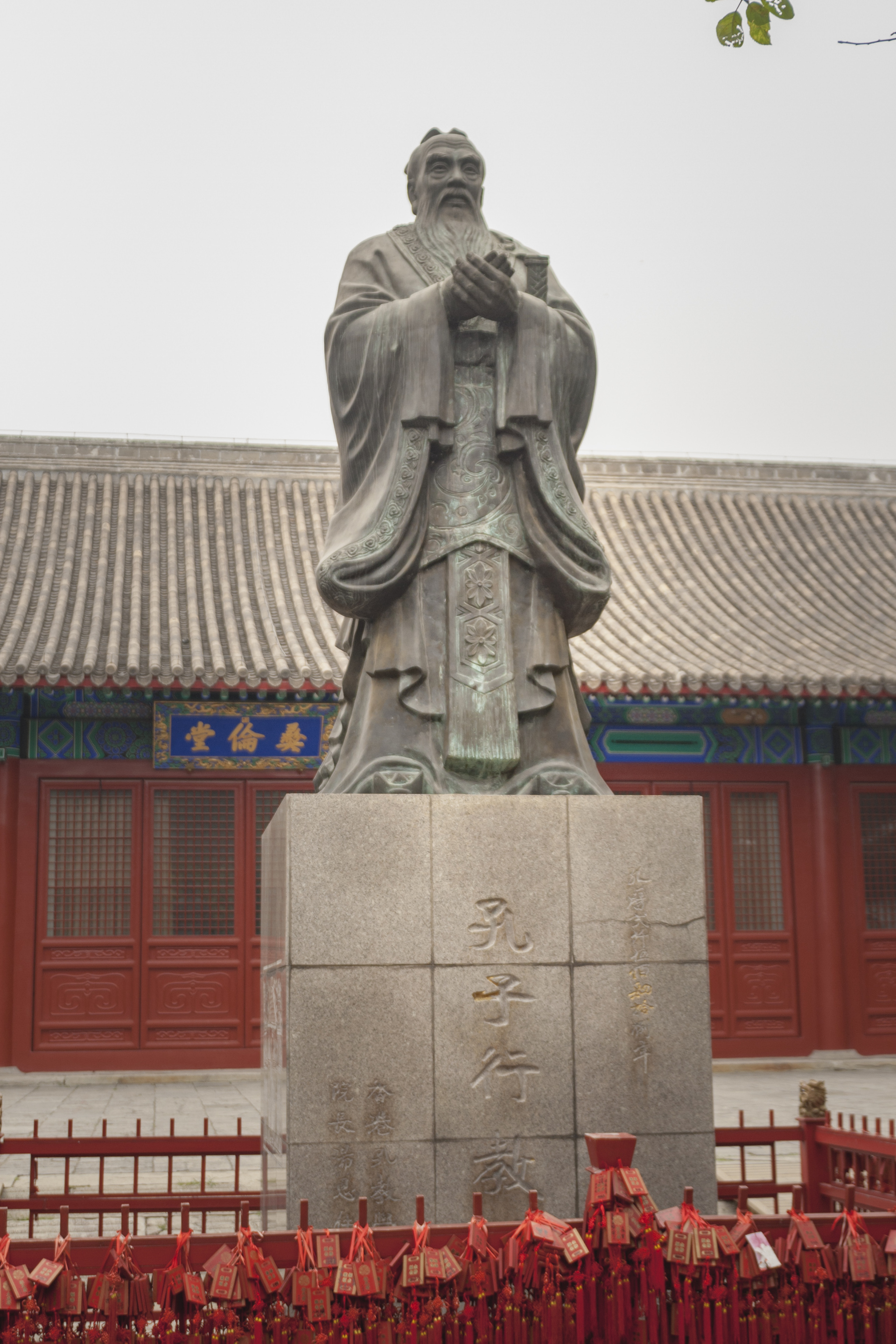
If the Duke of Zhou represents the cultural and intellectual breakthrough that brought Chinese intellectual and literary history into being from nothing, Confucius represents the breakthrough of the group that liberated thought during the era of the Hundred Schools of Thought. Confucius is positioned as the founder of the Hundred Schools (諸子百家); he was himself a Shi (士, the social class between Da Fu [大夫] and ordinary people and could only serve as low-level officials), or rather the greatest Shi of his age. He was a key driving force and mentor in the formation and rise of the Shi class, which went on to become the cultural mainstay of the Huaxia people.
The greatness of Confucius's thought lies mainly in four respects:
First, Confucius's thought is built on the political idea of "克己復禮" (Restrain oneself and bring the words and actions back in line with rites). Although this idea appears conservative, it in fact embodied the correct political direction of its time. The feudal system of the Western Zhou (西周, c. 1046 BC – 771 BC) can be summed up as "Enfeoff members of the royal family with land and establish vassal states to serve as a protective barrier for the Zhou dynasty and defend the Zhou royal house (封建親戚,以藩屏周).": the Zhou kings granted land and people to members of the royal family, meritorious ministers, and the nobility of earlier dynasties, and had them found vassal states to protect the Zhou royal house and maintain the ruling order. Through successive tiers of enfeoffment, this system formed a hierarchy of "the Son of Heaven (天子)—the feudal lords (諸侯)—Qing (卿, High-ranking nobles who held control over both state governance and military command) and Da Fu (大夫, Nobles of lower rank than the Qing [卿])—Shi (士)." With blood ties as its bond and combined with the distribution of political power, it was the defining feature of the Western Zhou political system.
This political system, together with its culture and learning, can be regarded as a political and cultural order superior to the centralized system that gradually took shape after the Spring and Autumn and Warring States periods (春秋戰國). In fact, the Zhou feudal system was the best political and cultural system China had before it entered the modern era.
From the standpoint of national and ethnic security, although the so-called barbarian incursions (夷狄侵擾) were continual during the two Zhou periods and the royal house declined, the various vassal states, operating within a competitive system, were nevertheless able to keep pace with the times, adapt to circumstances, and create and develop.
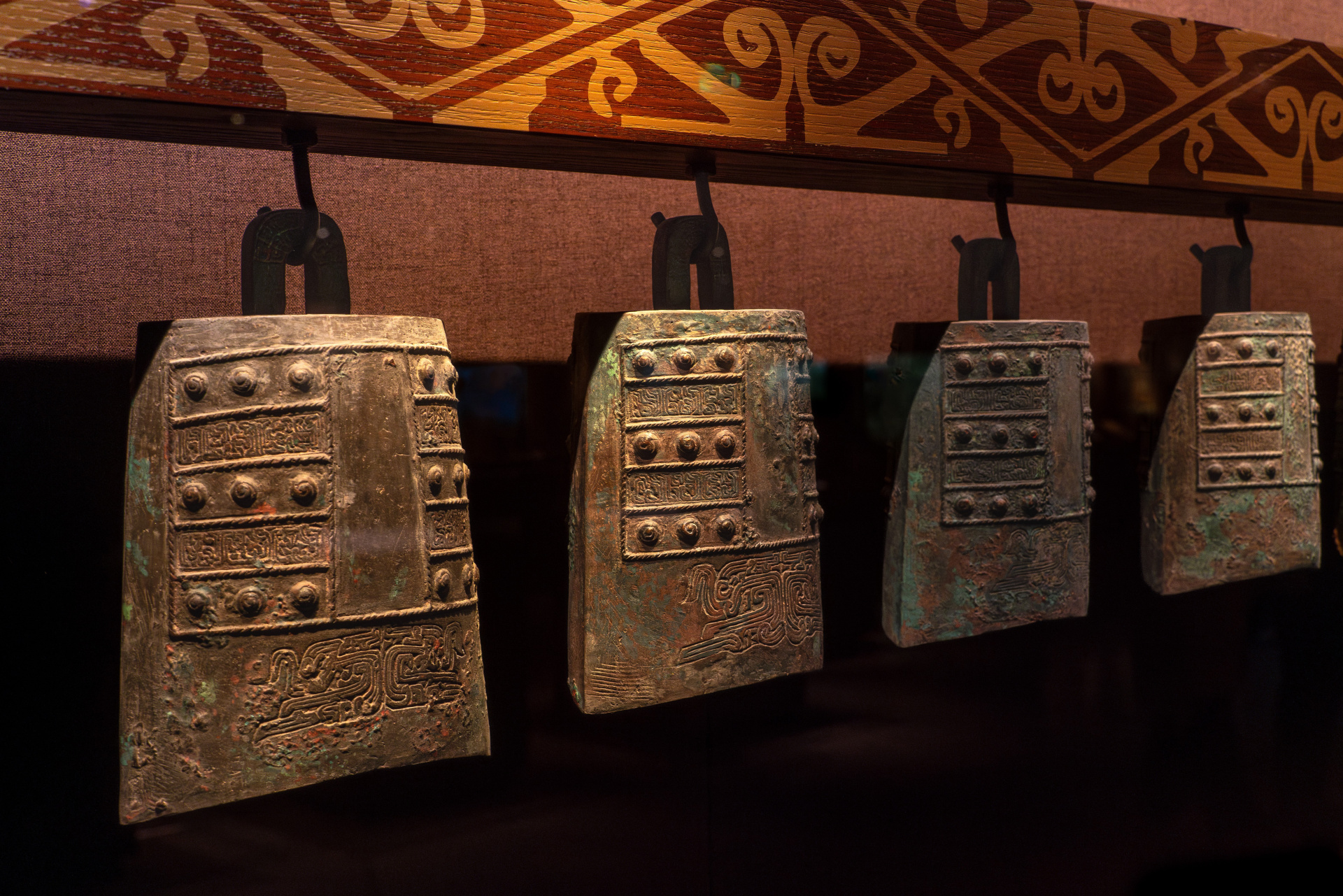
Confucius lived in the late Spring and Autumn period, an age when the rites had collapsed and music had decayed. In essence, his thought was a theoretical summation of the Duke of Zhou's system of rites and music. This fundamentally determines the greatness of Confucius's thought. The system of rites and music pioneered by the Duke of Zhou, and the culture of the Odes and the Documents (詩書文化) that arose under it, form the foundation of Chinese culture. They are also the common source from which the two great cultural systems, literary China and Daoist China, share their origin and root, and they can be counted among the most brilliant achievements in the history of world civilization.
Second, Confucius was the first to found a private school, thereby marking the beginning of private education in the history of Chinese education and breaking the earlier monopoly of "learning in the hands of the government (學在官府, Educational institutions, canonical texts, ritual vessels, and teachers were all controlled by the government)." The reason Confucius was able to become the pioneer of private education in China is that his great ideal of "Restrain oneself and bring the words and actions back in line with rites (克己復禮)" could not be realized in the face of reality and was repeatedly suppressed in his own time. Only then, with no other choice, did he turn to the path of teaching privately and cultivating disciples in order to spread his ideas.
In "Letter in Reply to Ren An (〈報任安書〉)," Sima Qian wrote: " Confucius suffered adversity, and so he composed the "Spring and Autumn Annals (《春秋》)"... All of these men were burdened with pent-up frustration, unable to realize their ideals and aspirations, so they recorded past events, hoping that later generations would come to understand their intentions (仲尼厄而作《春秋》……《詩》三百篇,大底聖賢發憤之所爲作也。此人皆意有所鬱結,不得通其道,故述往事、思來者)." This is a superb account of Confucius's course, driven by necessity, of pouring out his indignation in writing, "recorded past events, hoping that later generations would come to understand their intentions (述往事、思來者)."
Third, Confucius edited and compiled the Six Classics (六經典籍), thereby becoming the founder of Chinese poetic and textual culture, standing alongside the Duke of Zhou. The reason Confucius became the first person to systematically organize and create the culture of the Six Classics lay in the fact that his thought was out of step with his times. It did not fit the broad course of Chinese history, which was moving away from a cultured, civilized, and harmonious system of ritual and music toward the Warring States era, a time of collapsing rites and music and steady decline, and which inevitably advanced toward the centralized system of the Qin and Han dynasties and an age of ideological control marked by the dismissal of the hundred schools of thought.
Because he was out of step with his times, Confucius suffered suppression throughout his life and was driven onto the path of teaching privately. Private teaching inevitably generated a demand for teaching texts and course readings; thus teaching made demands on scholarship, which in turn led Confucius to organize the culture of the Six Classics and even to take part in writing them.
1. The "Book of Documents (《尚書》)"
The "Hereditary House of Confucius (〈孔子世家〉)" in the "Records of the Grand Historian (《史記》)" says: "In Confucius's time, the Zhou royal house had declined, the system of ritual and music had collapsed, and the classical texts, including the "Odes" and the "Documents", had fallen into fragments. So Confucius investigated the ritual systems of the three dynasties of Xia, Shang, and Zhou, and edited and arranged the "Book of Documents" and other writings. Its records begin in the era of Yao of Tang and Shun of Yu and extend down to Duke Mu of Qin, with the historical events arranged in chronological order (孔子之時,周室微而禮樂廢,詩書缺,追迹三代之禮,序書傳,上紀之際,下至秦穆,編次其事)." It cannot be ruled out that the "Book of Documents" was compiled by Confucius. In the "Analects", there are 2 passages that explicitly name the "Book of Documents", 5 that quote it without naming it, and 7 that base their arguments on it, which shows the close relationship between Confucius and the "Book of Documents".
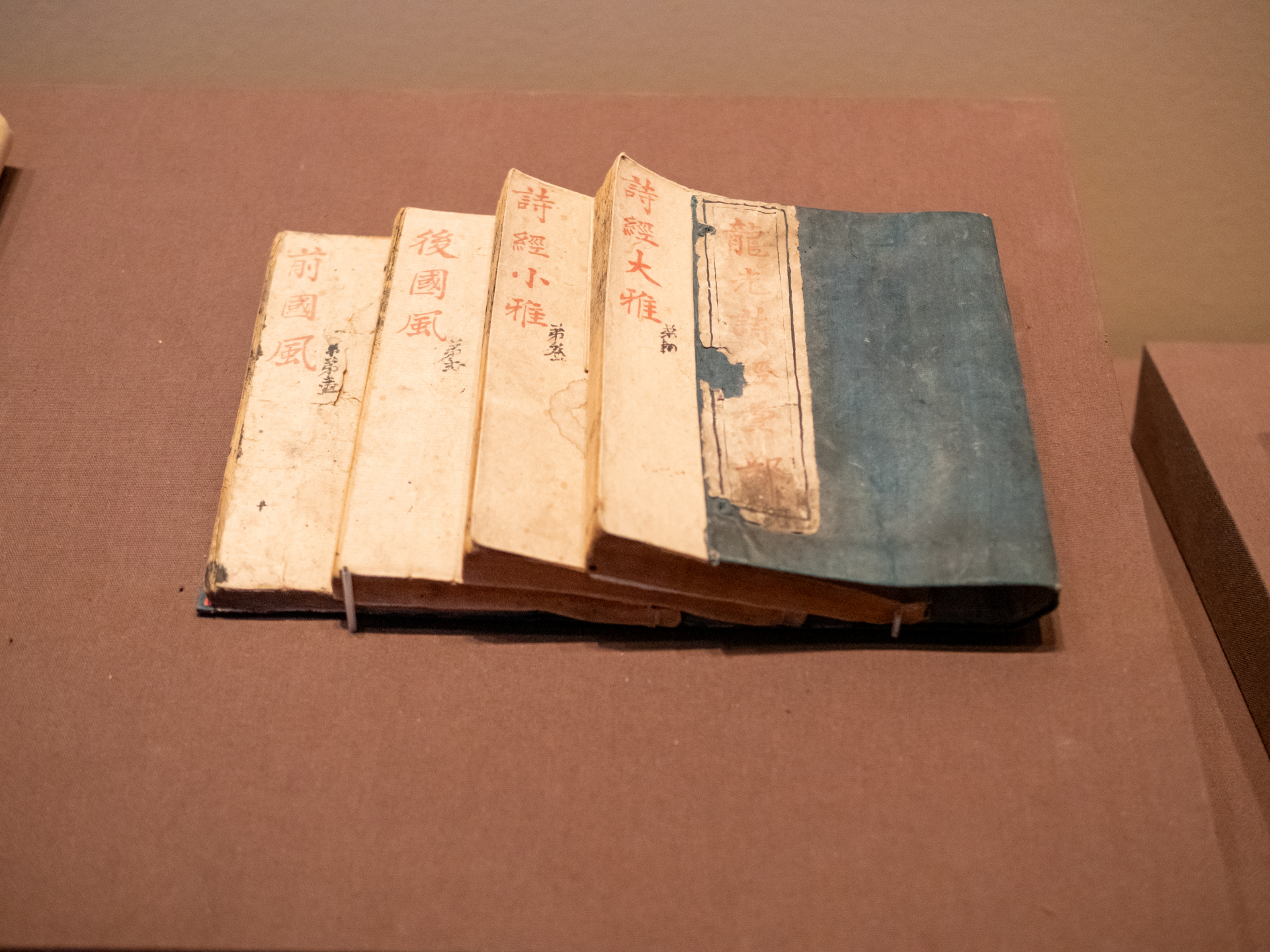
2. The "Book of Songs (《詩經》)"
The "Hereditary House of Confucius (〈孔子世家〉)" in the "Records of the Grand Historian (《史記》)" says that Confucius told the Grand Music Master of Lu: "It was only after I returned from Wey to Lu that I corrected the music, so that the Ya (雅) and the Song (頌) each regained their proper places, with their correct order and musical arrangement restored (吾自衛反魯,然後樂正,《雅》《頌》各得其所)."
3. The "Spring and Autumn Annals (《春秋》)"
Confucius took the historical material in the "Spring and Autumn Annals", the official history compiled by the state of Lu, from the first year of Duke Yin of Lu (魯隱公元年, 722 BC) to the fourteenth year of Duke Ai of Lu (魯哀公十四年, 481 BC), devised a new compilation format, and re-edited and revised it. The result is the "Spring and Autumn Annals" as we know it today, namely the Confucian classic "Spring and Autumn Annals" handed down through later ages. Using the "Spring and Autumn Annals" as his vehicle, and through rigorous accounts of historical facts, Confucius offered subtle yet penetrating criticism of acts that violated ritual norms, such as regicide and usurpation, and of the failure to honor Heaven and love people in keeping with the Rites of Zhou. This is the so-called "Spring and Autumn brushwork (春秋筆法)," by which he sought to rebuild the ritual-and-music political civilization of the early Western Zhou.
4. The "Book of Changes (《周易》)"
As to the authorship of the "Book of Changes", the traditional mainstream view holds that it passed through the hands of three sages. Fuxi (伏羲氏) "Look up to observe the celestial phenomena in the sky, and look down to observe the laws of the earth (仰觀象于天,俯觀法于地)," "Draw imagery close at hand from the human body itself, and farther afield from all manner of things (近取諸身,遠取諸物)," and drew the Eight Trigrams (八卦). King Wen of Zhou, imprisoned at Youli (羨裏), devoted himself to exploring the principles linking Heaven and humanity, expanded the Eight Trigrams into the sixty-four hexagrams, and wrote the hexagram statements and line statements. The author of the "Ten Wings" was Confucius, who raised the principles of the Changes (易學) to a new height and completed the system of Changes studies. The saying that "While King Wen of Zhou was imprisoned at Youli, he expanded upon and elaborated the "Book of Changes," " should refer to the Zhou clan's replacement of the Shang oracle-bone method of divination with a new one. Moreover, given the revolution in writing media that took place between the late Shang and early Zhou, the Duke of Zhou was the many-sided founder of this work. The contribution originally assigned to King Wen of Zhou (周文王, 1112 BC – 1050 BC), the second of the three sages, namely "expanded the Eight Trigrams into the sixty-four hexagrams, and wrote the hexagram statements and line statements," should in fact have been accomplished by the Duke of Zhou. The Duke of Zhou was the writer of the foundational portions of the "Odes" and the "Documents” and should likewise be regarded as the one who completed the foundational portion of the "Book of Changes". Confucius, for his part, was the compiler of the Six Classics, and also the author of some of the hexagram statements and line statements, as well as the Wings, of the "Book of Changes (《周易》)".
Fourth, Confucius's literary character and poetic philosophy: the manner in which Confucius expressed his great ideas carries forward the tradition of the "Book of Songs". It possesses the immediacy and aesthetic quality of literature, and, like the "Book of Songs" is one of the common wellsprings of both "Literary China" and "Daoist China." Confucius's sayings are full of poetic imagery and emotional expression, such as "It is only when the bitter cold arrives that you realize the pine and cypress are the last to wither (歲寒,然後知松柏之後雕也)," and "Time passes just like this river, flowing on day and night without ever stopping (逝者如斯夫,不舍晝夜)!" These use natural imagery to convey philosophical insights about life, in language that is concise yet deeply moving. "Time passes just like this river," together with the Japanese poet Matsuo Bashō (松尾 芭蕉, 1644 - 1694)'s "A quiet ancient pond—a frog leaps in, stirring a faint sound upon the water (古池呀!青蛙躍入的水聲; 古池や蛙飛びこむ水の音)," was described by Mr. Liang Zongdai (梁宗岱, 1903 - 1983) as an "eternal, glass-like sound of the Sanskrit chant (永恒的玻璃似的梵音)." All three may be called the eternal Sanskrit chant of "Literary China."
This article is reprinted from the WeChat official account "Muzhai Literature Lecture Hall (木齋文學講堂)."
All articles/videos are prohibited from reproducing without the permission of the copyright holder.
SHARE THIS


 Thank you for your like.
You’ve liked this article. Please browse more articles you may like!
people have liked this article/video
Welcome to leave a message:
Please Sign In/Sign Up as a member and leave a message