

Farming Life 3,000 Years Ago: Insights from the Classic of Poetry
The history of agricultural development of the Chinese nation is long-standing. Archaeological excavations have proven that as early as ten thousand years ago, during the early Neolithic period (c. 10,000 BC – c. 2,000 BC), the Chinese people had already begun engaging in farming activities.
Agriculture as the Foundation of the State
The Zhou dynasty (周朝, c. 1046 BC – 256 BC) was founded on agriculture. In the myths and legends that circulated as early as the beginning of the Western Zhou (西周, c.1046 BC – 771 BC) period, the Zhou people referred to their ancestor as Shennong (神農, the Divine Farmer) and took pride in possessing exceptional agricultural skills.
In the "Greater Odes (大雅) " section of the "Classic of Poetry (《詩經》), " there is a collection of ancient epics recounting the origins and development of the Zhou people. Among these, the poem "Birth of the People (《生民》) " describes the birth of Hou Ji (後稷), the founding ancestor of Zhou, and the history of his invention of agriculture. The poem tells of how a Zhou woman named Jiang Yuan (姜原) became pregnant after stepping on the footprint of God, and gave birth to Hou Ji. Hou Ji was born with a special talent for cultivating crops; the melons, beans, and grains he grew were described as "Hemp and wheat growing lush and thick, melons and gourds hanging heavy and full (麻麥幪幪,瓜瓞唪唪)" — meaning the harvests were abundant and bountiful. Later, Hou Ji went on to invent grain cultivation and led the Zhou people in developing agriculture, through which the Zhou gradually grew in strength and prosperity.
Although the poem "Birth of the People" is filled with extraordinary mythological elements, it vividly portrays life in ancient agricultural society, tracing the origins of the Chinese nation's foundation built upon farming.
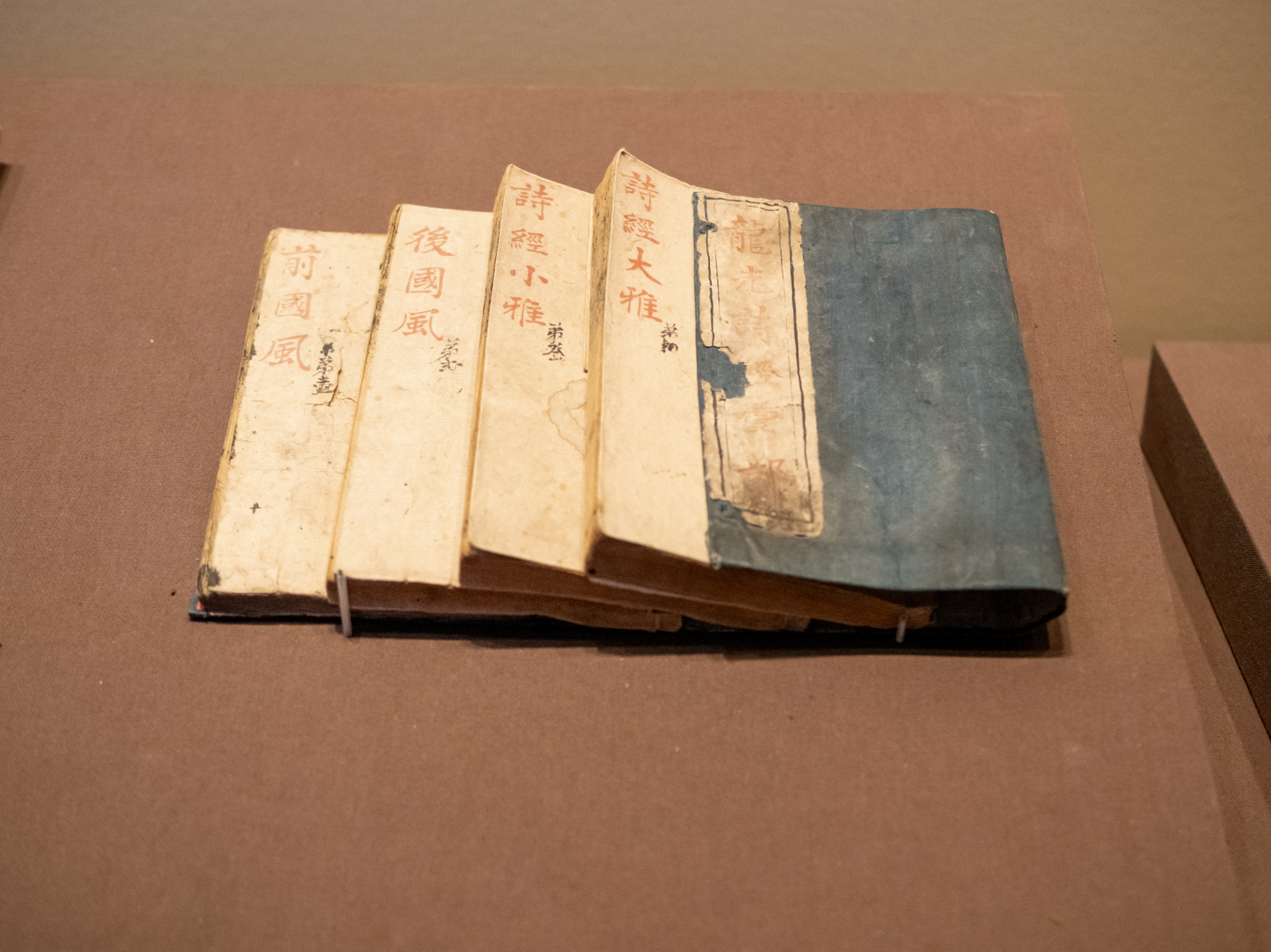
The Jitian Ceremony (籍田典禮)
According to the rites of the Zhou dynasty, every spring the Son of Heaven (天子, the sacred monarchial and imperial title of the sovereign) was required to perform a personal plowing ceremony, urging agricultural officials to lead farmers in diligent cultivation. This ritual was known as "Jitian" (籍田), which reflects the great importance the kings of Zhou Dynasty placed on farming.
The poem "Yi Xi (《噫嘻》)" in the "Classic of Poetry" depicts the scene of King Cheng of Zhou (周成王, 1055 BC – 1022 BC) conducting the spring plowing Jitian ceremony and organizing large-scale agricultural production. The poem reads as follows:
Lead these farmers,
率時農夫,
to sow all kinds of grains.
播厥百穀。
Vigorously cultivate your private fields,
駿發爾私,
Extending over thirty li.
終三十里。
King Cheng admonished his officials to swiftly lead the farmers, diligently sow all manner of grains, and vigorously open up the fields, extending to a radius of thirty li (里, a traditional Chinese unit of distance).
Farming and Sericulture
Another portion of the "Classic of Poetry" consists of works describing farming and sericulture in Zhou dynasty society, among which "The Seventh Month (《七月》)" from "The Ode of Bin (豳風)" is the longest and most representative.
"The Seventh Month" opens with the lines "In the seventh month of Chinese Calendar, the Fire Star1 passes on; In the ninth month, clothes are handed out, (七月流火,九月授衣)," and goes on to depict rural life through the four seasons. Ancient farmers began repairing and sharpening their plowing tools in the first month, and headed to the fields to work in the second month before the bitter cold had yet retreated. This was followed by silkworm raising and mulberry picking, hemp spinning, weaving and dyeing, harvesting crops, hunting and military training, repairing houses and brewing wine, and finally the cutting of ice for sacrificial offerings and preparations for the New Year. The "Book of Han · Geography Records (《漢書·地理志》)" states: "The poem 'The Ode of Bin' records the fundamentals of clothing and food sources—farming and sericulture—with great completeness and detail (豳詩言農桑衣食之本甚備)." Indeed, the poem vividly and concretely reflects the daily life of the Zhou people, a life inseparable from agricultural work.
Homesickness and Love of the Land
Agricultural life cultivated in the Zhou people a deep attachment to their homeland and a longing for a settled, peaceful existence. However, the wars between the Zhou dynasty and foreign tribes disrupted both farming and family life. Even in times of peace, walls had to be built and border regions garrisoned to defend against foreign invasion. From these circumstances arose the many poems in the "Classic of Poetry" about war and corvée. "Bao Yu (《鴇羽》)" gives voice to such suffering:
The king's corvée knows no end;
王事靡盬,
I cannot return home to till the millet and sorghum.
不能藝稷黍,
What then shall my aged parents rely upon to survive?
父母何怙﹖
Oh! Vast and boundless heavens above,
悠悠蒼天,
when shall I ever find a place to rest and call my own?
曷其有所﹖
The duties imposed by the authorities were endless, forcing those in service to remain far from home for long periods. Their fields lay abandoned and untended, leaving them unable to provide for their aging parents — a source of profound anguish and grief.
Likewise, "Zhi Hu (《陟岵》)2" is also a poem about labor service away from home. In this poem, the poet's brush does not directly depict the feelings of the laborer, but instead imagines how his family members miss him:
Climbing the lush and verdant mountain high, I gaze toward my father in my homeland far away. It seems I hear my father's sighing cry: "Alas! My son serves far away, Toiling day and night without rest or reprieve. May you take care above all else, Come home to me — do not linger and leave!"
陟彼岵兮,瞻望父兮,父曰嗟予子行役,夙夜無已,上慎旃哉,猶來無止。
Climbing the barren mountain, bare of tree, I gaze toward my mother in my homeland far away. It seems I hear my mother's plea: "Alas! My youngest son serves far away, Rushing day and night without sleep or ease. May you take care above all else, Come home to me — do not abandon us, please!"
陟彼屺兮,瞻望母兮,母曰嗟予季行役,夙夜無寐,上慎旃哉,猶來無棄。
Climbing to the top of the high ridge, gazing toward my elder brother in my homeland. It is as though I can hear my brother's sighs: Ah! My younger brother serves far away—morning and night, stay close to your companions, never wander alone. Take good care of yourself, I beg of you; come home safely, and do not perish in a distant land!
陟彼岡兮,瞻望兄兮,兄曰嗟予弟行役,夙夜必偕,上慎旃哉,猶來無死。
The father, mother, and elder brother at home repeatedly urge their loved one—through the phrases "猶來無止" (do not linger and leave), "猶來無棄" (do not abandon us), and "猶來無死" (do not perish)—not to stay long in a foreign land, not to be buried in a strange place, and above all to return home safely. Reading the poem as a whole, its indirect expression carries profound emotion, fully conveying the suffering brought by war while also evoking the conscript's deep longing for home.
The agricultural and sedentary way of life that has prevailed since the Zhou dynasty did indeed "cultivate in the Chinese people a deep sense of attachment to their native land and reluctance to leave it—a spirit of diligence and steadfast preservation rooted in agricultural production."3 This sentiment of cherishing one's homeland and being reluctant to relocate has become a cultural characteristic unique to the Chinese nation.
Reference
1. The fire star refers to Antares, which the ancient Chinese called "大火星".
2. The literal meaning of "陟岵" is to climb a mountain covered with vegetation. It later became a dedicated literary allusion expressing longing for one's father; In contrast, "陟屺 (Zhi Qi)" means climbing a barren mountain devoid of vegetation, and later evolved to express longing for mother.
3. Original text "培養了中國人那種植根於農業生產的安土重遷、勤勞守成的濃重的鄉土情蘊。"
趙明主編︰《先秦大文學史》(吉林:吉林大學出版社,1993),頁267。
All articles/videos are prohibited from reproducing without the permission of the copyright holder.
SHARE THIS




 Thank you for your like.
You’ve liked this article. Please browse more articles you may like!
people have liked this article/video
Thank you for your like.
You’ve liked this article. Please browse more articles you may like!
people have liked this article/video
Welcome to leave a message:
Please Sign In/Sign Up as a member and leave a message