

The Cognitive Concepts of Yin-Yang and the Five Elements
The cognitive concepts of Yin-Yang and the Five Elements were fundamental ideas used in ancient times to explain the laws governing the movement of all things in the universe and their intrinsic relationships. Ancient medicine, agriculture, mathematics, astronomy, and even the classification of living organisms were all largely permeated by the cognitive concepts of Yin-Yang and the Five Elements.
Conceptual Origins
The concept of "Yin and Yang (陰陽)" originated from the observation of sun-facing (向陽, Xiang Yang) and shade-facing (背陰, Bei Yin) sides. The “Classic of Poetry (《詩經》)” is one of the more reliable early texts, in which references to " Yin and Yang " primarily denote the sun-facing southern slopes (南麓) and the shade-facing northern slopes of mountains (北麓), as well as the contrasting concepts derived from these observations, such as darkness and brightness, cold and warmth.
According to the “Discourses of the States· Discourses of Zhou (《國語·周語》)”, in the second year of King You of Zhou (周幽王, 795 BC - 771 BC)'s reign (780 BC), Bo Yangfu (伯陽父) used the interaction of Yin and Yang concepts to explain the causes of earthquakes. The “Guanzi (《管子》)” held that the alternation of the four seasons was the result of the mutual waxing and waning of Yin and Yang. By the end of the Spring and Autumn period, the concept of Yin and Yang was gradually applied to the realm of human society to explain the relationships of opposition and interdependence between things.
The theory of the "Five Elements" (五行, Wuxing) in its most complete form first appears in the "The Great Law" (洪範, Hong Fan) chapter of the “Book of Documents (《尚書》)”. This chapter records the fundamental principles of governance that Jizi (箕子, also called as “Xuyu [胥餘]”), a member of the Shang royal family (商朝王室), expounded to King Wu of Zhou (周武王, ? – c.1043 BC). The "Five Elements" mentioned therein actually referred to the ruler's management and application of five fundamental substances: Water (水, Shui), Fire (火, Huo), Wood (木, Mu), Metal (金, Jin), and Earth (土, Tu).
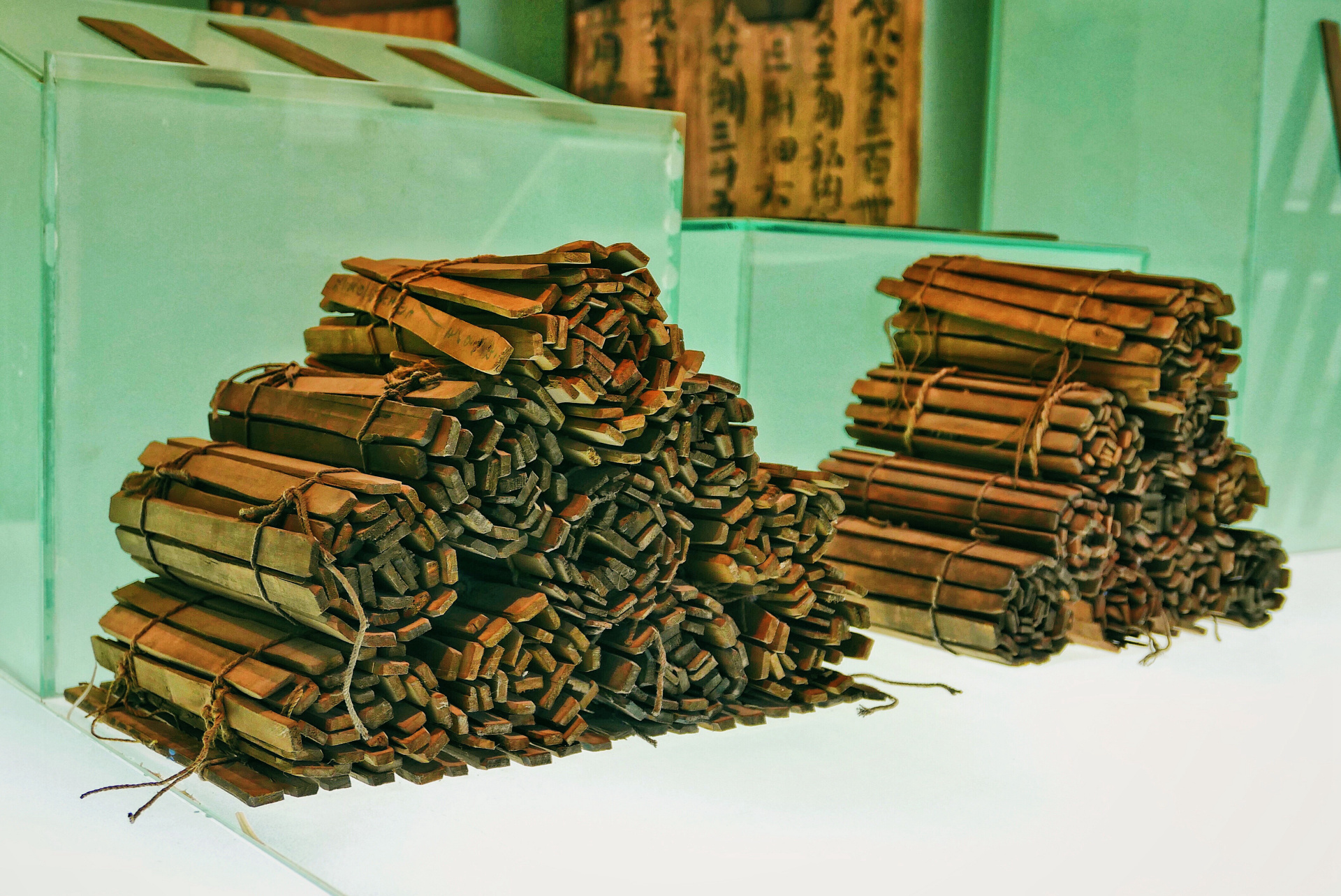
In the "Commentary of Zuo· Duke Zhao, Year 31 (《左傳·昭公三十一年》)" (511 BC), Shi Mo (史墨), the Grand Historian of Jin State (晉國, 11th century BC – 369 BC) who was skilled in divination, predicted that if Wu State (吳國, 12th century BC – 473 BC) attacked Chu State (楚國, c.1030 BC – 223 BC) six years later, it would certainly fail, because "Fire overcomes Metal (火勝金)." This shows that the concept of the "mutual conquest of the Five Elements (五行相剋)" already existed during the Spring and Autumn period (春秋時期, 770 BC – 476 BC). However, the theoretical framework of mutual conquest among the Five Elements was not built through serious study of the actual relationships in natural laws, but rather through attempts to correlate social affairs and phenomena with the cognitive framework of the Five Elements. During the Warring States period (戰國時期, 475 BC – 221 BC), Zou Yan (邹衍) incorporated the "Four Seasons (四時)," "Five Directions (五方)," "Five Tones (五音)," and "Five Flavors (五味)" into the system of the Five Elements, and even applied the theory of "Five Elements Succession (五行換代)" to historical perspectives, proposing the "Theory of the Succession of Five Virtues (五德終始說)," in an attempt to explain the historical developmental principles underlying dynastic change.
Harmonious Waxing and Waning
Taking medicine as an example, according to the "Commentary of Zuo· Duke Zhao, the First Year (《左傳·昭公元年》)" (541 BCE), the renowned physician Qin State(秦國, 9th century BC – 221 BC), Yi He (医和) believed that illness originated from the disharmony of the six Qi (六氣失和) — "Yin (陰), Yang (陽), Wind (風), Rain (雨), Darkness (晦), and Brightness (明)" — already regarding the harmony and balance of yin and yang as a factor in human health. Furthermore, according to the "Records of the Grand Historian · Biography of Bian Que and Cang Gong (《史記·扁鵲倉公列傳》)" the celebrated physician Bian Que (扁鵲, 407 BC – 310 BC) of the Spring and Autumn period also diagnosed illnesses using the medical principles of Yin and Yang.
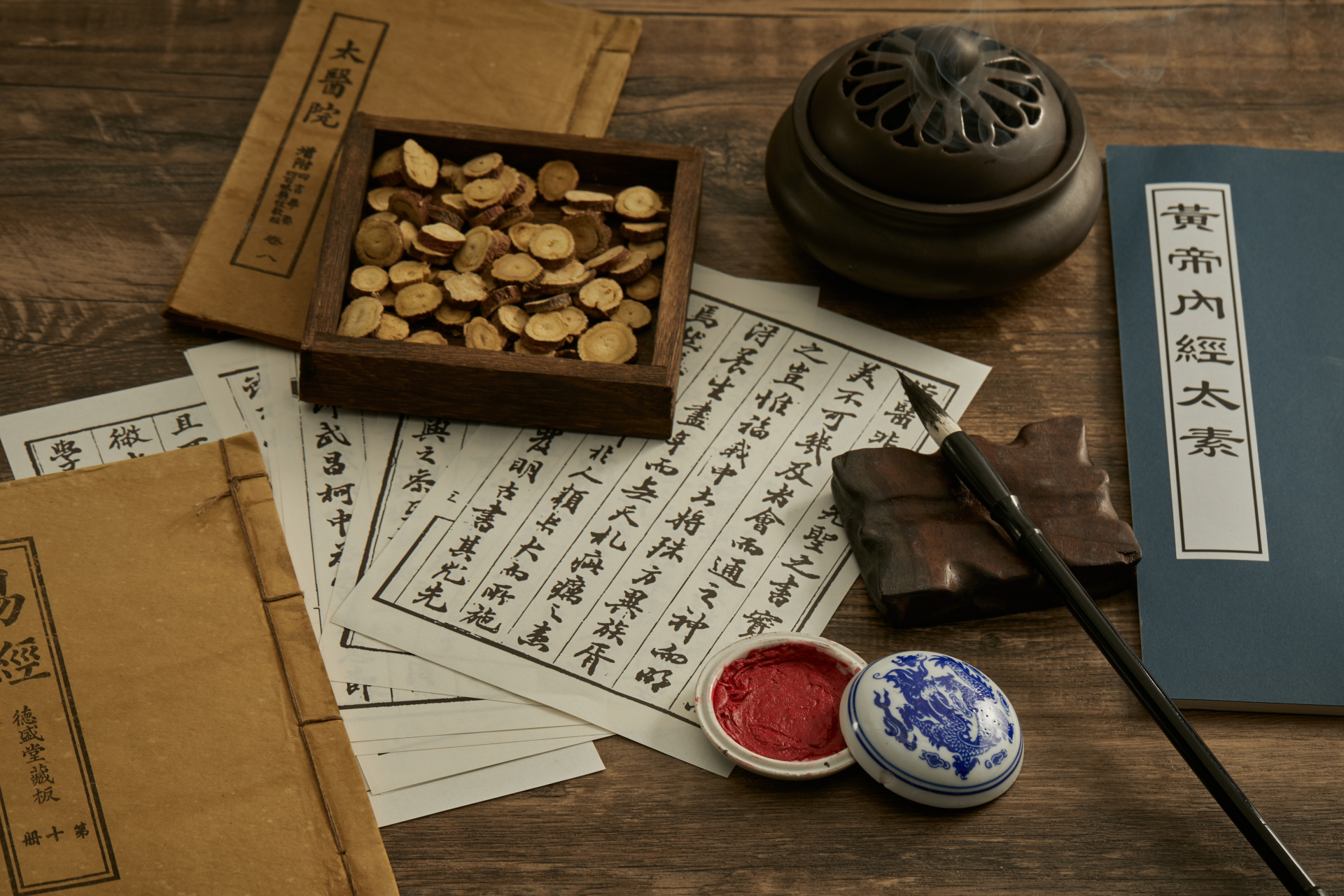
During the Han Dynasty (漢朝, 202 BC – 9 AD; 25 – 220 AD), several ancient medical classics were successively compiled. Among them, the "Esoteric Scripture of the Yellow Emperor · the Fundamental Questions (《黃帝內經·素問》)" regarded Yin and Yang as "the great way of heaven and earth (天地之大道)" and "the guiding principle of all things (萬物之網紀)," indicating that the relationship between Yin and Yang constitutes the fundamental principle of medicine. According to the relevant theories, an imbalance of Yin and Yang (陰陽失衡) is the cause of illness, and the way to treat disease is to rectify and rebalance Yin and Yang (調正陰陽). As for the method of rectification, it involves reducing excess and supplementing deficiency (瀉實補需) — eliminating what is superfluous and replenishing what is lacking. The means of achieving this balance through tonification and reduction can involve the use of medicinal herbs as well as acupuncture.
Mutual Generation and Mutual Restraint
However, the theory of Yin and Yang could only provide a general account of the human body's health condition, and was insufficient to explain the pathological relationships within the body's internal organs. Consequently, Han dynasty medicine incorporated the theory of the Five Phases, associating the five elements with the five viscera of the human body, and from this developed a formulaic system that integrated related concepts such as the "Five Colors (五色)" and "Five Flavors (五味)" into the framework of medicine. For instance, the "Esoteric Scripture of the Yellow Emperor" notes that sour-flavored foods can affect the liver, whose corresponding color is green and whose associated phase is Wood. Based on this understanding, there emerged at the time a theory known as "diagnosing illness through the five colors (五色診病)," which held that the location of a disease could be determined by observing the complexion and coloration of the patient's body surface. Furthermore, since the five flavors were associated with the five viscera, attention had to be paid to the properties of medicines and foods in order to achieve the best therapeutic effects. For example, the "Esoteric Scripture of the Yellow Emperor · the Spiritual Pivot (《黃帝內經·靈樞》)" states that those suffering from heart disease should eat wheat and mutton, on the grounds that wheat and mutton are bitter in flavor, and that "bitterness nourishes the heart." As for why mutton should be considered bitter in flavor, or why bitterness should be able to treat the heart, no further explanation is provided.
Inertial Thinking
Under the inertial thinking of the theory of Yin-Yang and the Five Elements, other fields of science were influenced to varying degrees. For instance, the "Book of Han · Treatise on Harmonics and Calendar (《漢書·律曆志》)" divided numerical units into five levels — ones, tens, hundreds, thousands, and ten-thousands — length units into five levels — Fen (分), Cun (寸), Chi (尺), Zhang (丈), and Yin (引) — and capacity units into five levels — Yue (龠), Ge (合), Sheng (升), Dou (斗), and Hu (斛) — while emphasizing that all these unit systems conformed to the "image of Yin and Yang (陰陽之象)." The "Huainanzi · Treatise on Topography (《淮南子·地形訓》)" further used the theory of the Five Elements to explain the distribution of various animals: for example, the East, associated with the color green, governs the liver, and abounds in tigers and leopards; the North, associated with the color black, governs the kidneys, and abounds in dogs and horses. In addition, it was widely believed during the Han dynasty that Heaven used the qi of the Five Elements to generate all things, and that all things contained the qi of the Five Elements. Since the Five Elements overcome one another, animals too were each subject to control by others — for instance, the tiger belongs to Wood, while the dog, ox, and sheep belong to Earth; since Wood overcomes Earth, the tiger can subdue the dog, ox, and sheep.
It is evident that the application of Yin-Yang and the Five Elements in the realm of science was, in practice, an attempt to establish intrinsic connections among complex social problems and natural phenomena based on superficial and one-sided observations, in order to find ways of resolving related issues. However, since the underlying theories originated from far-fetched, inertial thinking and lacked an empirical foundation, they were unable to give rise to science and technology in any genuine sense.
Such a mode of cognition, devoid of scientific basis, is difficult to find convincing. Indeed, regarding the ancient belief that the rat belongs to Water and the horse belongs to Fire, the Eastern Han thinker Wang Chong (王充, 27 – c. 97 AD) could not help but raise a challenge in his "Lunheng (《論衡》)": "If Water overcomes Fire, why does the rat not chase the horse? (水勝火,鼠何不逐馬) "
All articles/videos are prohibited from reproducing without the permission of the copyright holder.
SHARE THIS




 Thank you for your like.
You’ve liked this article. Please browse more articles you may like!
people have liked this article/video
Thank you for your like.
You’ve liked this article. Please browse more articles you may like!
people have liked this article/video
Welcome to leave a message:
Please Sign In/Sign Up as a member and leave a message