"Xunzi": A Landmark
in the Earliest Paradigm of Chinese Essay Writing
In the history of pre-Qin prose, it was not until Xunzi that the writing of essays in the strict sense began to take shape.
It is worth taking a brief look back. The period from the "Book of Documents" (《尚書》) to the "The Commentary of Zuo" (《左傳》) was the historiographical stage in the development of Chinese prose, when prose was primarily devoted to recording history or contemporary events.
Beginning with the "Analects" (《論語》), Chinese thought entered the age of the various philosophical schools—Confucian (儒), Mohist (墨), Daoist (道), and Legalist (法)—and the writings of this period focused on recording the philosophical ideas of the masters.
From the scattered, fragmentary remarks of the Analects, to the sweeping, unrestrained eloquence of the "Mencius" (《孟子》), to the philosophical aphorisms of the "Laozi" (《老子》), these works took scattered flashes of insight and shaped them into full-length treatises, forming a complete world of philosophical thought in which many points of light gather around a central luminary. They can be regarded as setting forth ideas in the form of integrated monographs, but they still do not constitute an essay-style of writing in the modern sense.
The chapters of the "Zhuangzi" (《莊子》) can be linked together as a whole or stand on their own. Taken apart, they can be read as individual essays, each a philosophical reflection that roams through an imaginative world, and together they show the early beginnings of argumentative writing. The true milestone that established the paradigm of the argumentative essay in the evolution of pre-Qin prose, however, should be credited to Xunzi (荀子, 316 BC – 237 BC).
Xunzi , whose personal name was Kuang (況) and courtesy name was Qing (卿), was a native of the state of Zhao (趙國) during the Warring States period. At the age of fifty, he traveled to the state of Qi (齊國) to study, where he served as Libationer (head scholar) of the Jixia Academy (稷下祭酒). He later went to the state of Chu (楚國), where Lord Chunshen (春申君, ? – 238 BC) appointed him as the director of Lanling (蘭陵令). In his later years, he lived at home in Lanling, teaching disciples and engaging in writing. Li Si (李斯, ? – 208 BC) and Han Fei (韓非, 208 BC – 233 BC) were both his students. Xun Kuang may have been a descendant of the Marquis of Xun of the Zhou dynasty (周郇伯, a son of King Wen of Zhou who was enfeoffed at Xun [郇]), while his intellectual lineage may trace back to Zigong, a second-generation disciple of Confucius. The master-disciple lineage is one of the distinctive educational traditions of China.
Mencius advocated the Way of King (王道), winning people over through virtue, whereas Xunzi combined the Way of King with the Hegemonic Way (霸道). Most of the book now known as the Xunzi was written by Xun Kuang himself. Besides Han Fei and Li Si, his disciples included Mao Heng (毛亨) and Zhang Cang (張蒼), among others. This shows that Xunzi spent most of his life working as a scholar and teacher, and so he had a profound understanding of education and learning.
In the middle and late Warring States period, Legalist thought flourished. In its formative stage, it began as a matter of individual exploration: Shang Yang's (商鞅, 390 BC – 338 BC) reforms embodied Legalism as a practical philosophy, while Han Fei expounded Legalist ideas through his writings. Xunzi, for his part, began running a private school, using private teaching and private writing to explore the advantages and drawbacks of Confucianism and Legalism.
Xunzi wrote the Xunzi in thirty-two chapters, which are essentially independent essays that nonetheless echo one another. Each chapter argues for a single central thesis: the Chapter "Encouraging Learning" (〈勸學〉), for instance, is an argument for the importance of "encouraging learning," while the "Discourse on Heaven" (天論) is a relatively systematic argument about "Heaven." Moreover, Xunzi often captures the crux in a few words, stating his central thesis explicitly at the very opening.
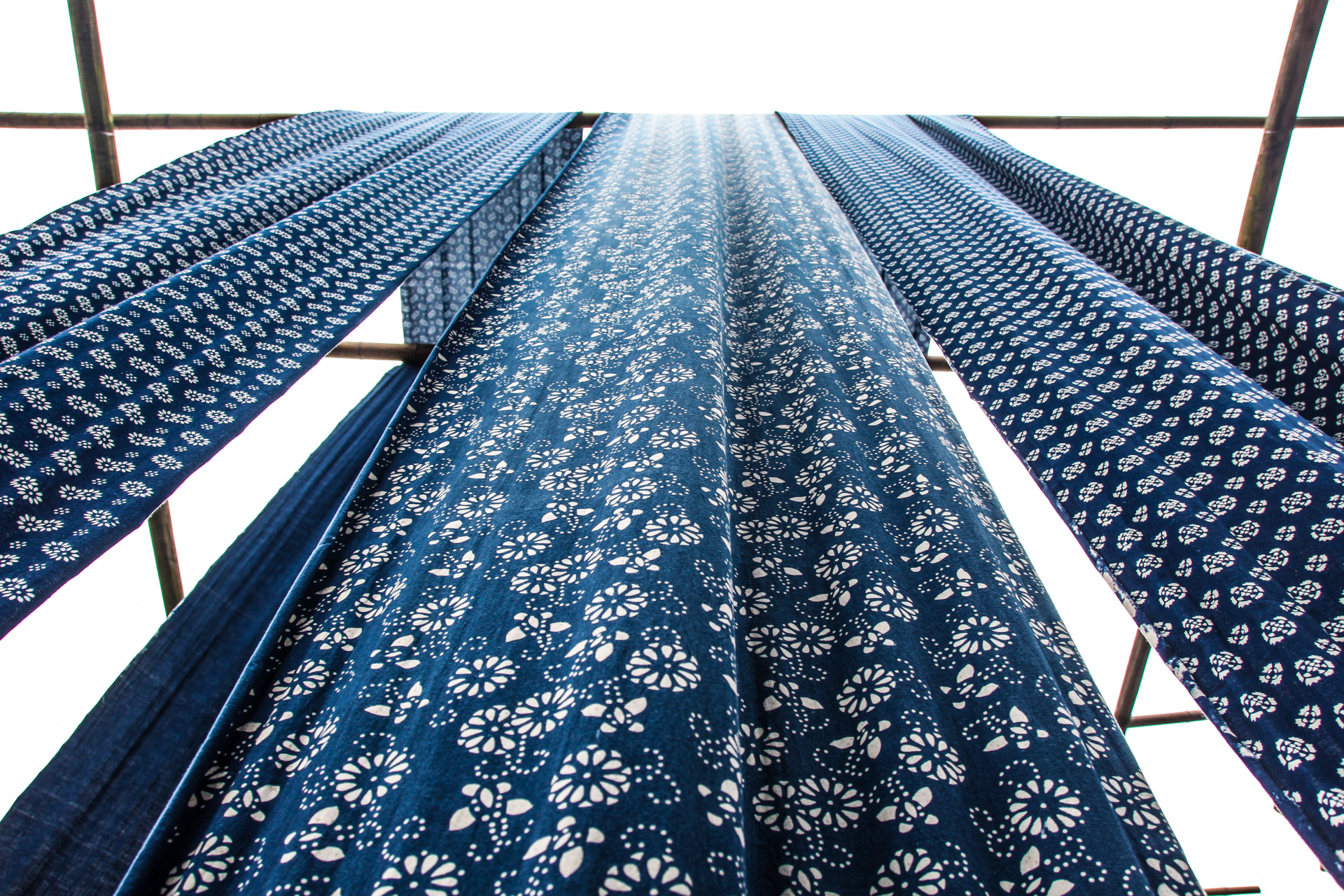
"Encouraging Learning" begins, "Learning must never cease," which is its thesis; the "Discourse on Heaven" begins, "Nature operates according to its own fixed laws. It does not exist just because Yao was a wise ruler, nor does it vanish because Jie was a tyrant (天行有常,不為堯存,不為桀亡)." He then supports the core thesis with metaphors, quotations, and other devices, developing the argument layer by layer. For example, he sums up the importance of learning with "Indigo is extracted from the indigo plant, yet its color is deeper than that of the plant itself; ice is formed from frozen water, yet it is colder than water (青,取之于蓝,而青于蓝;冰,水为之,而寒于水)." And he demonstrates the dialectical relationship between learning and thinking with "I once spent whole days in thought, yet it was not worth the gains of a moment's study; I once stood on tiptoe to gaze into the distance, yet it was not as good as climbing to a high place for a broader view (吾嘗終日而思矣,不如須臾之所學也;吾嘗跂而望矣,不如登高之博見也)."
Xunzi's "Encouraging Learning" can be regarded as the first comprehensive scholarly essay in China to treat education and learning systematically, and also as a work of fine literary prose. Before it, Confucius and Mencius had both touched on education and learning, but mostly in scattered remarks that never formed a system. Moreover, their discussions were framed chiefly in terms of the relationship between learning and entering government service.
Xunzi's treatment, by contrast, has the character of professional education. His philosophy can be seen as a summation of Chinese thought as it entered the late Warring States period, and so the traces of the Confucian, Mohist, Daoist, and Legalist schools are clearly visible in his ideas. Especially worth mentioning is his systematic and classic exposition of "learning (學)," which is the central question of Confucian education.
Moreover, and more importantly, Xunzi holds the position of a pioneer in the literary form of the "Fu" (賦, poetic exposition). As Liu Xie writes in "The Literary Mind and the Carving of Dragons" (《文心雕龍》): "So the "Fu" genre traces its origins to the poets of the "Classic of Poetry", and was then developed and expanded in scale in the "Songs of Chu". By the time Xunzi wrote his "Fu" on "Ritual" and "Wisdom," and Song Yu composed his "Wind" and "Fishing," the name "Fu" was formally established, drawing a clear line between this genre and the "Classic of Poetry"... The "Fu" often opens with a dialogue between host and guest, strives to depict the sounds, appearances, and forms of things, and spares no effort in the lavish elaboration of language. This was probably the beginning of the "Fu" breaking away from the "Classic of Poetry" to become an independent genre, and the point at which it received its name (然賦也者,受命于詩人,而拓宇于《楚辭》也。于是荀况《禮》《智》,宋玉《風》《釣》,爰錫名號,與詩畫境,……遂客主以首引,極聲貌以窮文,斯蓋別詩之原始,命賦之厥初也)."
Xun Kuang wrote the "Chapter on Fu" (《賦篇》), which comprises five fu on "Ritual (《禮》)", "Wisdom (《智》)", "Cloud (《雲》)", "the Silkworm (《蠶》)", "the Needle (《箴》)". It can be regarded as a link in the chain of the transition from the "Songs of Chu" of Qu Yuan (屈原, 343 BC – 278 BC) to the Fu as a literary form. Each of Xunzi's Fu describes a single thing, but instead of explaining it, he adopts the form of a dialogue riddle, naming at the end what he has actually been describing, and at the same time lending the piece a tone of expressing his own aspirations through the object. The silkworm "Nurture the elderly and rear the young (養老長幼)," yet "Once the achievement is complete, the one who accomplished it fades away as well (功立而身廢)."; the needle "Below, it can supply ordinary people with clothing to sew and cover their bodies; above, it can adorn the ceremonial robes of emperors. Its achievements are vast, yet it never flaunts its worth. When it is needed, it performs its function; when it is not, it sits idle and out of sight (下覆百姓,上飾帝王。功業甚博,不見賢良。時用則存,不用則亡)." These are the distinctive features of Xunzi's Fu.
Among the three masters, "Laozi", "Zhuangzi", and "Xunzi", the movement of prose toward parallel prose (駢文) shows a marked leap forward.
"Encouraging Learning" in the "Xunzi" alternates between parallel prose and free prose, and it contains many elegant parallel-prose lines, such as "So timber becomes straight once it has been corrected with an ink line, and a metal blade becomes sharp after being honed on a whetstone (故木受绳则直,金就砺则利)," and "Pile up enough earth to form a mountain, and wind and rain will arise from it; gather enough water to form a deep pool, and dragons will grow within it... Therefore, without accumulating small steps, you cannot travel a thousand miles; without collecting small streams, you cannot form rivers and seas. Even a thoroughbred, leaping with all its might, cannot cover ten paces in a single bound; yet a worn-out nag, plodding on for ten days, can go the distance — success lies in not stopping. If you give up carving halfway, even rotten wood cannot be snapped in two; if you keep carving without letting up, even metal and jade can be engraved with patterns (積土成山,風雨興焉;積水成淵,蛟龍生焉;……故不積跬步,無以至千里;不積小流,無以成江海。騏驥一躍,不能十步;駑馬十駕,功在不舍。鍥而舍之,朽木不折;鍥而不捨,金石可鏤)." Nearly every line is in parallel style.
"Encouraging Learning" is a grand, sweeping discourse that systematically sets out Confucian educational thought. It first argues that learning must never cease and how important learning is to human life. Moreover, the essay as a whole is rigorous in its logic, with fully developed arguments and ample supporting evidence, and its metaphors are vivid and lively. The whole piece flows in a single sweep, with a momentum like a rainbow arching across the sky.
The opening line declares at once: "The gentleman says: learning must never cease (君子曰:學不可以已)." As the focal point of the whole essay and its central claim, this sentence rings out like a stern call to attention. Why must learning never cease?
Xunzi strings together several analogies: " Indigo is extracted from the indigo plant, yet its color is deeper than that of the plant itself; ice is formed from frozen water, yet it is colder than water. The wood was originally straight enough to match the plumb line, but when it is heated over a fire and bent into a wheel, its curve conforms to the compass. Even if it later dries out in the sun, it will not become straight again, because the shaping by fire has made it so. Likewise, wood becomes straight when it is corrected with the ink line, and a metal blade becomes sharp when it is ground on a whetstone. A gentleman who studies widely and examines and reflects on himself every day will grow wise and clear-minded, and his conduct will be free of faults (青,取之于蓝,而青于蓝;冰,水为之,而寒于水。木直中绳,輮以为轮,其曲中规;虽有槁暴,不复挺者,輮使之然也。故木受绳则直,金就砺则利,君子博学而日参省乎己,则知明而行无过矣)."

Only through learning can a person improve, make great leaps, and avoid remaining stuck as the plant and the water, or even as the indigo and the ice. Only through learning can a person who is evil by nature become a perfect one. Only through learning can one know how high the heavens are and how thick the earth is, and avoid being like the frog at the bottom of a well.
What is the relationship between learning and thinking? "I once spent whole days in thought, yet it was not worth the gains of a moment's study; I once stood on tiptoe to gaze into the distance, yet it was not as good as climbing to a high place for a broader view (吾嘗終日而思矣,不如須臾之所學也;吾嘗跂而望矣,不如登高之博見也)." Thinking cannot replace learning. Learning is the high ground, the favorable wind, the carriage and horses, and the boat and oars of a person's growth and progress: " Climbing to a high place and waving does not make one's arms any longer, yet people far away can see them; shouting with the wind does not make one's voice any stronger, yet the listeners hear it all the more clearly. Those who rely on carriages and horses are not especially quick on their feet, yet they can travel a thousand miles; those who rely on boats and oars are not good swimmers, yet they can cross rivers. The nature of the gentleman is no different from that of ordinary people; he is simply good at making use of external things (登高而招,臂非加長也,而見者遠;順風而呼,聲非加疾也,而聞者彰。假輿馬者,非利足也,而致千里;假舟楫者,非能水也,而絕江河。君子生非异也,善假于物也)."
Learning is not merely a matter of facing books; more importantly, it means choosing a good learning environment, good teachers, and good classmates: "Therefore, a gentleman, when settling down, will surely choose a virtuous neighborhood, and when making friends, will surely seek the company of worthy people. This is how one guards against depravity and draws closer to what is upright and correct. Plants and trees grow together with their own kind, and birds and beasts gather in flocks and herds of their own kind; all things attach themselves to their own kind (故君子居必擇鄉,游必就士,所以防邪辟而近中正也。草木疇生,禽獸群焉,物各從其類也)."
Learning is a gradual process, a process of lifelong progress: " Pile up enough earth to form a mountain, and wind and rain will arise from it; gather enough water to form a deep pool, and dragons will grow within it. By continually accumulating good deeds and cultivating noble character, one's spiritual insight and wisdom will naturally flourish, and the mind of a sage will be fully realized. Therefore, without accumulating small steps, you cannot travel a thousand miles; without collecting small streams, you cannot form rivers and seas. Even a thoroughbred, leaping with all its might, cannot cover ten paces in a single bound; yet a worn-out nag, plodding on for ten days, can go the distance — success lies in not stopping. If you give up carving halfway, even rotten wood cannot be snapped in two; if you keep carving without letting up, even metal and jade can be engraved with patterns (積土成山,風雨興焉;積水成淵,蛟龍生焉;積善成德,而神明自得,聖心備焉。故不積跬步,無以至千里;不積小流,無以成江海。騏驥一躍,不能十步;駑馬十駕,功在不舍。鍥而舍之,朽木不折;鍥而不捨,金石可鏤)." "In ancient times, people studied in order to cultivate themselves; nowadays, people study in order to show off to others and win their praise (古之學者爲己,今之學者爲人)."
The highest realm of learning is learning that has forgotten utilitarian purposes, learning that is for oneself and aesthetic in nature. Once this realm is reached, learning, scholarship, and study become a person's lifelong way of living, the foundation of one's life, and an inexhaustible wellspring of aesthetic experience.
An analysis of Xunzi's "Encouraging Learning" shows that by his time, education in China had reached a fairly flourishing stage, and reading, studying, and teaching had become a fashion. This fashion owed something to the development of education itself, but it was also closely tied to the sharp rise in the status of the Shi (士, scholars) during the Warring States period and the respect that rulers showed to those with a special skill. King Zhao of Yan (燕昭王, 336 BC – 279 BC) built the Golden Terrace to await worthy men; the Lord of Mengchang (孟嘗君, ? – 279 BC), the Lord of Chunshen, and the Lord of Xinling (信陵君, ? – 243 BC) made keeping retainers a common practice; and Su Qin (蘇秦, ? – 284 BC) and Zhang Yi (張儀, 373 BC – 310 BC) studied diligently and rose to become chancellors and generals. The historical account of how Su Qin's sister-in-law was first haughty toward him and later deferential vividly illustrates this point. Consequently, by the late Warring States period, education had become even more prosperous.
After Xunzi, the style of essay writing was developed and extended still further in the hands of the Legalists, such as in the "Han Feizi", and became a hallmark of prose in the post-Hundred Schools era. As Legalist philosophy became state doctrine and the First Emperor of Qin (秦始皇, 259 BC – 210 BC) unified the country, private education and private writing in China, along with the contention of the Hundred Schools of Thought, came to an end.
The "Xunzi" can be regarded as a milestone in the evolution of pre-Qin prose toward parallel prose, and, together with the "Zhuangzi", it became a source of the poetic prose of Qu Yuan's "Songs of Chu".
This article is reprinted from the WeChat official account "Muzhai Literature Lecture Hall
(木齋文學講堂)."
All articles/videos are prohibited from reproducing without the permission of the copyright holder.
SHARE THIS


 Thank you for your like.
You’ve liked this article. Please browse more articles you may like!
people have liked this article/video
Welcome to leave a message:
Please Sign In/Sign Up as a member and leave a message