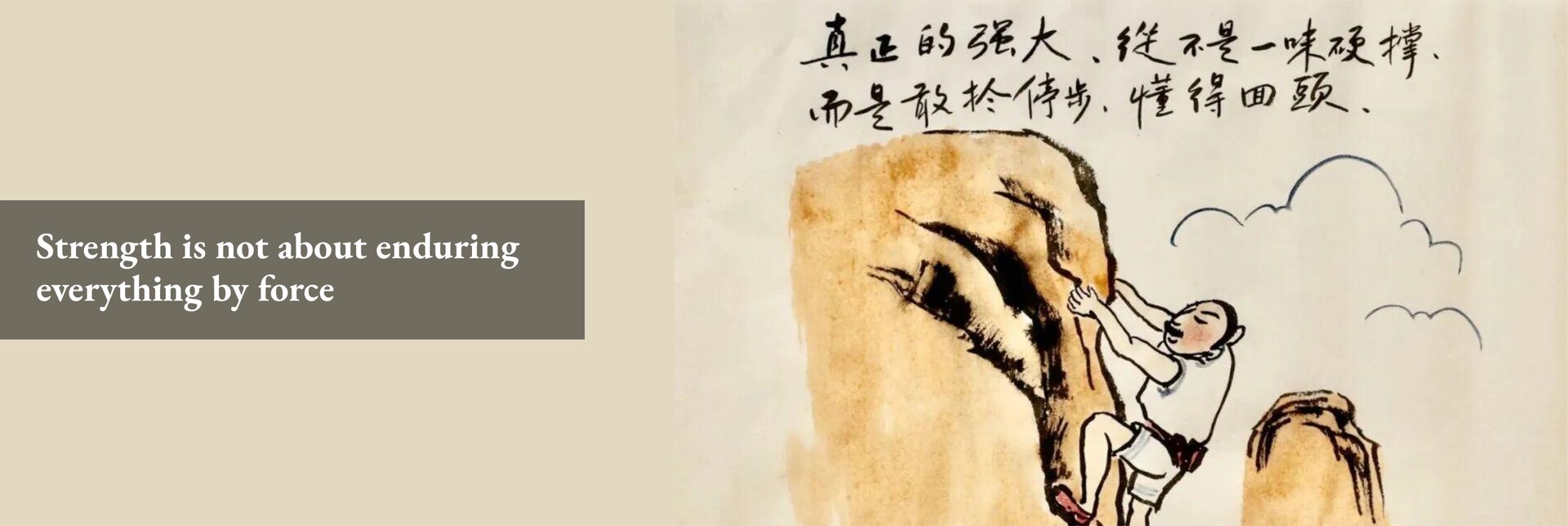
Strength is not about enduring everything by force
“Dragon Soaring in the Sky” (飛龍在天)
Performer: TAM Po-sherk (Chinese vertical bamboo flute, 譚寶碩—洞簫)
Selected from New Century Workshop's music album “Roams the World with Xiao” (《簫行天下》)
When I first began learning the Xiao (洞簫, Chinese vertical bamboo flute), I was young and full of fire, convinced that mastering an art demanded relentless drive and an unstoppable forward charge.
Even when my fingering was clumsy and my rhythm scattered, I refused to stop and correct myself, stubbornly grinding through repetition, determined to brute-force my way past every flaw.
The result was the opposite of what I'd hoped — my mistakes took root, my frustration mounted with every practice session, and progress refused to come.
It was only through years of practice, with enough setbacks piled up and hard lessons etched deep, that I finally began to wise up.
Openly acknowledging one's own weaknesses, humbly seeking guidance, slowing down the pace — the heart, too, grows calm and at ease.
True strength is never about pushing through at all costs, but about daring to pause and knowing when to turn back.
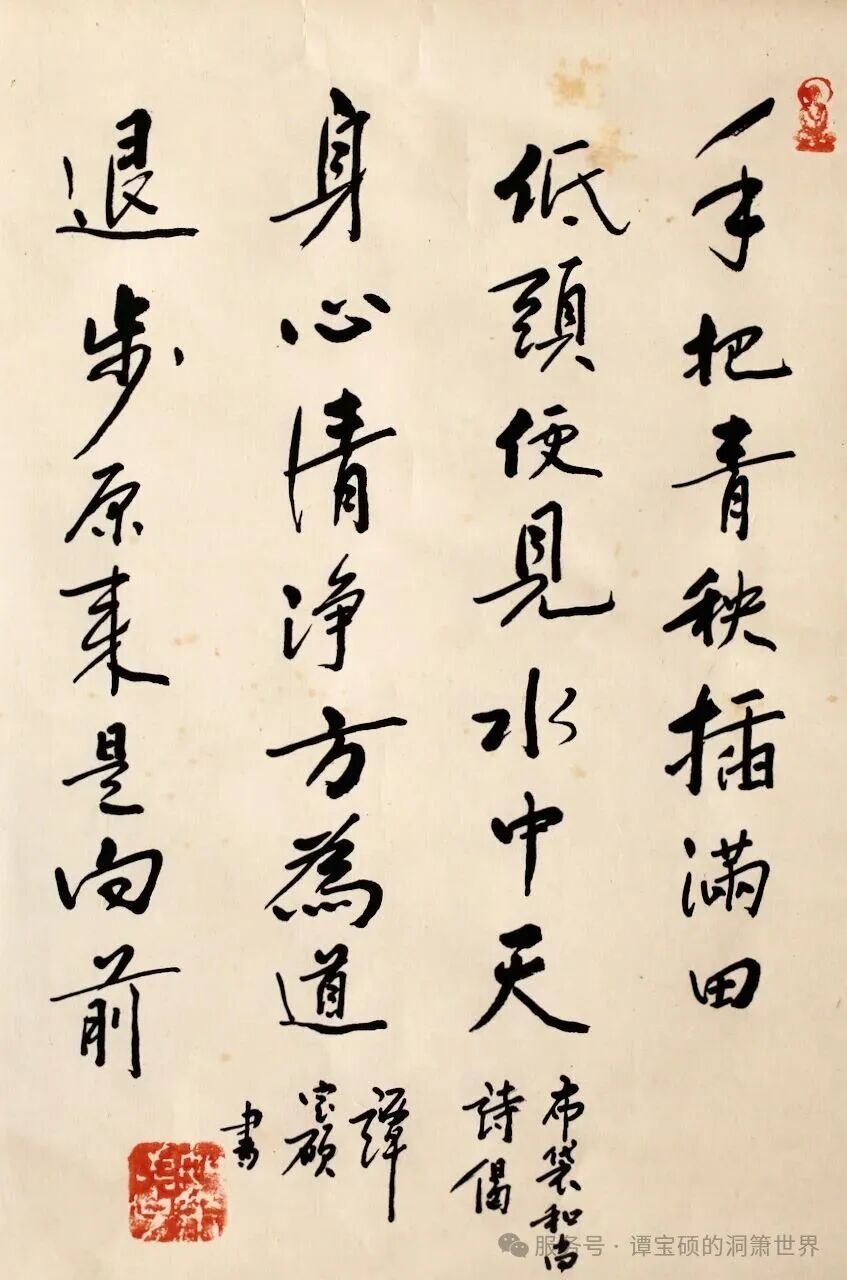
Holding seedlings, planting them across the flooded fields row by row,
bending low to glimpse the vast blue sky mirrored in the water below;
Only when the mind are all free from worldly dust and distraction can one truly grasp the great way,
It turns out that each step taken backward while planting rice is precisely what fills the field with seedlings stretching forward.
手把青秧插滿田,低頭便見水中天;
六根清淨方為道,退步原來是向前。
—— [Later Liang] Qieci (契此,also known as Budai [布袋和尚])
Calligraphy: TAM Po-shek
The practice of art is never purely a technical pursuit. Learning an art should not come at the cost of one's physical and mental well-being. There are many important teachings within Chinese culture. The “Book of Changes (《易經》)”, “Laozi (《道德經》)”, “The Art of War (《孫子兵法》)”... there are countless insights to be found.
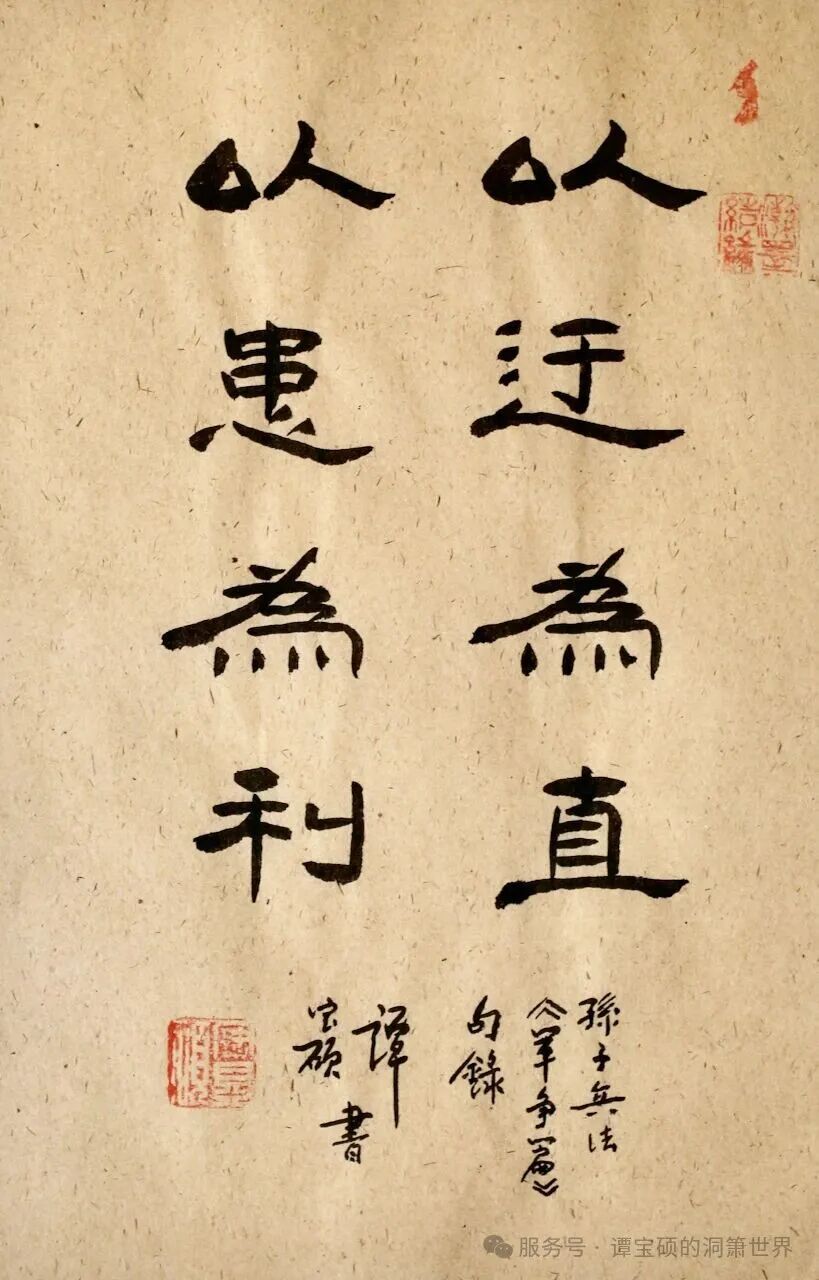
(he most difficult aspect of maneuvering troops to seize the initiative lies in)
Knowing how to turn a winding and roundabout route into a shortcut,
and how to transform adversity and misfortune into advantageous conditions.
以迂為直,以患為利
—“The Art of War: Maneuvering (《孫子兵法·軍爭篇》)”
Calligraphy: TAM Po-shek
I thought of the light method, which means playing with a relaxed, gentle approach. Using the lightest force, the smallest amount of air, and the lowest air pressure possible to produce a soft, quiet tone on the Xiao. This is the best practice method for improving tonal accuracy.
I thought of the slow method, which means slowing down the tempo when practicing difficult passages — and it is highly effective. By reducing the speed, everything becomes easier; correct muscle memory is established, and difficult passages are then resolved with ease.
I thought of the retreat method, which means that when practice has reached a certain level of progress, one should step back and seriously work on the fundamentals. Taking a step back to consolidate the foundation allows technique to advance more steadily and rapidly once a solid base is established.
I thought of the segmentation method, which means cutting the piece being practiced into sections and working on each segment separately. Breaking a piece into smaller fragments helps one focus their energy and tackle each part one by one.
I thought of the "silence method" — plugging one's ears while practicing to play. When hearing is blocked, the sensitivity of other senses increases. Relying on feeling to control one's playing can rapidly improve tone production techniques and lead to more stable playing.
I thought of the "pause method" — stopping technical practice at the right time to absorb other knowledge, cultivate personal refinement, enrich one's inner spiritual world. In doing so, one's art also gains greater depth and breadth.
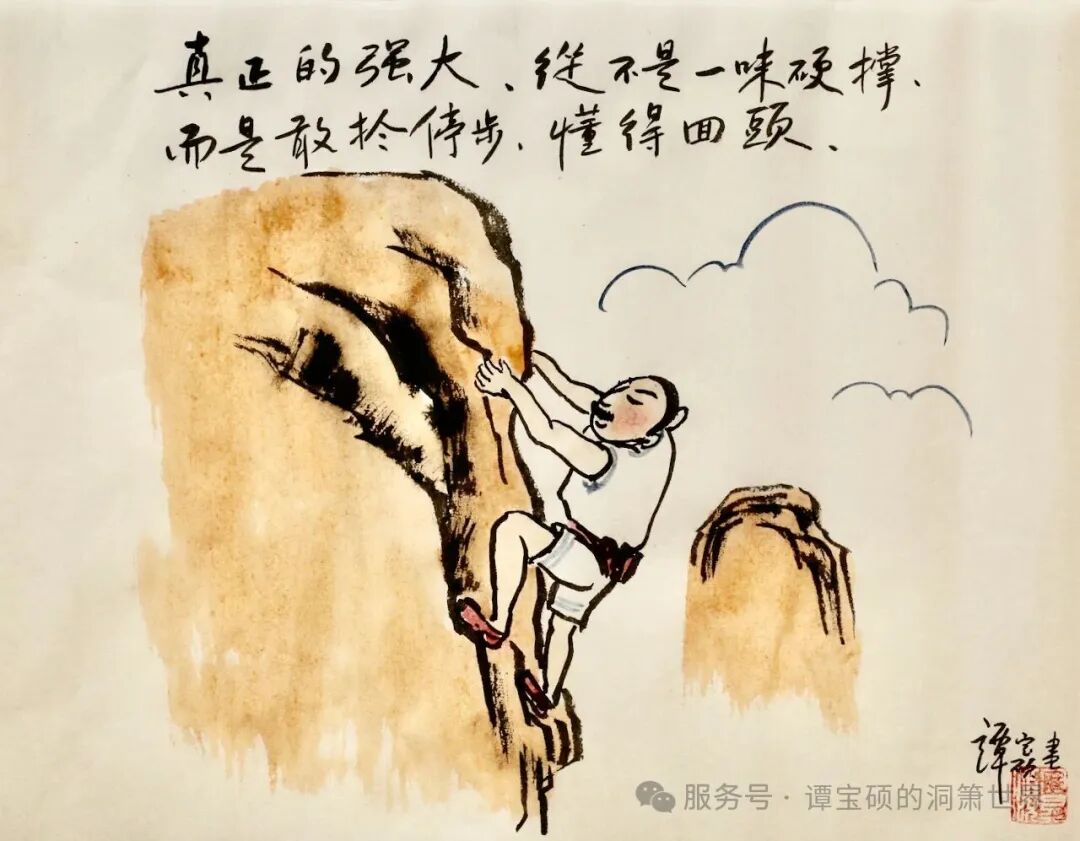
True strength is never about pushing through at all costs, but about having the courage to pause and the wisdom to turn back.
Calligraphy: TAM Po-shek
True strength is never about being perfect in everything or surpassing others in every way.
True progress is never about moving forward without self-reflection or knowing how to look back.
Having the courage to pause, recognizing your own shortcomings, and being willing to correct yourself.
To grow through humility, to move forward with gentleness — this is the most grounded and most enlightened power one can carry through life.
Life is like the Xiao — what matters is not just the breath you put in, but the spaces in between.
All articles/videos are prohibited from reproducing without the permission of the copyright holder.
SHARE THIS




 Thank you for your like.
You’ve liked this article. Please browse more articles you may like!
people have liked this article/video
Thank you for your like.
You’ve liked this article. Please browse more articles you may like!
people have liked this article/video
Welcome to leave a message:
Please Sign In/Sign Up as a member and leave a message