Tian Gong Dan: How Fujian People Celebrate Chinese New Year
The way Malaysian Chinese celebrate Nian年, the Chinese New Year, all the activities from the New Year Eve to the Lantern Festival on the fifteenth of the first month, originated from the series of traditions during the slack farming season over the transition from winter to spring. In the current industrial and commercial society, holidays for the Chinese New Year last three days in general, while Chinese traditional commercial industry perform a ceremony of “kick-off” for the year, so the New Year vacation for them lasts till the fifth or the sixth day for the most. Once the “kick-off” ceremony is done, daily work rhythm resumes and then the holiday atmosphere cools down until the Lantern Festival when a small highlight occurs again. However, for most Hokkiens, another highlight during the over ten days of the Nian celebrations is the Tian Gong Dan天公誕, the celebration of the Birthday of Heaven God Jade Emperor on the ninth day of Chinese New Year.
Photography: Zhang Lizhu (張麗珠)
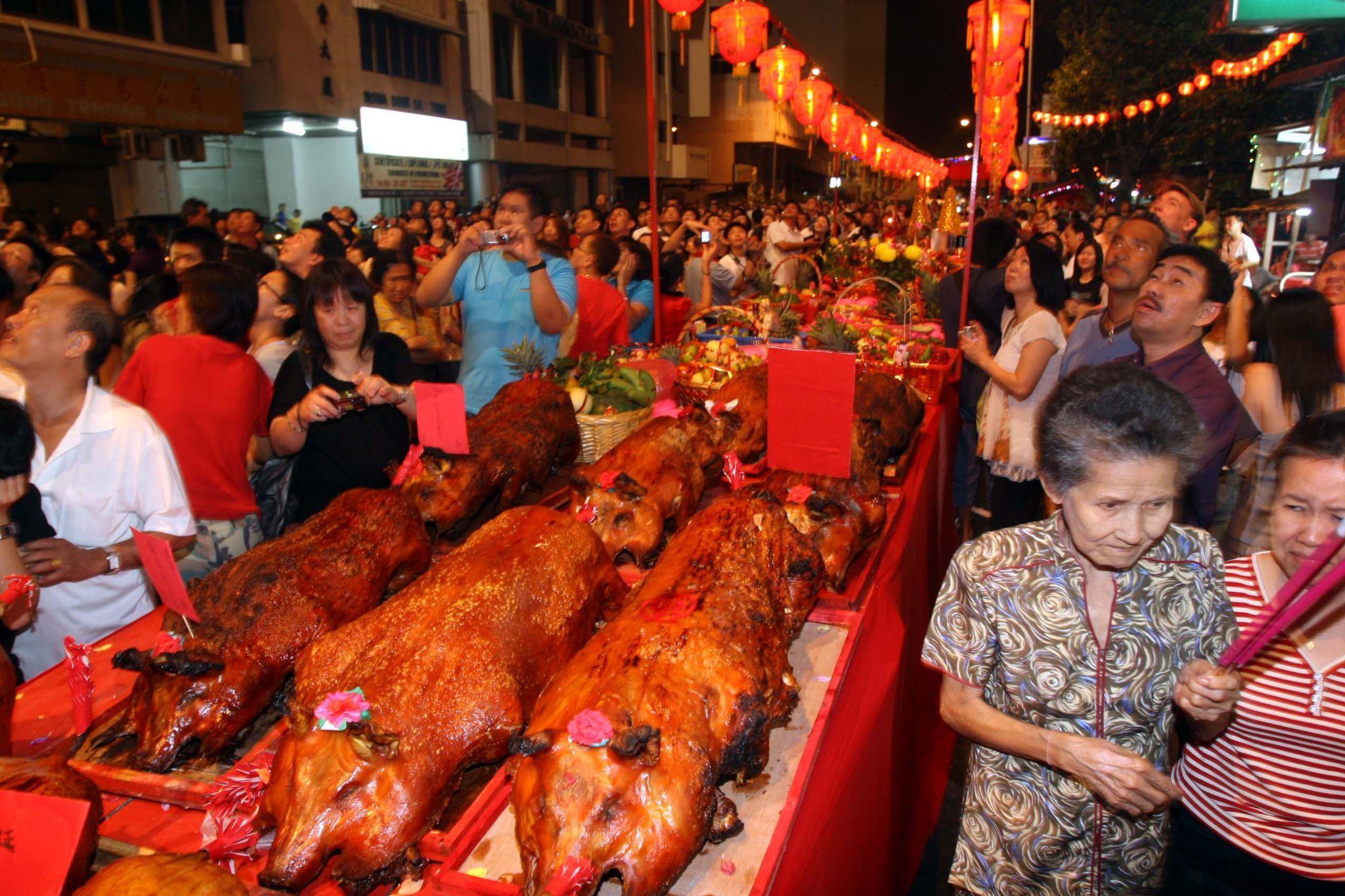
Folk customs consider the ninth day of Chinese New Year as the birthday of Heaven God Jade Emperor and people swarm into the Thean Kong Thnuah 天公壇, the temple of Heaven God Jade Emperor, to offer incense to Heaven God. For the Penang Thean Kong Thnuah, the busiest time of a year is from the night of the eighth day of Chinese New Year to the ninth day, Tian Gong Dan, when the pilgrims swarm in while beggars gather from all places to the sides of the road leading to the temple at the mountain, begging from the passing pilgrims. Besides, many Chinese also set up in front of their gates a memorial tablet of “Tian Guan Ci Fu天官賜福”, meaning “Heaven God Blessing”, to pray to Jade Emperor, also called Heaven God. Around the hour of Zi子时 (the 11 pm to 1 am period), of the eighth day of Chinese New Year, non-Hokkiens families put up fruits and cookies on the shrine and burn incense and pray like the general God worship in most families, whereas the traditional Hokkiens families prepare plenty of sacrificial offerings and set up incense case to sacrifice in a grand way.
Older generations of Hokkiens prepare two sets of new clothes for the whole family, one set to wear on the first day of Chinese New Year when visiting relatives, while the other set to wear on the ninth day when worshiping Heaven God, which serves clear evidence of how traditional Hokkiens value the observation of Tian Gong Dan on the ninth day of Chinese New Year.
Photography: Zhang Lizhu (張麗珠)
Photography: Zhang Lizhu (張麗珠)
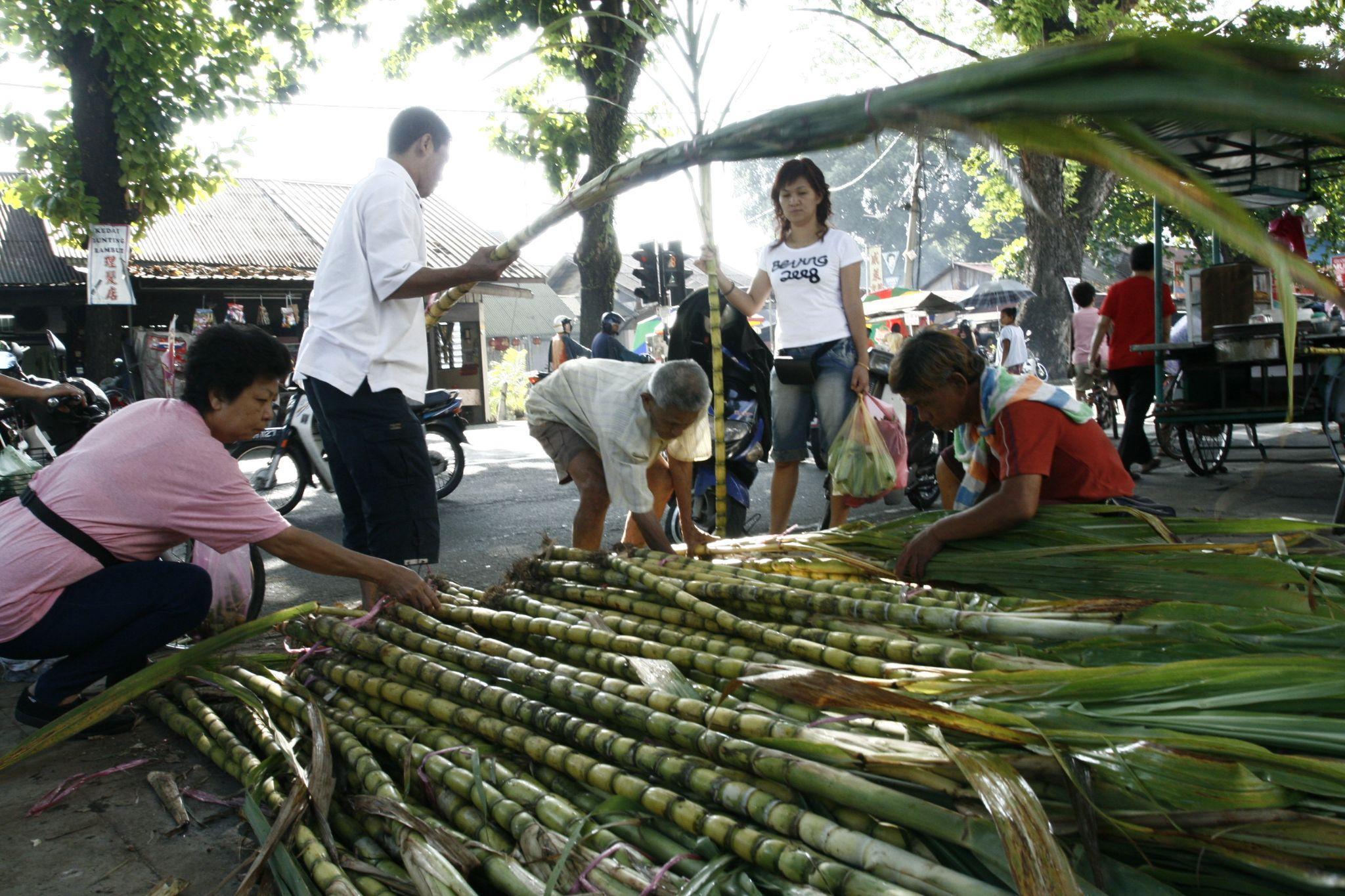
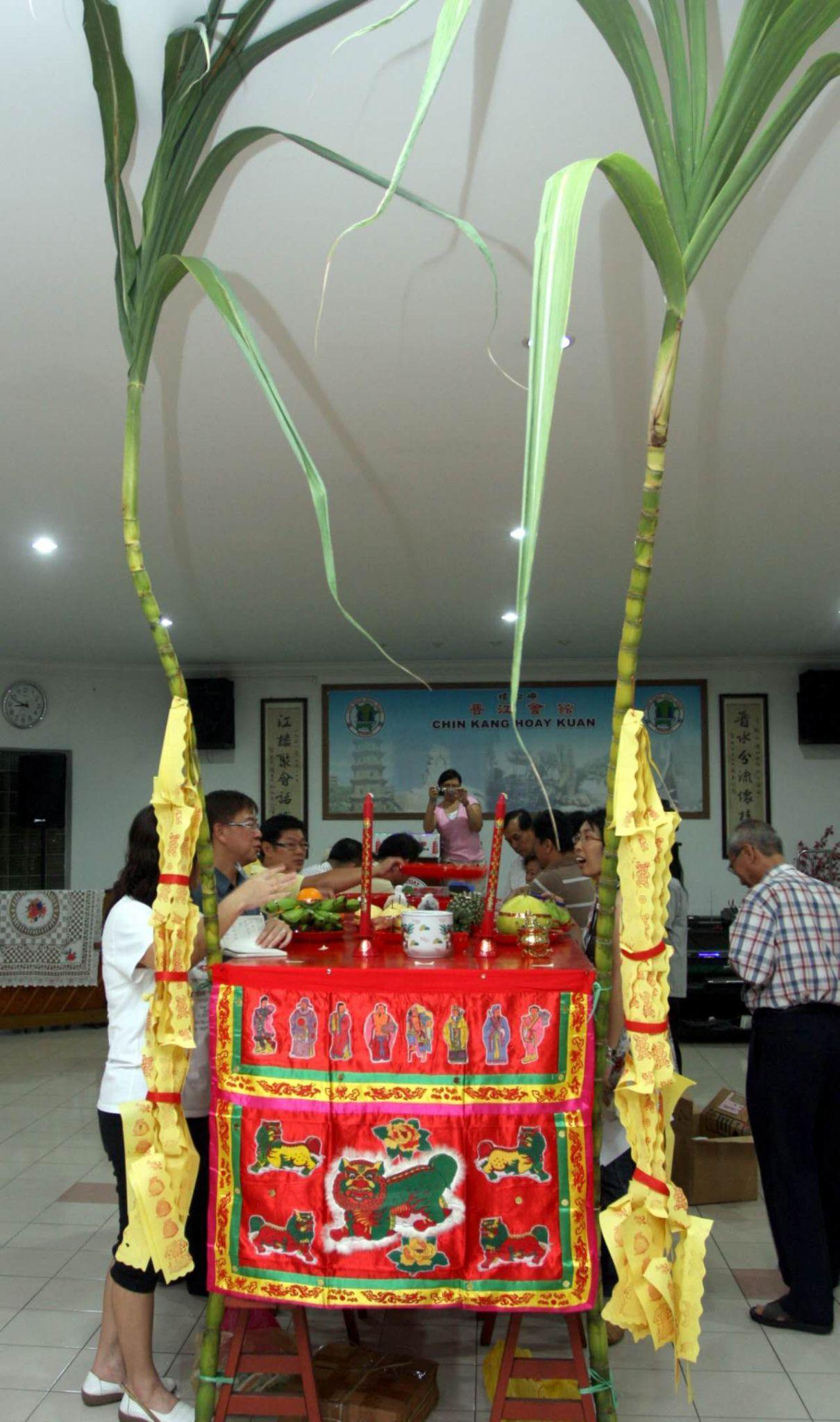
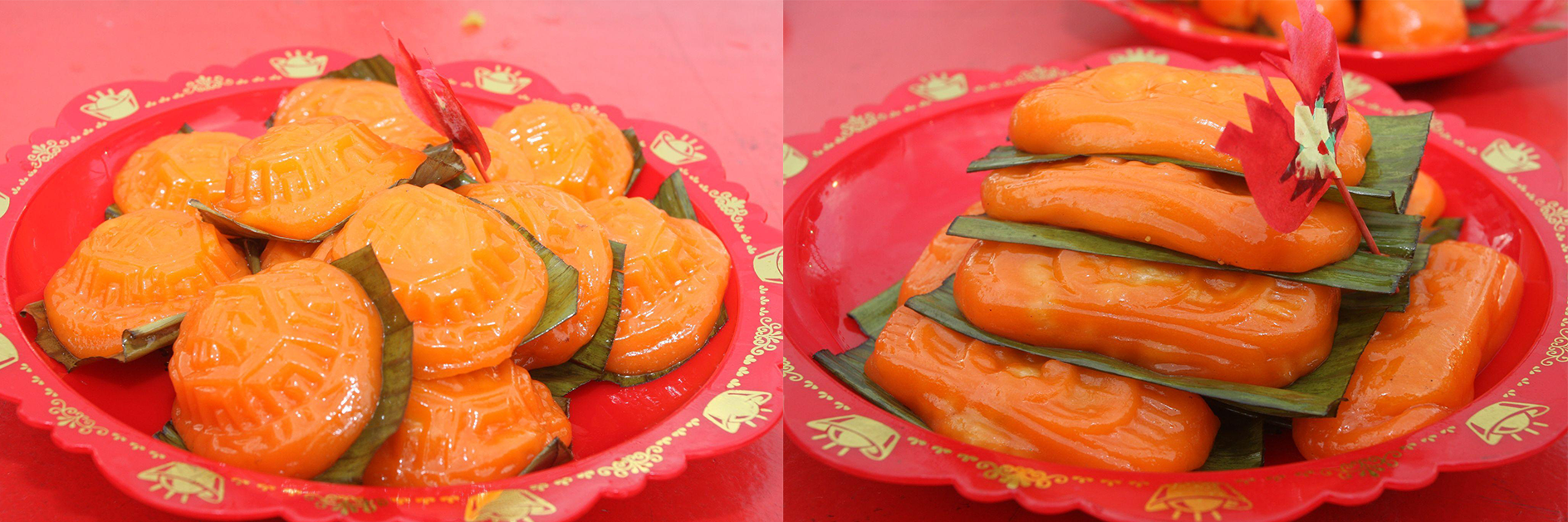
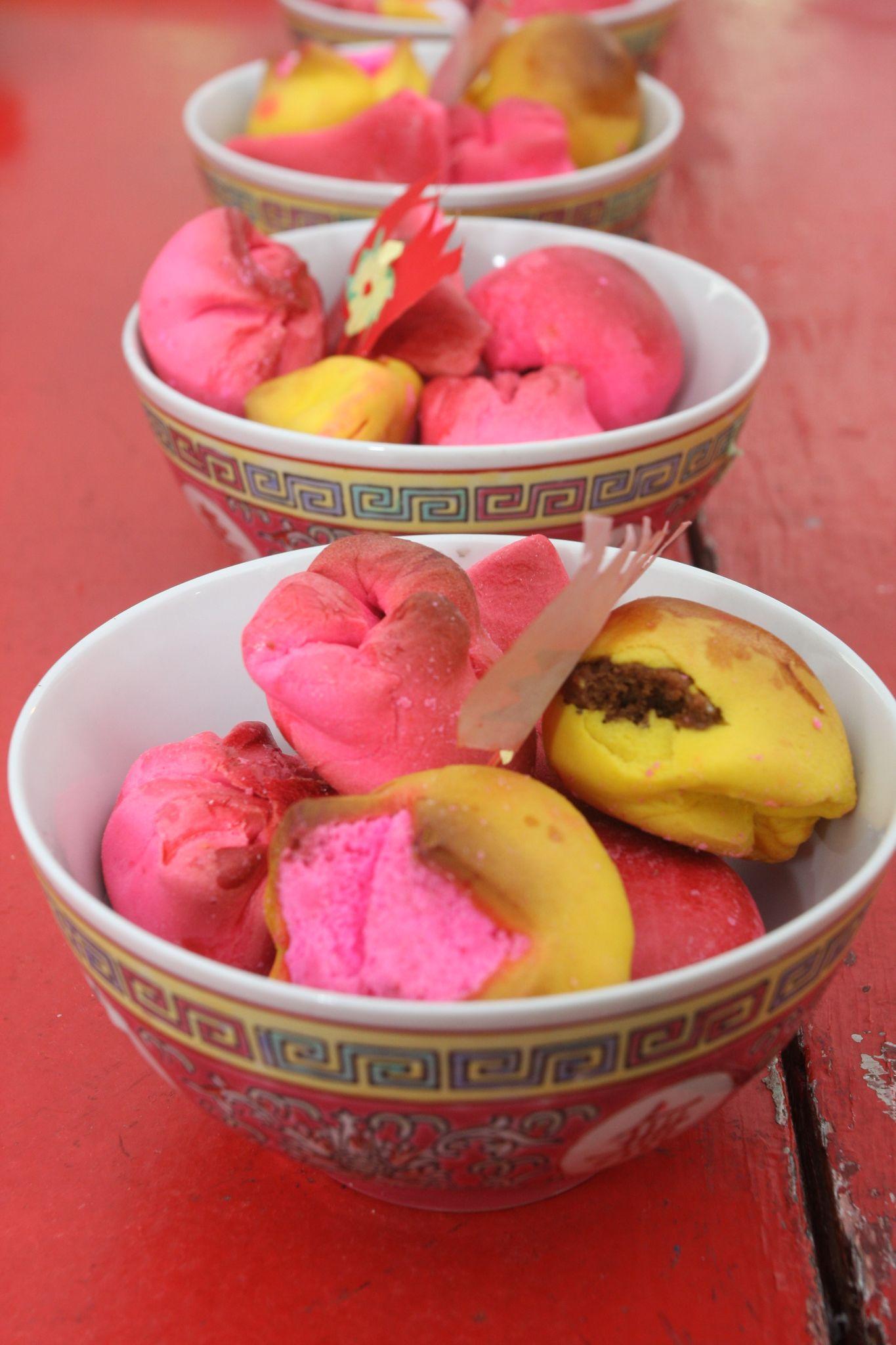
Hokkiens, called “Fujian People” in Malaysia, start to prepare the sacrificial offering for Tian Gong Dan a few days before the ninth day of Chinese New Year. Two sugarcane stalks with leaves are usually delivered early to the houses, with some yellow spirit money decorated with red paper hung to the stalk. They will be bound to front of the incense case elevated by a stool, which is covered by a big piece of table cloth decorated with gold thread fringe and auspicious patterns, which appears full of happiness. The offerings on the shrine, such as the rice cakes, glutinous rice cakes and red tortoise cakes 紅龜粿 (ang koo kueh) valued most by Hokkien population, are mostly prepared by the families on the eighth day of Chinese New Year and sometimes purchased from the market. Fruits are prepared in odd numbers like three or five. Pineapple, pronounced as “Wang Lai旺來” in Hokkien, and Nian Gan, tangerines for Chinese New Year, deemed indispensable for the situation, together with other fruits like apples, Ya pears鴨梨, and banana, are all stuck with red paper or the red stickers bought from the modern market. Since it is celebrating the birthday of God Heaven, the red eggs and noodles that Hokkien population must eat for birthdays are also essential. There are also sweet cookies called Tian Gong Bing天公餅, with pink or yellow skin, only available on the Tian Gong Dan eve.
Photography: Zhang Lizhu (張麗珠)
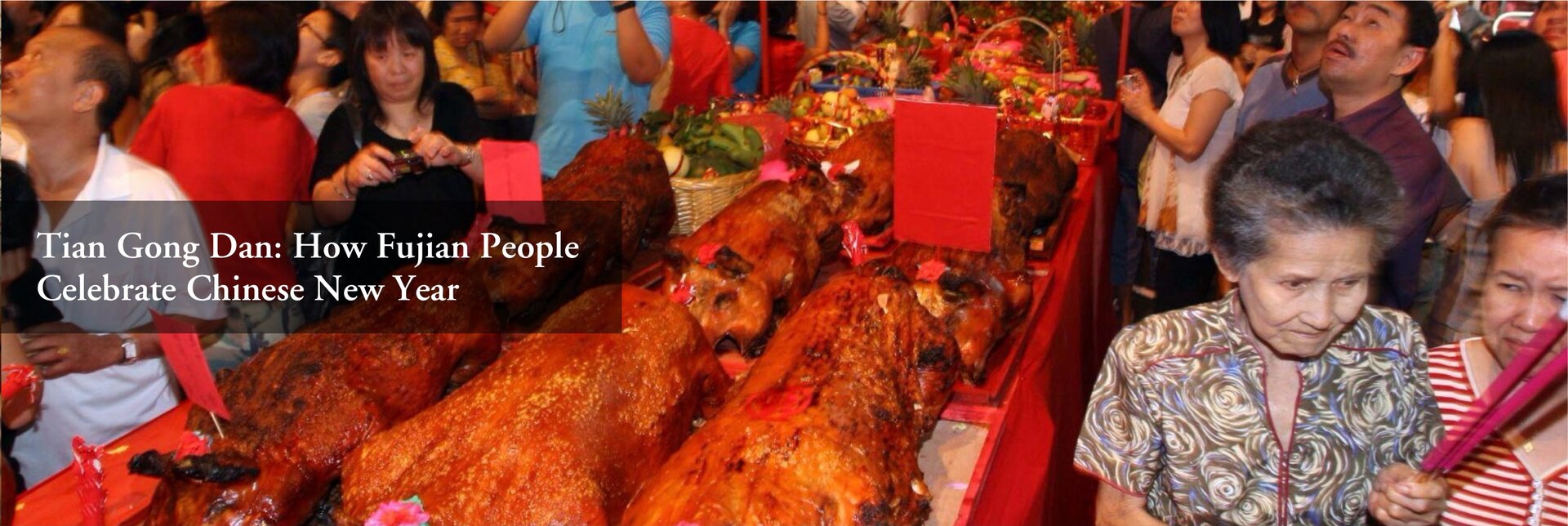
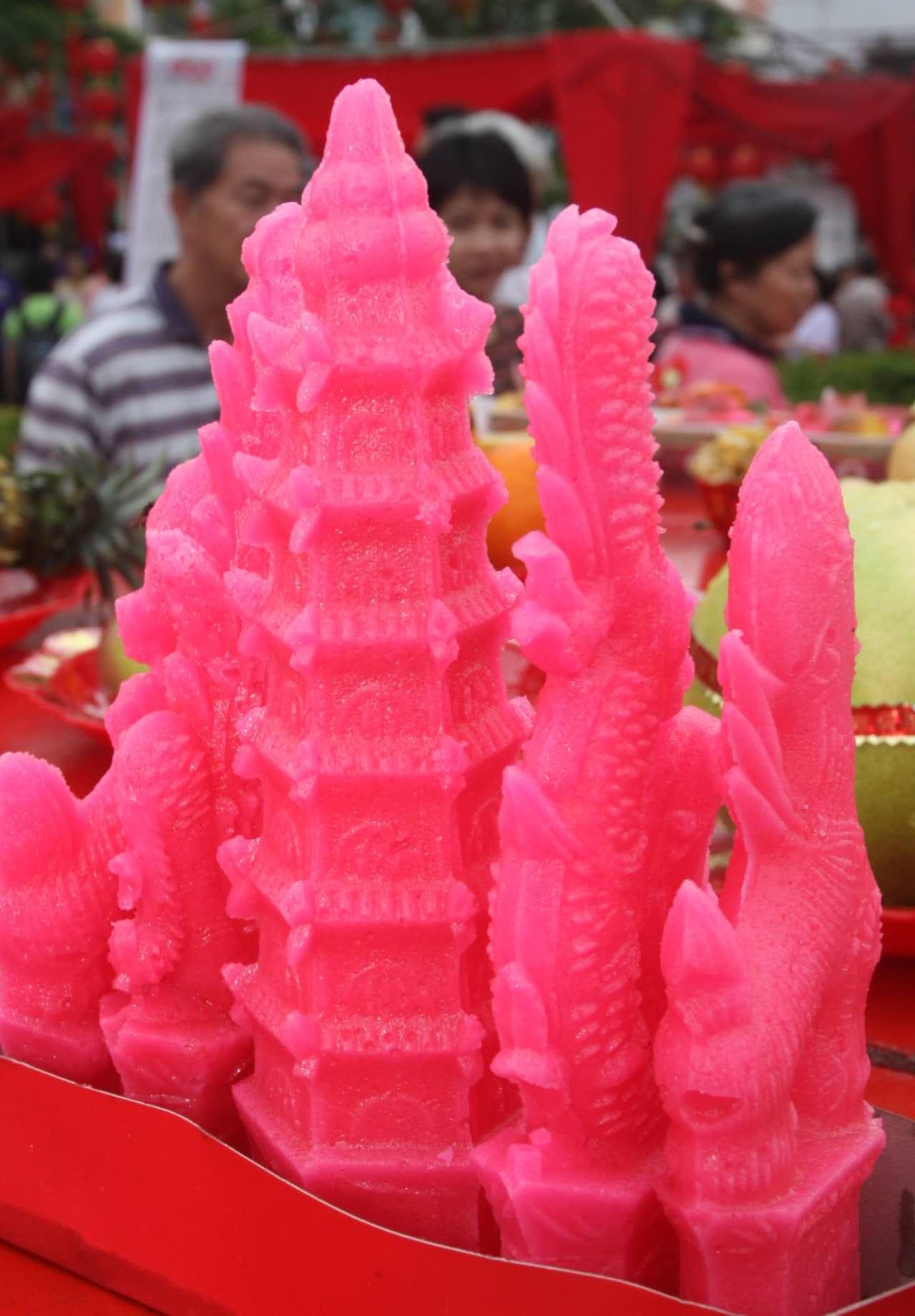
Besides, there are also vegetarian and meat offerings. Vegetarian offerings include strings of sweetmeat, dried mushroom, vermicelli (mung bean noodles), black fungus, Yuba, ginkgo, golden needle mushroom etc. assorted and served in small bowls. Meat offerings mainly consist of three types of livestock. Businessmen or those who have their wishes to God realized so need to redeem a vow to God usually serve roasted whole pig and offerings made with brown sugar, called Wu Sou 伍壽, which is made specially to pray to God Heaven.
Photography: Zhang Lizhu (張麗珠)
The incense cases Hokkiens use to pray to God Heaven are specially made and used only once a year, then put aside in the rest of the year. The families that are seek ideal effects even keep the utensils exclusively for Tian Gong Dan, never using them for other purposes. After cleaning up the front and back yards and the whole house outside and inside on the eighth day of Chinese New Year, families put on the incense case and put up the offerings when it goes into night. Starting from 11pm of the eighth day of Chinese New Year, led by the head of the household offering the first incense, family members change to new clothes and worship on bended knees in order. In the communities that Hokkiens inhabit in groups, every family is bright with lights and smoke of incense curling up around. After the series of sacrificial prayers, the sound of firecrackers rises one after another when it hits the midnight. The firecrackers sound even longer and louder than in the Chinese New Year Eve in the Penang Island and the Royal City of Klang, port city of Selangor State where Hokkiens reside in groups, which is why it’s called “Fujian People celebrating Chinese New Year”.
Photography: Zhang Lizhu (張麗珠)
The firecrackers set off at the Hour of Zi of the ninth day of Chinese New Year painted the night sky bright red. Some Chinese schools even suspend classes for one day, allowing the teachers and students who stayed up worshiping to have a rest. All taboos on this day are the same as the Chinese New Year’s Day, strictly forbidding brooming.
All articles/videos are prohibited from reproducing without the permission of the copyright holder.
SHARE THIS




 Thank you for your like.
You’ve liked this article. Please browse more articles you may like!
people have liked this article/video
Thank you for your like.
You’ve liked this article. Please browse more articles you may like!
people have liked this article/video
Welcome to leave a message:
Please Sign In/Sign Up as a member and leave a message