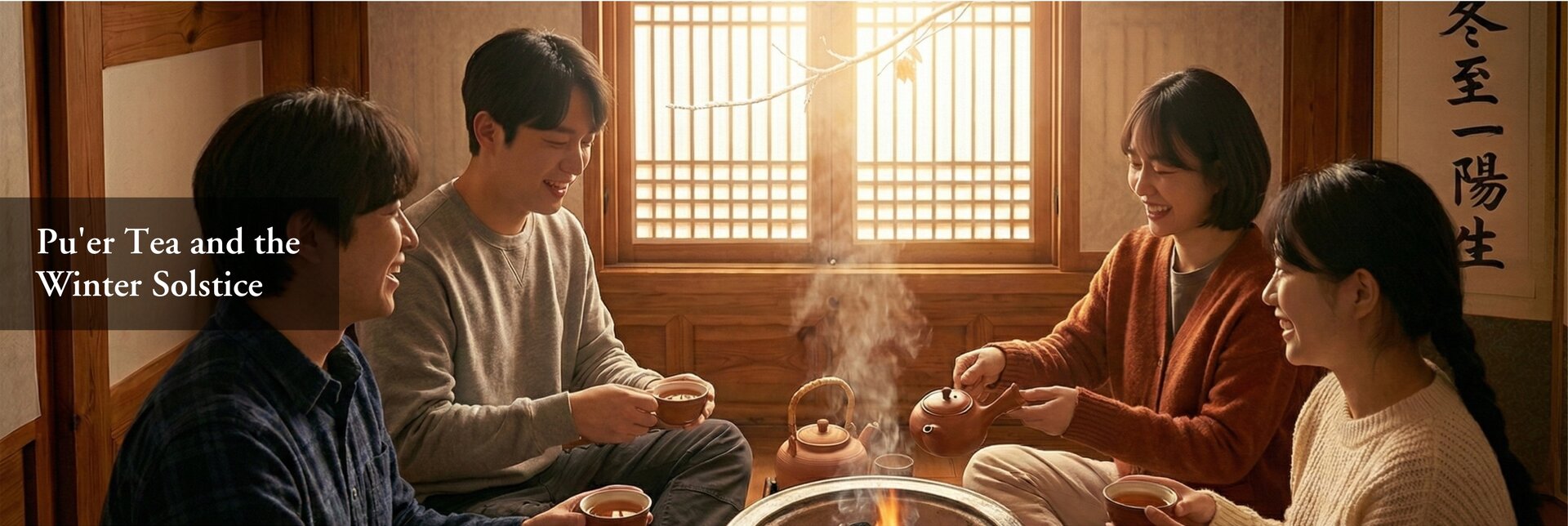

Pu'er Tea and the Winter Solstice
The shortest day, the longest yearning—on the Winter Solstice, the sun reaches the Tropic of Capricorn at its southernmost point, causing the Northern Hemisphere's daylight to shrink to its briefest and nighttime to stretch to its longest. Hence, the Winter Solstice is also called "the shortest day" or "the longest night." Everything seems to quiet down, retreating into the cold—but you know, in the deepest and stillest of nights often lies the first stirring of life.
The Winter Solstice is a turning point in the cycle of yin and yang, also marks the beginning of the twenty-four solar terms. After the Summer Solstice, yin energy gradually grows, reaching its peak on the Winter Solstice; yet it is precisely at this darkest moment that the first ray of yang energy quietly emerges. The ancients called this "On the Winter Solstice, yang energy begins to rise." To truly feel the rhythm of heaven and earth, there is no better way than to gather with a few close friends, sit around a warm hearth, and quietly await a pot of mellow, aged ripe Pu'er tea. As the tea enters the throat, warmth spreads throughout the body, as if the wisdom of life has been distilled into this single cup of sweet nectar.
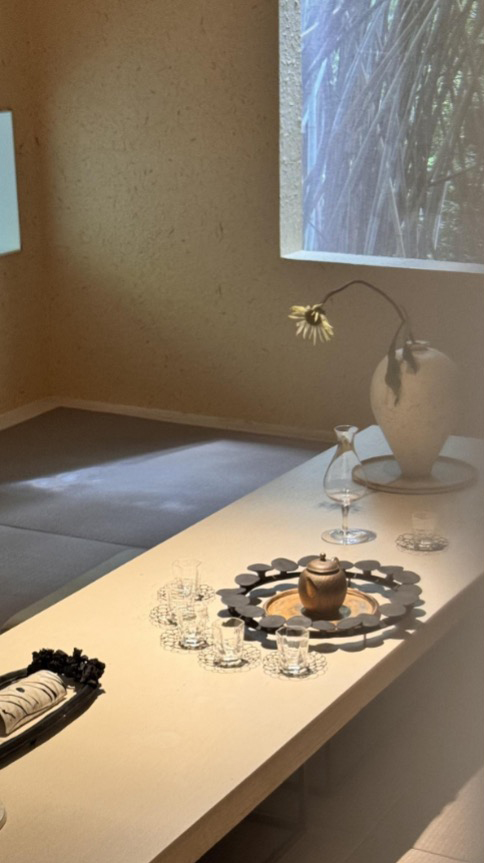
The Fu hexagram (複掛) in the "I Ching (《易經》)" is the core cipher for understanding the Winter Solstice. Its hexagram image shows Kun (坤,Earth) above and Zhen (震,Thunder) below, hence the name "Earth Thunder Revival (地雷複)." Among the six lines, five yin lines are above, with only the bottom-line being yang, symbolizing the initial sprouting of yang energy and the renewal of all things. This imagery is precisely the perfect metaphor for the life of ripe tea.
A tea leaf's "Fu hexagram" cultivation begins with the crucial wo dui fermentation process. Sun-dried raw tea leaves are inherently cold and harsh in nature, but they quietly transform in an artificially created warm and humid environment. Microorganisms alter the tea leaves' essence. After forty-five to sixty days and nights, the tea completes its transformation from astringent to mellow, its nature shifting from cold to warm, its liquor color deepening from light to dark. Caffeine transforms, catechins reorganize, and "yin reaches its extreme and generates yang (陰極化陽)" is accomplished here, creating a microscopic "Winter Solstice" field for the tea leaves, allowing them to nurture new warm life in the darkest environment.
After fermentation completes, the long storage and aging process is the true cultivation. The tea engages in slow dialogue with time in a clean, breathable environment. At temperatures of 20-30°C and humidity of 60-75%, under these conditions, the wo dui aroma of new tea gradually fades, the sharp fire energy slowly dissipates, replaced by increasingly mellow tea character and rich complexity that improves with age. This is like the newly born yang line in the Fu hexagram - neither hasty nor slow, accumulating energy in tranquility, completing the sublimation from "having fire (有火)" to "being without fire (無火)," quietly awaiting the perfect moment to be awakened.
The winter solstice customs naturally echo the warmth and mellowness of ripe pu'er. Northerners eat dumplings to fortify yang energy, while southerners eat sweet rice balls hoping for reunion. After indulging in rich foods, inevitably sweet and heavy, a cup of deep red ripe pu'er becomes the perfect companion. It gently dissolves greasiness, warms the stomach and generates heat, helping the body better absorb the energy from food, forming a nourishing cycle from eating to drinking.
The more elegant "Nine-Nine Winter Dispelling Chart (數九消寒圖)" was a poetic ritual by which the ancients recorded their patient waiting for spring light during winter days. Starting from the winter solstice, one would take up the brush daily to add a stroke to a character with nine strokes, or to paint a plain plum branch with eighty-one petals, coloring one petal each day. Through nine-nine, eighty-one days, stroke by stroke completed, petal by petal fully colored, quietly awaiting the blossoms. This way of recording—is it not like our savoring of an aged tea cake, from first taste to the last drop? In the subtle changes of the tea liquor, we directly witness the process of "yang energy" growing and warmth returning.
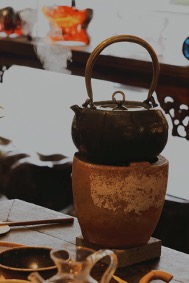
The profundity of the Winter Solstice ultimately requires human warmth to illuminate it. Bai Juyi (白居易, 772-846)'s invitation across a thousand years—"As evening falls and snow threatens, won't you join me for a cup? (晚來天欲雪,能飲一杯無?)"—still resonates at today's tea gatherings. On bitter cold winter nights, nothing is more moving than gathering around the fire to drink together. Over the small red clay stove, the clay kettle hisses and steam rise in misty clouds. The mellow fragrance of ripe tea disperses with the heat, and the voices of tea friends soften. Among friends, many things that need not be spoken are understood in cup after warming cup.
This scene of gathering by the fire vividly embodies the hexagram Fu's principle of " No disasters or troubles in interactions (朋來無咎)"—in a season when yang energy is still weak and all things lie dormant, the companionship of friendship and communion of spirits are warmer than anything else. At this moment, tea is no longer merely tea; it is the bond between people, the tacit peace of mutual understanding. It is a tangible warmth in a harsh world.
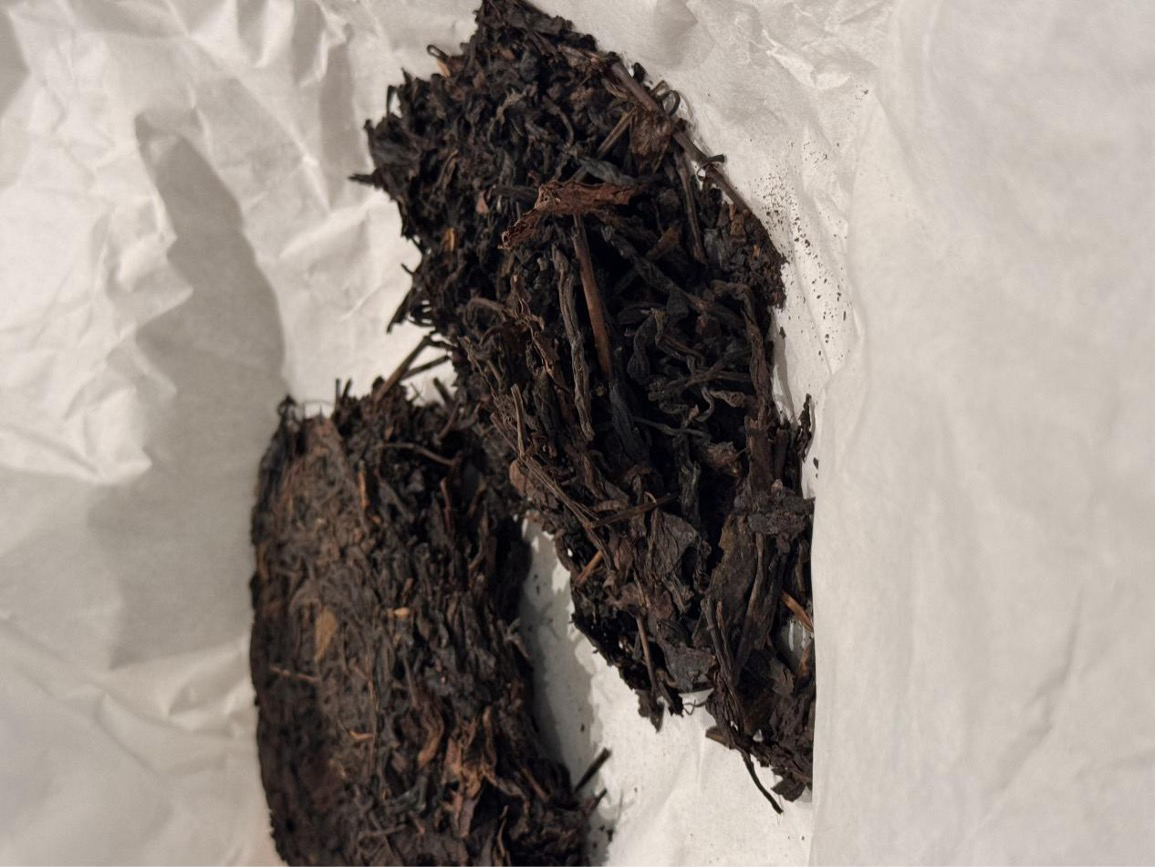
On the Winter Solstice night, heaven and earth are completing a silent transition. When we mindfully warm our vessels, add tea leaves and pour water, watching the tightly compressed tea unfold and release in boiling water, as the liquid gradually takes on the color of amber sunset glow, and finally drinking that sip of smooth, mellow, warming flow—this is a microcosmic experience of the universe.
In this cup of ripe Pu'er, we touch upon the celestial cycle of " the initial sprouting of yang energy (一陽來復)," align with the ancient wisdom of Winter Solstice wellness, and settle both our own hearts and those of our companions. The night is still long, the tea still warm. The grand cycles of heaven and earth are already clearly reflected in the small cosmos of this teacup.
Draining this cup, we come to know that the deepest darkness has already passed, and the power of light, along with the returning sweetness, is quietly growing.
All articles/videos are prohibited from reproducing without the permission of the copyright holder.
SHARE THIS




 Thank you for your like.
You’ve liked this article. Please browse more articles you may like!
people have liked this article/video
Thank you for your like.
You’ve liked this article. Please browse more articles you may like!
people have liked this article/video
Welcome to leave a message:
Please Sign In/Sign Up as a member and leave a message