‘Discipline Formation’
- Yangshao Culture and the Beginning of Modern Chinese Archaeology
Abstract
The discovery of the Neolithic Yangshao Culture in 1921 is widely held to herald the beginning of modern archaeology in China. In this paper we explore what this discovery introduced to archaeology, arguing that several factors coalesced to shape this change and its impact. One of these was the political changes at the time and the search for a new historiography. However, we argue that another formative influence was the new mindset that geology and mining introduced. We propose that the Yangshao Culture excavations became sites of ‘discipline formation’, where a new vocabulary was developed as well as a new way of ‘seeing’ the landscape.
Key word: Yangshao Culture, Modern Chinese Archaeology, Discipline Formation, Geology, Archaeological Methods, Historiography
It is widely agreed that professional archaeology developed in China during the 1920s (Chen [1997] 2009; Chen and Fang 2014; Wang and Ucko 2007), and that this was in part inspired by the discovery of the Yangshao Culture (5000-2500 BC), and the flurry of excavation activities that followed. It is also widely recognised that the Swedish geologist, paleontologist, mining engineer, and later archaeologist Johan Gunnar Andersson (1874-1960) played a pivotal role in this together with a group of young Chinese scholars, who gained positions of influence in the institutions that developed during this time (BMFEA 2021). Their influence should be set against both the new opportunities and the alteration in the distribution of power engendered by the development of the Republic of China as it established its administrative and political structures. What is less often emphasized are the changes that led to this increased professionalisation of archaeology and the paradigmatic shifts that made them possible.
Whereas the outline of this development is well known (e.g. Chen 2009; Chen & Fang 2014; Falkenhausen 1993; Fiskesjö & Chen 2004; Han 2018; Hein 2016), there has been a tendency to focus on the interpretative approaches that developed after 1921 and the subsequent characteristics of Chinese archaeology (e.g. Fiskesjö 2017; Hein 2016). The aim of this paper is to explore in greater details the significance of the influence from geology as a field method and a distinct way of thinking about landscapes and soil formation, and how this enabled new information to be extracted from the ground. Focusing on the discovery of the Yangshao Culture in 1921, we locate how this site and other similar locations became sites of ‘discipline formation’. By this we refer to how these sites were used to process new ideas about the importance of, for example, stratigraphy and layers, and how these, in turn, lead to new kinds of arguments about chronology and ‘culture’. The development of the new professional habitus did not, however, just rise from fieldwork; it was also carried forward by young Chinese scholars, who trained abroad and on their return encountered ground-breaking discoveries in the field as well as a dynamic intellectual scene that sought to develop a new historiography.
It is well known that China has its own distinct and long history of antiquarian activities (for details see, for example, Chen 2009; Chen & Fang 2014; Falkenhausen 1993; Hein 2016; Yang 2014), and by the 20th century its interest in the past was in many ways well developed. The focus of that interest had, however, consistently been shaped around the historical records kept by the major dynasties, as well as government records, which were used as a source for political wisdom (e.g. Falkenhausen 1993: 839). In addition to the records, the emperors had over time created collections, often themed around the previous dynasties. Arguably a major motivation was political, as they aimed to link the past with the (political) present. The scholars of the Song dynasty (AD 960-1279) were particularly active, and some of the collections from that period laid the foundations for later palace collections (e.g. the Palace Museum in Beijing). Thus, there was a well-established practice of ‘reading’ the past through historical scripts, built structures (including burial monuments), cultural relics, and precious objects, especially those linked to the imperial families. The result was a narrow focus on particular types of remains, such as ceramics, bronzes, paintings, calligraphy, and jade objects. However, standing monuments and buildings were given little attention beyond their roles as cultural relics representing dynastic history, and below ground remains were largely unrecognised. It also meant that there had been little to no interest in the history of wider social sectors of society. The existing antiquarian interest had, therefore, not translated into archaeological activities aimed at discovering and investigating remains to understand the past per se in a targeted manner.
One may, therefore, question whether these can be described as archaeological practices as we now understand the discipline, and it is common for Chinese archaeologists to place the birth of modern or professional archaeology in the discovery and excavation of Yangshao Culture sites in 1921 (Chen 2009; Fu [1930] 1996; Wei 2005; Yang 2014; Zhang 2009). At the time of this discovery, several developments came together. As part of the New Cultural Movement, Chinese historians were rejecting earlier dynastic historiographies and were searching for a broader-based national history (Gu 1923; Tang 1998; Wang 2000) - a new pre-history would suit that endeavour very well. Opportunities for entrepreneurial engagement with the building of the new society had emerged and these were frequently met by young Chinese scholars trained abroad, for example as geologists, mining engineers, and anthropologists.
Another strand came through Johan Gunnar Andersson, as his contribution to the discovery of the Yangshao Culture did not only result in a new site being found but also introduced and disseminated (through working with teams and his extensive contacts) methods of geological landscape prospecting that had been adopted by archaeologists in Europe, but not used by antiquarians in China. Together these different influences and aspirations meant that the discovery of the Yangshao Culture could dovetail with emerging ambitions and in turn be used to develop a new methodologically driven scientific engagement with the past. With this general background, we briefly outline first the role of foreign contacts before 1921 and then the arguments about the purpose of historiography that took place from 1912 before we consider the influence of geology in the development of new approaches within archaeology.
The foreign involvement which we see in the discovery of the Yangshao Culture was not a new phenomenon, but the form it took was different from what had been the norm. The different dynasties showed varied interest in contact with the ‘outside’ world. The Qing dynasty (1636-1912) was, for example, interested in attracting scientific and technological experts from the west. This interest became particularly pronounced after the end of the Second Opium War in 1860. Amongst the renewed interactions were activities that in several ways influenced attitudes towards the archaeological remains as well as their recording and treatment.
However, during the late 19th and early 20th century, the internal and external approaches to and views about the Chinese past were mutually confirmed, and it can be argued that the interactions with foreigners aided and consolidated the antiquarian view of history and the perceived value of different kinds of remains. For archaeology, the interaction with foreigners mainly took the form of foreign expeditions which had the purpose of sourcing materials for collections ‘at home’. Many were more like adventurers, searching for treasures and the ‘big discovery’, than proper scientists, and by the early 20th century they were increasingly anachronistic in their approaches to the past compared to archaeology as practised in Europe, for example in terms of attention to context and excavation procedures. These expeditions did, therefore, in general not further rigorous academic investigation of China’s past. Similarly, the increased formalisation of Sinology, developed already in the 17th century in connection with Spanish, Portuguese, and Italian missionaries’ efforts to spread Christianity to China (Kircher [1667] 2020; Tulli 2006), did not further a wider attention to the archaeological past as it focused on Chinese history (as known from various forms of text) and language.
The late 19th century and early 20th century foreign expeditions to China were organised from many different countries including early ones from Russia, which sent a ‘science investigation team’ in 1898 to the Xinjiang province to excavate tombs and early historical remains (Chen 2009; Zhang 2009). Japanese explorers also came to China, and several of them are known to have travelled and worked in north-eastern China from the end of the 19th century, and probably long before that. Their publications, with titles such as 《南满洲调查报告》Investigation Report on Manchuria by Torii Ryuzo in 1910 (Chen 2009), suggest that they, similar to the European explorers, were travellers rather than scientists. Another well-known explorer who travelled in China during this time is the Swede Sven Hedin (1865-1952), who made four expeditions to China and Central Asia between 1893 and 1935, with his notes influencing the development of precise mapping and investigations of Central Asia, particularly in Xinjiang and Tibet (Chen 2009: 2). The Hungarian-British Sir Marc Aurel Stein (1862-1943), who travelled extensively in China between 1907 and 1914 (Yang 2008), is by many seen as the archetypal explorer, but others praise his careful recordings of finds, and stress how his concern with context was unusual for his time (e.g. Falkenhausen 1993). His extensive explorations and collection of materials made him a hero in Europe, but his clearing out of a great number of manuscripts from the Dunhuang Grottos caused controversies in China and has subsequently marred his reputation. It did, for example, caused friction with the Chinese nationalists, who had begun to appear on the political stage. They argued for the importance of protecting the national treasures against foreigners (Yang 2004, 2014). The Chinese historian Chen Yinke (1890-1969) once said, “The loss of Dunhuang manuscripts is a most tragic incident in the history of Chinese scholarship”1) (Chen [1930] 1980).
These foreign expeditions added little to China’s own understanding of its past, but such projects contributed significantly to European knowledge of Central Asian geography and history. They also often explicitly served political purposes. People like Hedin, the Russian Nikolay Mikhaylovich Przewalsky (1839-1888), the British Sir Francis Edward Younghusband (1863-1942) and Sir Aurel Stein were active players in the European struggle for influence in Central Asia; they were part of what became known as the ‘Great Game’ (Hopkirk 1994; Nalle 2000; Verrier 1991). They filled in the ‘white spaces’ on contemporary maps and their expeditions were supported by various funders – government, academies, and private sponsors (Nalle 2000).
During the early 20th century, the foreign involvement began to shift, and the exploits by individual explorers were complemented by expeditions arranged by museums wanting to expand their China collections, or by academic institutions with the rather open-ended aims of strengthening knowledge about China’s history. In 1913, the Smithsonian Institution, for example, sent the archaeologist Langdon Warner (1881-1955) to Asia to to “acquire material” (Fan 2014: 6). This in time became the conduit for foreign involvement as the new political power of the Republic of China identified such institutions for collaboration, and the independent single adventurer became an entity of the past.
It was typical of the foreign projects that there was no involvement of the Chinese scholars, as they were not seen as equals. Chinese members of the teams were traditionally employed as workers and expedition assistants (cooks, mule drivers, and guides). With changes in the political administration after 1912 new systems were put in place. This meant that permits for exploration and excavation had to be obtained, and these often came with conditions (as an example, we discuss below the contract made between Johan Gunnar Andersson and the central government). These contracts often included a demand for the participation of Chinese official administrative personnel in the field team. The differences in expertise (academic versus administration) meant, however, that this new request did not automatically lead to a transfer of knowledge between foreign and Chinese participants. Nonetheless, these projects introduced new perspectives and procedures that in various ways helped to encourage the existing indigenous interest in the past. They, therefore, partook in the transformation of Chinese intellectual (and political) engagement with the past during this period but without yet developing a distinct archaeological discipline tradition. It was only when it became expected that Chinese academics were involved as equal scientific partners on foreign projects that the mutual fertilisation of ideas and experiences took off. The excavation of the Yangshao Village site is arguably one of the first cases of this interaction being a reality, as discussed later.
In this way, when the Republic of China was formed in 1912, the interest in China’s past had two sources. One was the long-standing Chinese interest in dynasties, lineages, inscriptions, and antiques, but a relative lack of interest in the people or the non-dynastic past of the nation and with only limited ideas of using excavation to explore below-ground archaeology, i.e. traces of past activities preserved within the soil itself. The other derived from the impact of a growing number of foreign explorers and Sinologists, with activities ranging from treasure hunting to genuine scientific studies. In terms of methodology, they advanced mapping, recording and survey techniques, but their mindset was largely based on the desire to enrich foreign collections, and their approaches tended to disconnect objects from their contexts. Their approaches and interests therefore largely coincided with the Chinese traditions of historiography. This meant that, despite a considerable number of activities, they neither altered established collecting practices nor challenged theoretical and interpretative frameworks. The aims of the limited excavations undertaken were still largely to find treasure or to expose monuments (the ‘lost cities’ genre). Excavation of non-monumental locations had not really begun, and the ‘buried past’ remained only to be ‘opened’ for exploration.
Apart from this tradition of explorers and travellers, foreigners were also increasingly involved in activities such as mining and the development of China’s infrastructure projects. The Republic of China, recognising the benefits of controlling resources (especially iron ores and coal), had invested heavily in the modernisation of the mining industry. In comparison to the explorers with their focus on monuments, this kind of prospecting introduced a new mindset. Whereas the established antiquarian mapping and survey methods record that which is visible or indicated on the surface, prospecting explicitly entails searching, inspecting, and exploring to determine if there is something to be found and extracted. It aims to search out what is still unknown, using techniques such as drilling, coring, and excavation. For instance, Johan Gunnar Andersson describes using hammers, mattocks, and spades while prospecting in the mountains at Zhaitang in 1914 (Romgard 2018: 26). Compared to the mapping exercises done by the explorers, geological prospecting introduced a different way of understanding a landscape as it is understood as constituted by a process of layering and accumulation. Andersson’s description of the characteristics of the Neolithic sites makes this difference very clear, and it is also obvious that such sites could only be found through a change in approach. He states that the settlements had “No surface indicators … except fragments of pottery and other artifacts” and that “The remains of the ancient villages consist of more or less thick deposits of refuse, charcoal and ash…” (Andersson 1925: 5), nothing to entice the traditional collectors. Considering tombs, Andersson purchased many artifacts from locals who accidentally or purposefully excavated tombs from the Neolithic period in China.
Benefitting from the geological mindset, the landscapes could be approached through new concepts of time and depth (layers and strata). This new approach made it possible to expand concepts of China’s past and its archaeological remains to encompass that which had no visible surface indications and no textual record. China’s past could be seen as being about more than dynasties. This suited the emerging political rethinking of the nation, and the ambitions of the Chinese partners, such as Ding Wenjiang (Fiskesjö 2011), a partner on the Yangshao project. The connection, however, does not seem that convincing. Soon after Andersson, Chinese archaeologists who had been trained abroad used stratigraphic techniques to excavate historic sites and answer historic questions.2
The change in approach toward Chinese historiography was also a significant aspect of the transformation of archaeology that took place, as it led to intellectual developments that allowed the idea of a prehistory that was not restrained by textual information. During the early years of the Republic of China, attitudes to the past and historical research changed in many ways, including a rejection of traditional approaches, even though ideas generally remained framed within an expectation of historical continuity (Falkenhausen 1993).The Revolution of 1911 led to critical engagement with and eventual rejection of the existing state ideology of Confucianism, and there was much interest in liberal ideologies from the West. This, however, did not go unchallenged. The Second Revolution in 1913, during which Yuan Shikai (1859-1916), as the second provisional President of the Republic of China, attacked (and suppressed) the Guomindang political party,3 reintroduced political conservatism and re-emphasized respect for Confucianism under the banner of Zunkong (literally ‘Respect Confucianism’)4 just as the Qing dynasty had done earlier.
‘Respect Confucianism’ was continued as later, in 1913, Yuan became the first official President of the Republic of China and then in 1915 became the Hongxian Emperor of the Chinese Empire. When Yuan Shikai died the following year, the ideological position of the Republic of China, then under the control of the northern warlords, was extremely complex. The ideology of the ‘Three people’s principles’ created by the first provisional president, Sun Zhongshan (1866-1925), replaced Confucianism. This ideology absorbed some content from all the three main socio-political ideologies: liberalism, Confucianism, and socialism. The initial ideology of the ‘Three People’s Principles’ of the Republic of China became increasingly Confucianized through the theoretical considerations and political practice of Dai Jitao (1891-1949) and Jiang Zhongzheng (1887-1975). With the expansion of Guomindang rule, it gradually became a national ideology implemented in the fields of administration, culture, and education (Tang 1998).
This, however, led to counter-movements, amongst which the New Culture Movement is particularly important. An article by Chen Duxiu (1879-1942) published in 1915 in The New Youth (under his editorship) is commonly considered an important stage towards the formation of the New Culture Movement. It advocated for democracy and science (commonly referred to as ‘Mr. De’ and ‘Mr. Sai’), criticized the traditional and pure Chinese culture, and argued for Marxism (Tang 1998). Others followed, launching a movement “against tradition, against Confucianism, against classical Chinese” (Geng 2016: 6), and advocating for ideological and cultural innovation, coupled with literary revolution. The core concepts of the movement were further consolidated in 1919, when it took the name, the May Fourth Movement. The movement gained its name from a group of students taking to the streets in Beijing in 1919 to protest the Paris Peace Conference which gave Imperial Japan the German rights over the Jiaozhou Bay concession, but it was by no means restricted to that event. It represented a major process of change, including social transformation, roughly between 1915 and 1925. Many radical political and social leaders of the next five decades emerged during this time.5
Led by intellectuals, such as Hu Shi (1891-1962), Chen Duxiu, Lu Xun (1881-1936), Qian Xuantong (1887-1939), Cai Yuanpei (1868-1940), and others who had received a Western education (at the time called the ‘new education’ or ‘western-style education’), it adopted a new anti-Confucian revolutionary position: Beating Kong jiadian (translated to, ‘knock down the Confucian family shop’), which was put forward as a slogan in 1919. Their goals were to shape a new country, a new people, and a new ideology. On one hand, it made western-based ideas of liberalism (individualism, freedom, democracy, etc.) widespread, further attacking the value and justice of Confucianism. This eventually created the ideological foundation for the introduction of Marxism into China and promoted deep ideological changes. On the other hand, it also caused reactions, which furthered a continuous interest in the renewal of Confucianism producing the first generation of modern neo-Confucianism politicians and intellectuals.
It was, moreover, not just a political movement, but also an economic and social one with topics such as ‘Freedom of the individual’, ‘Freedom of marriage’ and ‘Freedom of love’ widely discussed in the open press. The movement was not, however, in agreement on all issues, and moderates such as Hu Shi opposed Marxism. They supported the ‘movement of modern vernacular Chinese’ and advocated replacing Confucianism with pragmatism.
The word ‘new’ indicated that Chinese intellectuals aimed to subvert Sinocentrism, challenge existing cultural values, identify with Western culture and a democratic republican system, and move towards Eurocentrism (Tang 1998). The movement sprang from disillusionment with traditional Chinese culture following the failure of the Republic of China to address China’s problems. They called for the creation of a new Chinese culture based on global and western standards, especially democracy and science. One of the results was the increased presence of western scientists in China. For instance, when the National Geological Society of China was established in 1922, out of a total of 62 members 22 were foreigners (Gabbiani and Zhang 2019).
The impact on historiography was significant. The scholar Edward Q. Wang writes of the early 20th century as a time “when Chinese historians, buoyed by nationalist impulses in the face of the global expansion of Western capitalism, searched for new ways of writing history. They had a two-fold purpose: embarking on the the project of nation-building and embracing the new knowledge that came with the Western intrusion in Asia” (Wang 2002).
These Western influences focused on historical interpretations and considered various evolutionary perspectives (ibid.). The latter led to new ways of thinking about time. He further argues that during this period there was a move away from the earlier norm of dynastic history “in which historical periodization simply followed the life of a dynasty” (ibid.) and instead historical writing came to be “modelled on the Western tripartite division: ancient, medieval and modern” (ibid). In addition, there was a new interest in popular culture and folk traditions.
One of the major scholars who rose to the challenges of writing history in a new manner was Gu Jiegang (1893-1980), the leading force in the ‘Doubting Antiquity School’ or ‘Doubters of the Old’ (Yigupai) (Falkenhausen 1993; Gu 1926-41; Yang 2004, 2014). His criticism of the Chinese Pangu origin myth and the paradigm of ‘Three Sovereigns and Five Emperors’ (circa 2852-2070 BC),6 for example, was intended to reject the earlier historiography, which was based on looking back to a supposed ‘Golden Age’ (Gu 1923). Due to such critical writings, the epistemology underpinning traditional ancient Chinese history collapsed. Moreover, in terms of the hitherto dominant political ideology, the concept of a centralised multi-ethnic country under the Emperor lost its legitimation. In turn, it became important to establish the ‘actual’ culture(s) of ancient China. Long-standing ‘truisms’, such as the antiquity of a continuous Chinese civilisation over ‘five thousand years’ were questioned. Several academic disciplines became engaged with such questions, and there was political and intellectual support for the further development of various fields of study. Of interest to this paper, this included the development of an indigenous Chinese archaeology.
As a part of these changes, several individuals adopted new approaches and participated in the contemporary debates about sources of historical knowledge. Most importantly for the development of archaeology, they also began to conduct excavations.
Although much of this work was not published until later (in some cases, not until after the 1930s), this helped to lay the foundation of modern Chinese archaeology. For example, Luo Zhenyu (1866-1940), and Wang Guowei (1877-1927) are significant scholars from this period, as was Li Ji (1896-1979) who published the “Formation of the Chinese People: An Anthropological Inquiry” in 1928. This was one of the fundamental texts written during this time. Its title, with its concept of the ‘Chinese People’ is a clear reflection of the new approaches to the past. However, note that Li Ji’s book was published in English only. Its influence in China may be assumed to have been minimal during the period.
The impact of Andersson’s geological methodologies on the beginning and development of modern Chinese archaeology, particularly through his interactions with Chinese archaeologists, is profound. Andersson’s partnership with Ding Wenjiang, along with his connection to Li Ji, who is considered the father of modern Chinese archaeology, significantly influenced the field. Andersson, through his geological methodologies, guided the discovery of Neolithic culture in northern China, represented by the Yangshao site. Meanwhile, Li Ji led the excavation of the Bronze Age culture in China, represented by the Anyang Yinxu site (Chen & Ma 2007). Their collaboration and academic exchanges laid the foundation for the development of Chinese archaeology.
Through three letters from Gao Benhan to Li Ji in 1937, which are preserved in the Museum of Far Eastern Antiquities in Sweden, we can gain insights into the interactions between these two scholars and their understanding of the origins of Chinese prehistoric culture (Chen & Ma, 2007). Their research on the relationship between prehistoric culture and historical era culture in China is a pivotal issue that intertwines their contributions and propelled Chinese archaeological studies to new heights.
As one of the crucial contexts, Andersson posited that the Yangshao Culture was derived from the West after employing stratigraphic methods at the site. He suggested that the discovery of this culture served as a ‘culture shock’ by introducing previously unrecognized facets of the past, including his own theories about Western influences on this culture. This assertion became a catalyst for ongoing debates about the origins of Chinese culture and civilisation. These discussions were fundamentally tied to efforts to debunk theories of Western transmission and affirm the antiquity of Chinese history prior to the imperial dynasties.
In summary, the ‘New Culture Movement’, influenced by Western culture and attempting to establish something new in place of the old, was the ideological basis for wide-ranging changes. It aimed to form a new culture with nationality and science as its core values; these were ideas that were to affect developments throughout the 20th century. In terms of archaeology, it was a fortunate coincidence that Andersson was employed by the Chinese government and began to work in 1914, a year before the start of the movement. He represented many of the scientific outlooks which they sought, and the general intellectual mood in the country favoured the introduction of modern methodology-driven versions of geology and archaeology.
In the early years of the Republic of China, minerals were either under-explored or largely controlled by foreigners. World War I had resulted in a dramatic increase in the need for steel and iron, and the Chinese government wished to benefit from this. In a move to gain greater control over its resources, and recognising the importance of technological knowledge, the government established the National Geological Survey of China in Beijing in 1913; one of the aims was to train indigenous geologists (Han 2018). Industrialised European countries were, therefore, of some interest as they were considered to have more developed industries; the new China could learn from such countries.
Sweden was a country of interest. It had a well-established mining industry, and it was relatively neutral in terms of 19th century aggressions between China and various European nations. Moreover, various constellations of people aided the China-Sweden connections (detailed in Romgard 2018). Professor Erik Nystrőm (1879-1963), who was trained as a chemist and geologist at Stockholm University, came to Shanghai in 1902 and stayed there for most of his life. After 1911 he taught chemistry at the natural science department, Shanxi University in Taiyuan, Shanxi province. Realising the importance of further investigating the country’s geology, it was he who convinced the Swedish envoy to Beijing (Gustaf Oscar Wallenberg, 1863-1937) and support the idea of a Swedish-Chinese project of surveying the mineral resource in China. He traveled to Sweden to present the proposal to the then director of the Swedish Geological Survey – Johan Gunnar Andersson. After protracted negotiation, Nyström, Andersson, and the latter’s colleague Felix Tegengren (1884-1980) were employed by the National Geological Survey of China in 1914. The contract was for one year with possible extension (Romgard 2018: 34). The Chinese member of the team was Zhang Jingguang, a public administrator. For the Chinese National Geological Survey, the aim was the prospecting for and mapping of iron and coal resources. The interest of the Swedish government, which brokered the employment of the Swedish partners, seems to have been the country’s international standing and esteem (ibid. 33-34).
Andersson is now commonly referred to as being the first to discover the Yangshao Culture and has received praised as an important archaeologist (Chen and Fang 2014). He was trained as a geologist at Uppsala University, and from 1906 taught at the university while serving as Director of the Swedish Geological Survey. He had no prior experience of China, but at the end of the first year he extended his employment contract as a mining consultant for the Chinese government. He eventually stayed in China until the end of 1924, with further visits in 1928 and 1936 (Romgard 2018). Most historiographic comments about Andersson have focused on his later years in China and especially his later discredited Eurocentric diffusionist discussions of the Neolithic pottery (e.g. Johansson 2016; for a correction of misconceptions about Andersson’s views see Fiskesjö 2017). Here our concern is more narrowly focused on 1921 aiming to identify some of the paradigmatic shifts through which knowledge about the deep past became reachable. It should be remembered that by 1920, there had been little proof that a Stone Age culture existed in China (Chang 1986: 4f). Several steps were needed: firstly, the possibility had to be recognised and then the methods needed for finding relevant evidence had to be developed.
When Andersson found the cultural layer of the Yangshao Culture, he was employed as a geologist and had only recently become explicitly interested in archaeology. When he first arrived in China, he worked as a mining consultant as per his contract, travelling to various places sourcing minerals for the Chinese government. From the beginning, he expressed a strong interest in landscape history, including fossil discoveries and climate history, and this gradually led to an increased interest in the human past (Romgard 2018). It is, however, also clear that he was not interested in archaeology from the beginning.
Andersson’s methods of inspecting the landscape were guided by his training as a geologist. It was distinctly different from the methods that had been used by antiquarians, in particular his attention to the consistency and colours of the soil. His diaries (extensively quoted in Romgard 2018) show that the routine was to travel to the foot of a mountain range and then walk over it (especially through natural passes and ravines) extracting samples using different hand tools. The discovery of a fossil bed on the second day of his first fieldwork season immediately furthered his interest in the history of the mountains – their geological origins and traces of glaciation in the past – but he did not yet express any interest in cultural history. He even acknowledges that his interest in the deep geological history was not what his employment was about, writing that “fossils, so to speak, had to be considered in passing” (Andersson letter from 1914 in Romgard 2018: 28).
Andersson met Ding Wenjiang in 1915. Ding, trained in geology and zoology at Glasgow University, was a person with wide-ranging interests and ambitions for the future of China. In 1915 he was employed by the State in a low ranking role, but he eventually became one of China’s most progressive research directors (Chen and Fang 2014; Fiskesjö and Chen 2004). The two worked exceptionally well together and hoped to develop a national geological survey, a museum, and a publication series (Romgard 2018: 48). However, President Yuan Shikai’s death in 1916 was followed by a turbulent political period that threatened the research of the National Geological Survey of China due to a shortage of funds. In response, Andersson resigned from his post in Sweden and signed a contract for employment from 1916 until 1921 as an advisor to the National Geological Survey of China, with his task shifting from the survey for minerals to working towards a general natural history of China (ibid. 69). Ding Wenjiang and Andersson adjusted their focus, turned to large-scale collecting and cataloguing of fossils, as they already knew where and how to find them, and given the international interests in such finds.
For their cooperation, Andersson and Ding Wenjiang (together with Weng Wenhao as the founder of the National Geological Survey of China) signed several agreements concerning fossil collection, publications, and other related matters. In signing the agreement, Ding adhered to the principle of equality and safeguarding China’s rights and interests. For example, he required all research related to Chinese archaeology and natural history to be published in Chinese academic journals, such as the journal Palaeontologica Sinica (a journal established in 1919). Moreover, it was specified that half of the excavated objects was to be kept in China and the other half given to the funder (in this case Sweden). Material without duplicates had to be returned to China after being studied (Chen 2009; Fiskesjö & Chen 2004; Romgard 2018). These agreements were very successful; in the Andersson case a good cooperative relationship with China was maintained for many years (Gabbiani and Zhang 2019). These agreements became a blueprint for later agreements, including for Andersson’s later archaeological excavations. In various ways, through collaborations, contracts, publications, and the housing of material in China rather than abroad, this confirmed China as the focus of archaeological activities.
Andersson had until 1918 been entirely focused on the geological history of the landscape, but due to wider international discussions of human origins led him to believe that remains of early humans might be found in China. This incipient interest grew as stray finds of stone artefacts from different regions continued to provoke questions about their dates and significance. In the summer of 1919, Zhu Tinghu (1895-1984), one of Andersson’s collectors, was sent to eastern Inner Mongolia and southern Manchuria to collect fossils but also instructed to keep an eye out for traces of prehistoric people and cultures (Romgard 2018: 160f). In February following, Andersson presented the stone tools that Zhu had found at an international conference in Peking (ibid. 120); by then his interest in archaeology had become more central. In a note from 1920, he stated that the Stone Age finds had made him start a systematic search for Neolithic types in China (Andersson in Romgard 2018: 169, our emphasis). Of note is how he applied methods similar to his established procedures of prospecting and finding fossils to the recovery of Neolithic finds.
The same year he wrote, “Meanwhile, it seems to me this Neolithic material is of its own considerable interest” (ibid 162). In June 1920, he prepared an expedition to Henan Province to look into archaeological finds, and later that year he sent his very skilled collector Liu Changshan, a staff member at the National Geological Survey of China, to the eastern Henan Province to look for fossils – and to keep an eye out for stone tools. While in the field, Liu showed examples of stone tools to the locals to enlist their help. He then learned that the Yangshao villagers over the years had found many objects during ploughing, so he collected or bought a range of stone axes, sickles, knives, and other specimens from them. After asking the villagers about the location of the finds, he made a field survey to the south of the village, where he collected additional artefacts. (Andersson 1923; Romgard 2018). Overall, Liu bought and collected more than six hundred stone tools and pottery (Andersson 1923: 12); the important role Liu played in the discovery of the Yangshao Culture is widely recognised. When Andersson subsequently saw the finds he concluded that a Neolithic culture must be present in the area, which interested him. As shown by Chen and Fiskesjö (2014), Andersson had been made aware of the Neolithic in Europe and its artefacts and had earlier in 1920 been advised by the famous Swedish archaeologist Oscar Montelius that it was likely that a similar early sequence would be present in China. Despite lacking formal training as an archaeologist, Andersson was by then familiar with the idea of a Neolithic period and how it was associated with stone axes and pottery. Andersson, however, with his geological mindset recognised the limited value of stray finds and the importance of connecting such objects to specific layers and strata.
Andersson decided to investigate the Yangshao Village location further (Andersson 1925; Chen and Fiskesjö 2014; Romgard 2018: 181ff). After obtaining the consent of the Chinese government and with the support of Ding, Andersson, guided by Liu, returned to Yangshao Village in April 1921. On the 18th of April, while walking along a trunk road, he noticed that the fields were composed of thick loess overlying tertiary layers and the red clay from the Pliocene, cut through by ravines. Upon crossing a major ravine, he writes that he “… saw in the side of the road a very interesting profile – over the red clay … [he saw] a sharp-edged layer which was distinct from the surrounding geology” (Andersson in Romgard 2018: 182). He handled the soil and found it to be loess, ash-rich and loose, and containing fragments of pottery. In his recollection of the discovery, it is consistently such geological observations and skills (noticing variations in the colour and consistency of the soil) that are emphasised as the guide to understanding and placing the find. Next, he dug out fragments of pottery from the exposed section and soon found a red sherd with black paint on a beautiful smooth surface, at the bottom of the layer. His letters home show how disappointed this made him, because he thought this pottery was too fine to belong with the stone tools, which they had found as stray finds (ibid. 183). So, he left the ravine and used the following two days for paleontological studies nearby. This sequence has also been accounted for by others (e.g. Johansson 2016), but the following activities were the most revealing of the geologist’s mindset. Andersson describes how he kept thinking about the layer, he had seen at Yangshao, and on the 21st he decided to re-visit (Romgard 2018: 183). After two hours of exploring the ravine, the breakthrough came, as he found a stone axe and a stone chisel in the same layer as the red pottery sherd. This physical stratigraphic relationship was for him empirical proof that they all belonged to the same undisturbed layer, and therefore, also from the same period (ibid. 183). Next, to decide what culture this layer was a part of, he realised that a proper scientific excavation was needed (Andersson 1923). The resulting excavation, supported by various institutions, lasted from 27th of October to the 1st of December 1921 and is commonly claimed as the first modern archaeological excavation in China.
We propose that it was exactly due to the training as a geologist that Andersson made this kind of inference and the important in-situ discovery of Neolithic cultural layers. Neither the fieldwork methods nor the kind of reasoning which was employed were by then used in the investigation of China’s past. Recollections by Chinese archaeologists, who worked with Andersson (for example Yuan Fuli), and Andersson’s diaries and letters give us some idea of what the new approaches were based on. Observation of the landscape and investigating the composition of the soil were clearly valued skills that were routinely applied. These are skills that are essential to geology and its attention to the component elements of landscapes, and for the geologist, this meant observing colours, constituents, feel, and other aspects of the soil and rocks – methods that are now commonplace in archaeological fieldwork, but that were novel in China at the time. Secondly, deduction, inferences, and comparisons were also consistently used by Andersson to reach conclusions about what the observations represented or indicated. Moreover, when attempting to develop archaeological reasoning about the finds from the Yangshao Village site Andersson wrote “… I will use the ceramic as a time-record similar to how geologists use fossils” (Andersson in Romgard 2018: 203). For Andersson fossils, and later the archaeological finds, were referred to as belonging to distinct layers, and arguments regarding their age were based on stratigraphic co-existence and sequences (ibid. 98). In Andersson’s various letters and diary entries, there is a steady reference to stratigraphy,
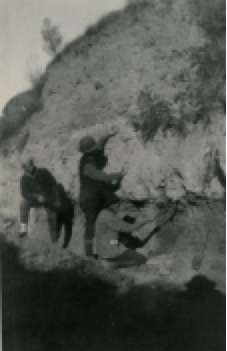
layers, and strata, and he worked in the field by identifying ‘seams’ and digging along sections. This geologist’s view is also very clear from is topographic description, for example in his 1925 publication of the fieldwork in Kansu (now ‘Gansu’) (Andersson [1925] 2011), which was conducted to find additional Yangshao Culture sites Here he detailed observations of the changing shoreline of the lake, relating it to past climatic changes (ibid. 7), and he argued that to understand the location of the sites knowledge of the physiological development of the Kansu valley was necessary (ibid. 7-9). Most revealing, the section drawings (ibid. figure 1-4) focus on the underlying geology, and they were drawn at a scale appropriate for geological investigations but not right for archaeological interpretations of the landscape settings of sites.
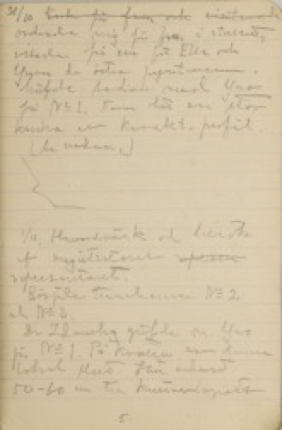
These were the practices and ways of reasoning that Anderson developed and shared with Chinese colleagues. Geology, as field methods, skill set, and mode of reasoning thus played a substantial role in the development of modern Chinese archaeology and its fieldwork methodologies. It is, therefore, especially noteworthy that many of the young Chinese scholars who became involved in the development of archaeology came from a similar background in geology. For instance, Ding Wenjjang, who was a particularly close collaborator of Anderson, shared not only the same educational background but also Andersson’s empiricist-positivist science approach (Fiskesjö 2011).
The political and social turmoil arising from the downfall of Imperial China and the rise of the Republic of China affected all aspects of life in China, including the intellectual sphere. The interruptions did, however, also produce very energetic and dynamic movements that sought new reasons and roles for historical research including the study of the ancient past. The discovery of the Yangshao Culture was befitting of such a period of openness towards new practices and ways of thinking. In comparison with earlier antiquarian work, the discovery of the Yangshao Culture may be seen ‘culture shock’ – it demonstrated that there was a hidden past not seen in the imperial records, but rather had to be exposed through new methods of opening the ground and observation of layers. This constituted, at least for some, an epistemological rupture that had a lasting effect on fundamental views of historical time and the emergent state’s position within this framework. Strongly influenced by western scientific understanding of methods, a modern Chinese archaeology developed with new methods for fieldwork, terminologies, agendas, and institutions. The interactions, in terms of personnel, different disciplinary expertise, and academic milieus (in both China and Europe) that form the context for the extraordinary impact of this discovery (Chen 1997: 52-65; Li 1990), are evidence of how disciplinary competence and innovation often develop incidentally and fortuitously, thus becoming milestones that lay the foundation for the future of the field. Further insight into these complex processes of discipline formation will likely be based on administrative records, unpublished papers, and remnants from Chinese archaeologists who in different settings partook in conversations about ways to investigate the deep past.
The longer-term impact was, however, not just driven by this disciplinary progress but was also deeply influenced by wider nationalistic aims, as with time the discovery of the ancient past (at least for a while) came to be realigned with history in its classical formulation (Fiskesjö 2011: 258). Magnus Fiskesjö, a renowned expert on this question, has characterised the subsequent development as, “the previously-unknown Neolithic findings had presented a tremendous opportunity for challenging the understanding of China as an eternal nation”, fetishized as an enduring essence and instead seeing it as a process of state and empire formation, but in the nationalistic scheme, the pre-Chinese Neolithic instead came to be defined as proto-ancestral to latter-day historical China (Fiskersjö 2017: 304). However, going beyond politics, the longer-term impact of this modernisation of Chinese archaeology on our knowledge about China’s past has nonetheless been real and revolutionary; by the year 2021 the official record states that there were more than 16,000 sites of the Yangshao Culture in China.
The research underwriting this paper is part of the project, Yangshao Culture: 100 Year Research History and Heritage Impact at the Cambridge Heritage Research Centre, McDonald Institute for Archaeological Research, Department of Archaeology, University of Cambridge, which is funded by the Shanghai Academy of Guyewang Studies and Beifang International Education Group. We are happy to acknowledge the support of the Världskulturmuseerna/National Museums of World Culture, Stockholm, who provided the originals for Figure 1. We are grateful for the cooperation with Mr. Hou Junjie, Cultural Consultant (of the National Archaeological Park of Yangshao Village) for People’s Government of Mianchi County, formerly Director of Sanmenxia Municipality Administration of Cultural Heritage; Dr. Wei Xingtao, Deputy Director of Henan Provincial Institute of Cultural Heritage and Archaeology, the Director of the Fourth Excavation of the Yangshao Village Site; and Mr. Yang Shuanchao, Administrator of the Yangshao Cultural Research Centre of the Chinese Academy of Social Sciences (CASS), and their willingness to share their personal views of some of these connections.
(Interviews were conducted on 15th August 2018, 10th July 2019, 18th August and 7th October 2020 and 15th February 2021)
1. Andersson, JG. 1923 (2011). An Early Chinese Culture 中國遠古之文化. Bulletin of the Geological Survey of China 5. Peking: Ministry of Agriculture and Commerce; Beijing: Cultural Relics Publishing House.
2. Andersson, JG. 1925 (2011). Archaeological Research in Kansu 甘肅考古記. Bulletin of the Geological Survey of China 5. Peking: Ministry of Agriculture and Commerce; Beijing: Cultural Relics Publishing House.
3. BMFEA. 2021. “100th Anniversary of the Discovery of the Yangshao Culture by Johan Gunnar Andersson (1874–1960).” Bulletin of the Museum of Far Eastern Antiquities 82, in November the National Museums of World Culture, Stockholm.
4. Chen, X. 1997. Zhongguo shiqian kaoguxue shi yanjiu 1895-1949 中國史前考古學史研究 (History of Chinese Prehistoric Archaeology 1895-1949). Beijing: Sanlian Shudian.
5. Chen, X. 2009. 20 Shiji Zhongguo kaoguxue shi yanjiu luncong 20 世紀中國考古學史研究論叢 [20th Century History of Archaeology Research Symposium in China]. Beijing: Cultural Relics Publishing House, pp. 1-2.
6. Chen, X and M Fiskesjö. 2014. “Oscar Montelius and Chinese Archaeology.” Bulletin of the History of Archaeology 24 (10): 1-10.
7. Chen, X and F Fang. 2014. Yangshao he tade shidai: Jinian Yangshao Wenhua faxian 90 zhounian guoji xueshu yantaohui lunwen ji 仰韶和她的時代:紀念仰韶文化發現90 周年國際學術研討會論文集[Yangshao and Her Time: proceedings of the international symposium on the 90th anniversary of the discovery of the Yangshao Culture]. Beijing: Cultural Relics Publishing House.
8. Chen, X & S Ma. 2007. “Li Ji and An Tesheng: Cong Gao Benhan zhi Li Ji de san feng xin tanqi.”李濟與安特生: 從高本漢致李濟的三封信談起 (Li Ji and Andersson: A Discussion Based on Three Letters from Gao Benhan to Li Ji ). Archaeology 考古 2.
9. Chen, Y. 1930 (1980). “Chen Yuan Dunhuang jie yu lu Xu” 陳垣敦煌劫餘錄序 (Preface, Introduction to Chen Yuan’s Dunhuang Robbery), published in Zhongyang yanjiuyuan lishi yuyan yanjiusuo jikan 中央研究院歷史語言研究所集刊 1) [Collected papers of Institute of Historical Linguistics of Academia Sinica]; collected in Chen Yinke wenji 陳寅
10. 恪文集 [Chen Yinke’s collected works], Shanghai Classics Publishing House. Falkenhausen, LV. 1993. “On the Historiographical Orientation of Chinese Archaeology.” Antiquity 67 (257): 839-849.
11. Fan, S. 2014. The Harvard-Yenching Institute and Cultural Engineering: Remaking the Humanities in China 1924-1951. Lanham, MD: Lexington.
12. Fiskesjö, M. 2011. “Science across Borders. Johan Gunnar Andersson and Ding Wenjiang.” In Glover D. M., S. Harrell, C. F. McKhann, and M. B. Swain (eds) Explorers and Scientists in China’s Borderlands, 1880-1950. Seattle: University of Washington Press.
13. Fiskesjö, M. 2017. “Chinese Autochthony and the Eurasian Context: Archaeology, Mythmaking and Johan Gunnar Andersson’s “Western Origins”.” In Kathryn O. Weber K O, Hite, E, Khatchadourian L and A T Smith (eds) Fitful Histories and Unruly Publics: Rethinking Temporality and Community in Eurasian Archaeology. Leiden: Brill.
14. Fiskesjö, M and X Chen. 2004. China Before China: Johan Gunnar Andersson, Ding Wenjiang, and the Discovery of China’s Prehistory (a completely bilingual English-Chinese volume), Stockholm: Museum of Far Eastern Antiquities.
15. Fu, S. 1930 (1996). “Kaoguxue de xin fangfa” 考古學的新方法(New Methods of Archaeology). Fu Sinian Xuanji 傅斯年選集[Collected Works of Fu Sinian]. Tianjin People’s Publishing House.
16. Gabbiani, L and B Zhang. 2019. Board of French Sinology Series (ed.), Jiuxue xinzhi – Zhong Ou zhishi yu jishu zhi yanbian 舊學新知 中歐知識與技術之演變 [New Knowledge from Old Learning -- The Evolution of Knowledge and Technology in China and Europe]. Sinologie Française 18. Zhonghua Book Company.
17. Geng, H. 2016. Xin kecheng: Yuwen jiaoyu wenti yu duice yanjiu 新課程: 語文教育問題與對策研究[New curriculum: A Study on Problems and Countermeasures of Chinese Education]. A Book on the Professional Development of Chinese teachers in primary and secondary schools. Xinhua Publishing House.
18. Gu, J. 1923. “Cengleidi zaochengde zhongguo gushi” 層累地造成的中國古史[Ancient Chinese history was created by layers and layers]. Yu Qian Xuantong xiansheng lun gu shishu 與錢玄同先生論古史書 [View on ancient history with Master Qian Xuantong (1887-1939)].
19. Gu, J. 1926-41. Gushibian (Debates on ancient history). Beijing: Pushe (Reprinted 1982, Shanghai : Shanghai Chinese classics publishing house).
20. Han, Q. 2018. Antesheng zai Zhongguo – Cong kuangwu guwen, huashi caijizhe daokaoguxuejia安特生在中國----從礦務顧問、化石采集者到考古學家 [From Mining Adviser, Fossil Collector to Archaeologist: Johan Gunnar Andersson and His Scientific Activities in China]. Sinologie Française 18. Zhonghua Book Company.
21. Hein, A. 2016. “The Problem of Typology in Chinese Archaeology.” Early China 39: 21-52. Hopkirk, P. 1994. The Great Game: The Struggle for Empire in Central Asia. Kodansha Amer Inc. Johansson, P. 2016. “The Collaborative Dimension of Johan Gunnar Andersson’s Search for a Western Origin of China.” Bulletin of the History of Archaeology 26(1): 11, 1-8.
22. Kircher, A. 1667 (2020). China monumentis, qua sacris qua profanis, nec non variis Naturae et artis spectaculis, aliarumque rerum memorabilium argumentis illustrata. Amsterdam: Jansson; Republished by Olms-Verlag.
23. Li, J. 1928. The Formation of the Chinese People: An Anthropological Inquiry. Harvard University Press.
24. Liang, Q. 1936 (1989). “Nanhai Kang xiansheng zhuan” 南海康先生傳. collected works of Yin bing shi heji 飲冰室合集. Beijing: Zhonghua Book Company.
25. Nalle, D. 2000. “Book Review – Tournament of Shadows: The Great Game and the Race for Empire in Central Asia.” Middle East Policy. Washington, USA: Blackwell Publishers.
26. Romgard, J. 2018. Polarforskaren som strandade i Kina: Johan Gunnar Andersson & de svenska Asienexpeditionerna. Stockholm: Fri Tanke.
27. Tang, D. 1998. Wan Qing qishi nian (1) Zhongguo shehui wenhua zhuanxing zonglun 晚清七十年 (1)中國社會文化轉型綜論 [An overview of the social and cultural transformation of China in the 70 years of the Late Qing Dynasty]. Yuan-Liu Publishing Co., Ltd.
28. Tulli, A. 2006. The Contemporary Situation of Italian Sinology: A Historical Perspective (Before the 19th century). Newsletter for Research in Chinese Studies 25(3).
29. Verrier, A. 1991. Francis Younghusband and the Great Game. London: J. Cape.
30. Wang, QE. 2000. “Historical Writings in 20th Century China: Methodological Innovation and Ideological influence.” in Rolf Torstendahl (ed) An Assessment of 20th Century Historiography. Stockholm: The Royal Academy of Letters, History and Antiquities.
31. Wang, T and P Ucko. 2007. “Early Archaeological Fieldwork Practice and Syllabuses in China and England.” in Ucko P, Qin L & Hubert J (eds) From Concepts of the Past to Practical Strategies: the Teaching of Archaeological Field Techniques. London: Saffron.
32. Wei, J. 2005. Zhongguo kaoguxue shi 中國考古學史 [China’s History of Archaeology]. Beijing: Unity Press.
33. Yang, G. 2008. World Heritage in China. Beijing: Zhongyang wenxian chubanshe (Central Party Literature Publishing House).
34. Yang, G. 2014. “The Concept of ‘Patriotic Education’ and its Influences on China’s World Heritage Practices.” PhD dissertation in Archaeology. University of Cambridge.
35. Zhang, Z. 2009. The General Theory of Chinese Archaeology. Nanjing University Press.
Footnotes
1. Chen Yinke’s statement, Dunhuang zhe, wu guo xueshu zhi shangxin shi ye “敦煌者,吾国学术之伤心史也” is today engraved on a stone plaque at the doorway of the museum at the UNESCO World Heritage site of the Mogao Grottoes.
2. The article in Shenbao on the formation of the discipline of contemporary Chinese archaeology detailed the development of this field and the contributions of key figures, particularly highlighting the important roles of Andersson and Li Ji.
3. ‘Guomindang’ is a political party often referred to in English as the Nationalist Party or Chinese Nationalist Party. Guomindang traces its ideological and organizational roots to the work of Sun Zhongshan, a proponent of Chinese nationalism and democracy who founded the Xingzhonghui (Revive China Society) in 1894. In 1905, Sun Zhongshan joined forces with other anti-monarchist societies in Tokyo to form the Tongmenghui (the Revolutionary Alliance), a group committed to overthrowing the Qing dynasty and establishing a republican style government. The Tongmenghui was the predecessor of the Guomindang, which was founded by Sun Zhongshan together with Song Jiaoren shortly after the Xinhai Revolution of 1911, with Sun Zhongshan as the first provisional president (from the 1st January 1912 to 1st April 1912).
4. Yuan Shikai formed an interim government in Beijing from the 10th March 1912 to 10th October 1913, becoming the second provisional President of the Republic of China. During this period he promulgated the “Decree to honour Kong shengwen”《通令尊崇孔圣文》and stipulated in the Draft Constitution of the Republic of China on the 31st October 1913 that “national education is based on the Teachings of Confucius to cultivate one’s morality” (Article 19). The following year, on the 25th September 1914, Yuan Shikai issued the “Order to Offer sacrifices to Confucius”, specifying that the central and local authorities must offer sacrifices to Confucius on the latter’s birthday, and ordered the Ministry of Finance to allocate funds to repair the Confucius Temple in Beijing.
5. All translations from texts in Chinese or Swedish are by the authors of this study.
6. The ‘Three Sovereigns and Five Emperors’, are the semi-mythological rulers, culture heroes and/or historical figure of the ‘three sovereigns’ and the ‘five emperors’ of ancient China during the period from circa 2852 BC to 2070 BC. This period preceded the Xia dynasty (2070-1600 BC). In the myth, the Three Sovereigns named, in some sources, as Suiren, Fuxi and Shennong, were demigods who used their abilities to help create mankind and impart essential skills and knowledge. The Five Emperors, also named differently in different sources, but often known as Huangdi, Zhuanxu, Ku, Yao and Shun, were exemplary sages of upright moral characters (Yang 2008).
< 原創文章/視頻,未經許可,不得轉載 >
分享文章




 謝謝你的按讚。
你已對此文章按讚,請瀏覽其他你會喜愛的文章!
已有人對此文章/視頻按讚
謝謝你的按讚。
你已對此文章按讚,請瀏覽其他你會喜愛的文章!
已有人對此文章/視頻按讚
歡迎留言:
請登入/登記成為會員後留言