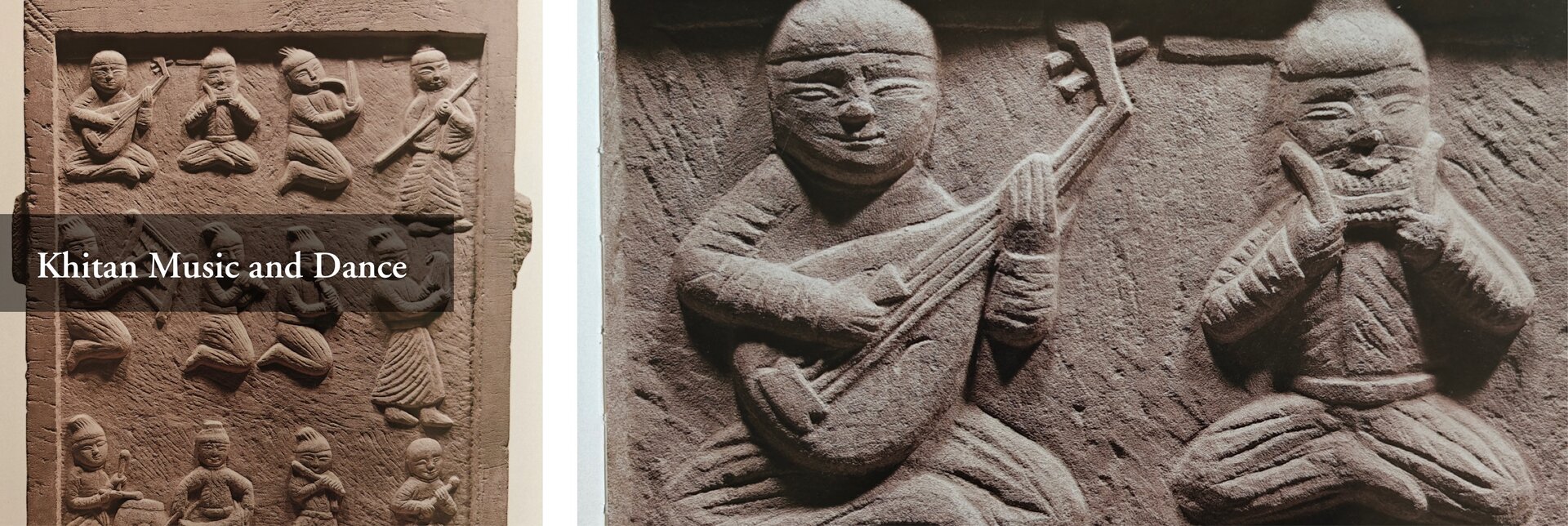
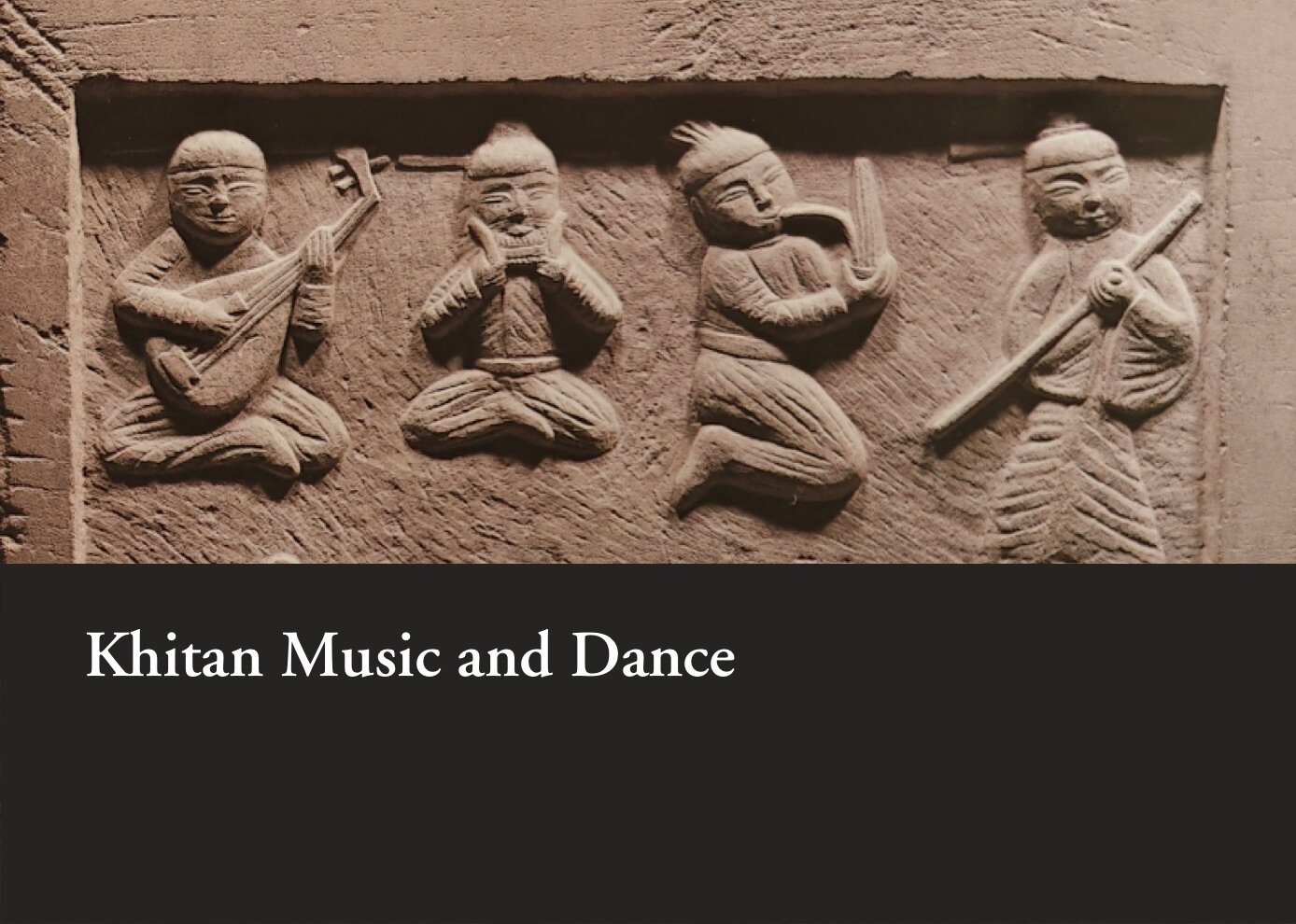
Khitan Music and Dance
The Khitan were a nomadic people from northern China in ancient times. According to historical records, the Khitan were also known for their love of singing and dancing. They "lived by their saddles and horses" and "roamed for hunting, with no fixed residence." This free-spirited way of life led to a culture that highly valued music and dance. Whether among the royal aristocracy or common folk, music and dance were frequently performed, with both the emperor and the people often immersed in these activities. This not only reflected a part of Khitan spiritual culture but also demonstrated the etiquette system of the Liao Dynasty.
The forms of Khitan music and dance primarily include Khitan music, 雅乐 (elegant music),大乐 (grand music), 燕乐 (Yan music), 散乐 (scattered music), 铙歌 (bell song), 模吹乐 (mimic wind music), and 军乐 (military music). These performances took place during solemn sacrifices, various rituals, or in moments of leisure, and involved a wide range of singing and dancing activities.
The music and dance of the Khitan were deeply embedded in their social life, much like food and water, indispensable at all times. The close connection between music and dance and the people is directly related to the Khitan people's love for, understanding of, and the basic characteristics of music and dance. This is the main factor behind the vitality and artistic appeal of Khitan music and dance. In the "Khitan Customs Song," the grand scene of the Khitan people's grassland music and dance is vividly described: "The Khitan people live amidst the clouds and sand, there was heavy traffic on the streets. When spring comes, the grass stretches for ten thousand miles, with peonies and paeonies in alternating reds. The great Khitan leads the cart, and the young Khitan dances; playing the pipa, the melody is for the Khitan women. In the spring, they roam without returning home, with their tents protecting them from wind and rain." This song truly and vividly depicts the grand scene of Khitan music and dance. Wang Anshi, a Song dynasty envoy who once traveled to the Khitan lands, famously wrote in his poem, "On the sand in Zhuozhou, drinking, with the spring breeze, watching the small Khitan dance." The music and dance of the Khitan ethnic group formed their own system, particularly strengthened by absorbing the culture of other ethnic groups. Building upon the music and dance of northern nomadic peoples, they also widely absorbed Han, Tang, and Western Regions music and dance, which led to a more prosperous era in both the court and among the people. Scholars, through historical research and the extensive collection of Liao dynasty relics, have discovered rich representations of music and dance, especially in various architectural reliefs and tomb murals, which preserve a wealth of Khitan music and dance material. This article aims to further organize and analyze relevant artifacts and historical documents based on previous studies, deepening our understanding of their styles and uncovering the cultural information they contain, thus clarifying their historical value and contemporary significance.
From an aesthetic perspective, the exceptional qualities of Khitan music and dance can also be summarized. This summary can be derived from existing authentic artifacts and categories of music and dance, which allow us to directly understand the musical and dance life of the Khitan people. "Music and dance as one", Khitan dance is colorful, rich, and has a far-reaching influence.
1、Stone-carved reliefs: The majority of stone-carved relief artworks depicting music and dance are found in stone stele, architectural components, and accessories. Various aspects of Liao dynasty society seem to be encapsulated in these artworks.
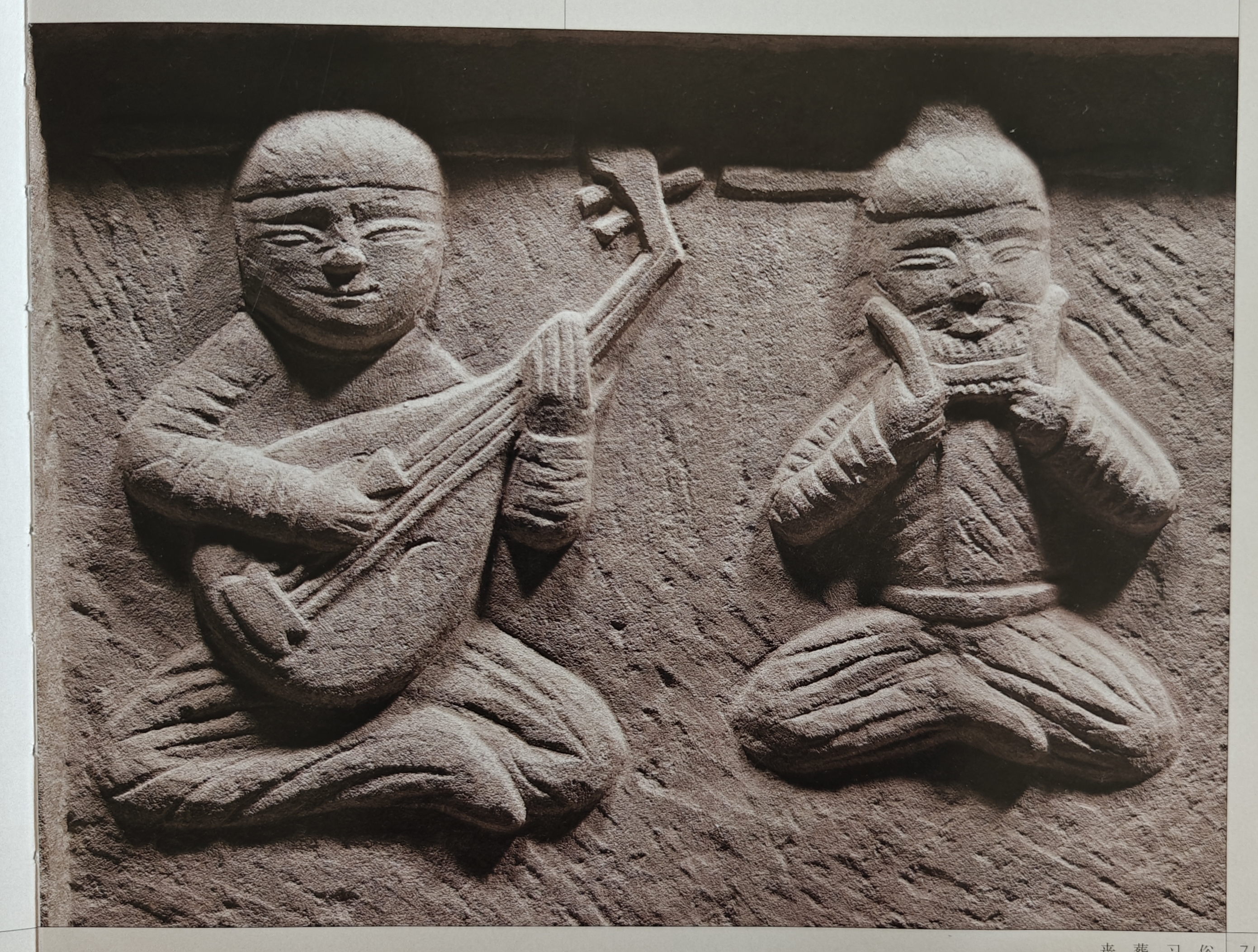
The relief of "Scattered Music," from the Liao dynasty (916–1125), stands 115 cm tall, 74 cm wide, and 7.5 cm thick. It was excavated in 1989 from the tomb of Madam Xiao at the ShiJiangGou of YangJiaYingZi Town, Baarin Left Banner. It is currently housed in the Baarin Left Banner Liao ShangJing Museum. The relief is made of fine sandstone, with a border around the edges. Inside the border, there are three rows of semi-relief figures, totaling 12 people. Of these, 11 are dancers from the scattered music ensemble.Most of the performers are wearing flat-topped headgear, round-collared long robes, wide belts at the waist, and high boots. The 1st person is seated, holding a pipa and in a playing posture; the 2nd person is seated, playing the panpipes; the 3rd person is kneeling, playing the sheng; the 4th person is standing, holding and striking a clapper board; the 5th person is kneeling, with a square resonator in front, holding a hammer in each hand and alternating striking it; the 6th person is kneeling, playing a flute; the 7th person is kneeling, playing a bianxiao (a type of flute); the 8th person is standing, holding a clapper with both hands, beating in time with the music; the 9th person is standing, with a large drum in front, holding drumsticks in both hands, alternating strikes; the 10th person is standing, holding a waist drum horizontally, with the left knee slightly bent and the right foot flat on the ground, holding a staff with the right hand while beating the drum with the left hand and dancing; the 11th person is standing, playing a horizontal flute; the 12th person is standing, with a shaved head, wearing a long robe and high boots, holding short-handled iron bone clappers with both hands, likely the leader of the ensemble.This relief provides extremely valuable material for studying the performance forms, instrument arrangements, attire of musicians, and the shapes of musical instruments in the Liao dynasty's scattered music ensemble.
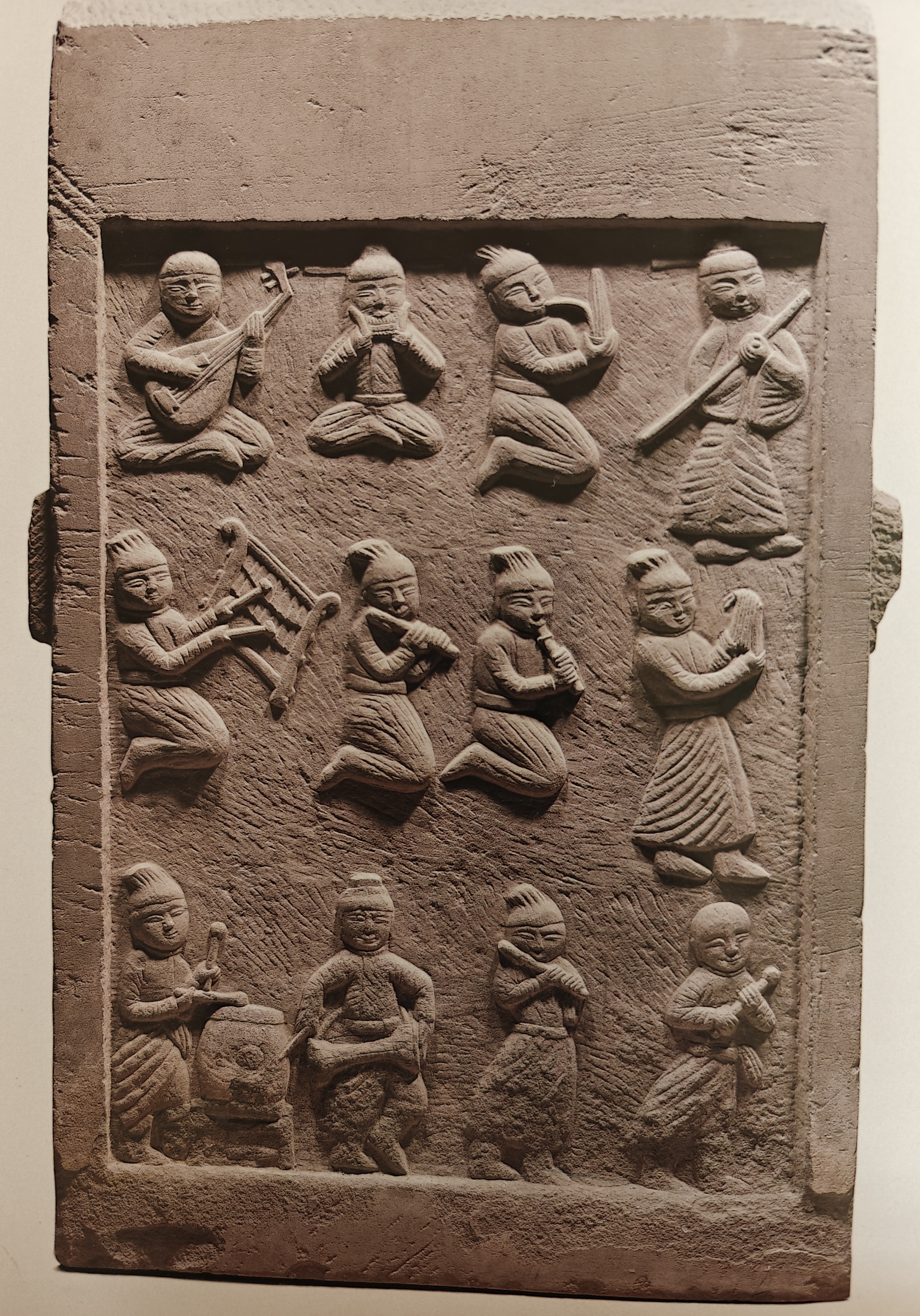
Taken from The Khitan Dynasty, the essence of Liao Dynasty artifacts from Inner Mongolia, published by the China Tibetology Publishing House, 1st edition, 2002.
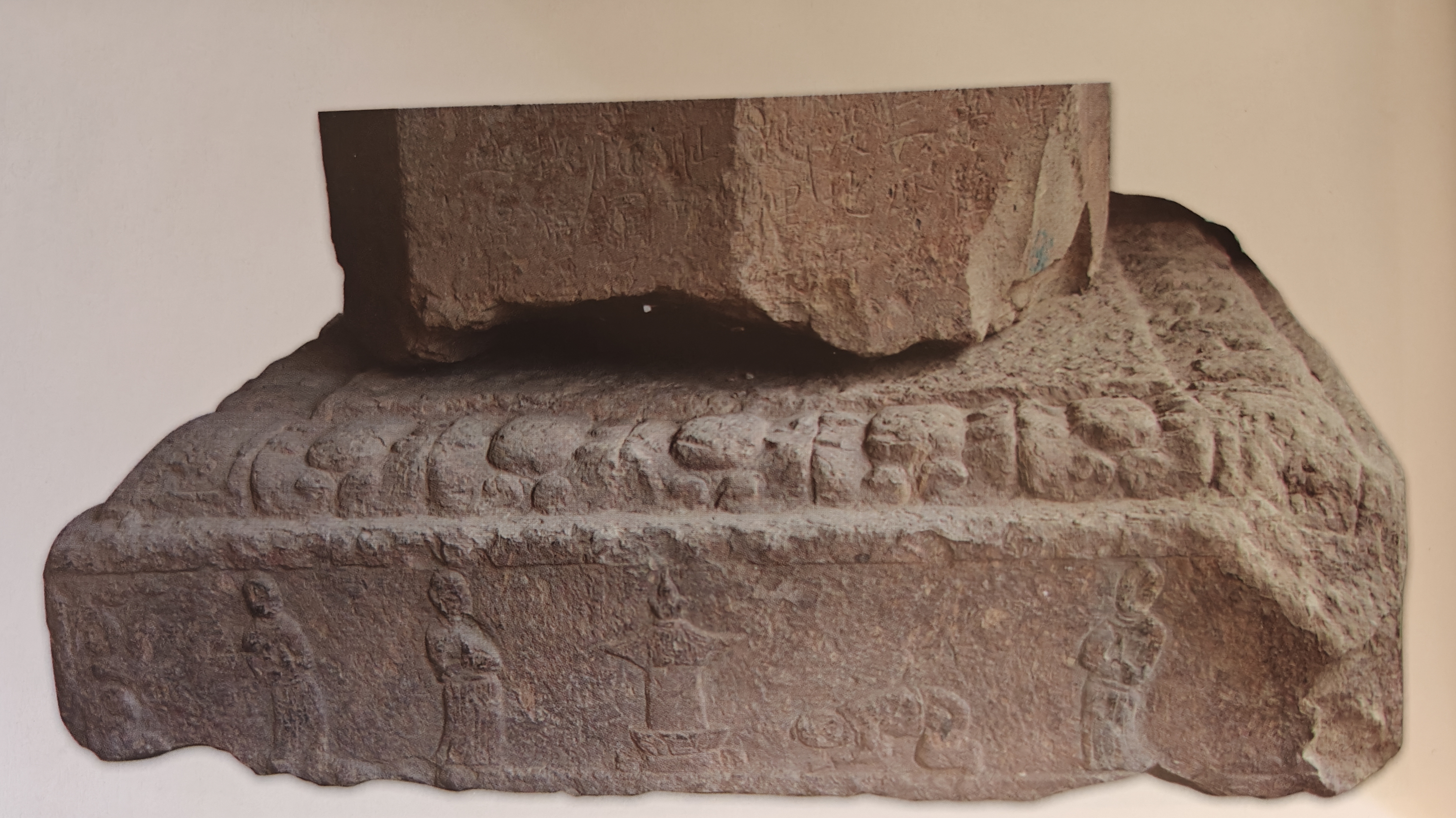
The music and dance stone stele base, from the Liao dynasty (916–1125), is 18 cm in height and has sides measuring 80 cm. It was excavated from the site of Kai Hua Temple at the Qianzhao Temple in ChaGanHaDaSuMu, Baarin Left Banner, and is currently housed in the Baarin Left Banner Liao Shangjing Museum. The base is square in shape, with a half-relief large lotus pattern. Each of the four sides features different half-relief scenes. One side depicts four people dancing for entertainment, all wearing narrow-sleeved long robes and tied at the waist with a belt. The central figure has both arms extended, with the upper arms bent downward and the forearms raised. The other three figures are musicians, with one leg straight and the other bent, performing while simultaneously playing their instruments and tapping their feet. Some of them are holding their hands in front of their chests while playing, creating a rhythmic and harmonious feel that gives a special sense of mystery. This scene is a true depiction of the use of music and dance to entertain the Buddha in Liao dynasty Buddhist temples.
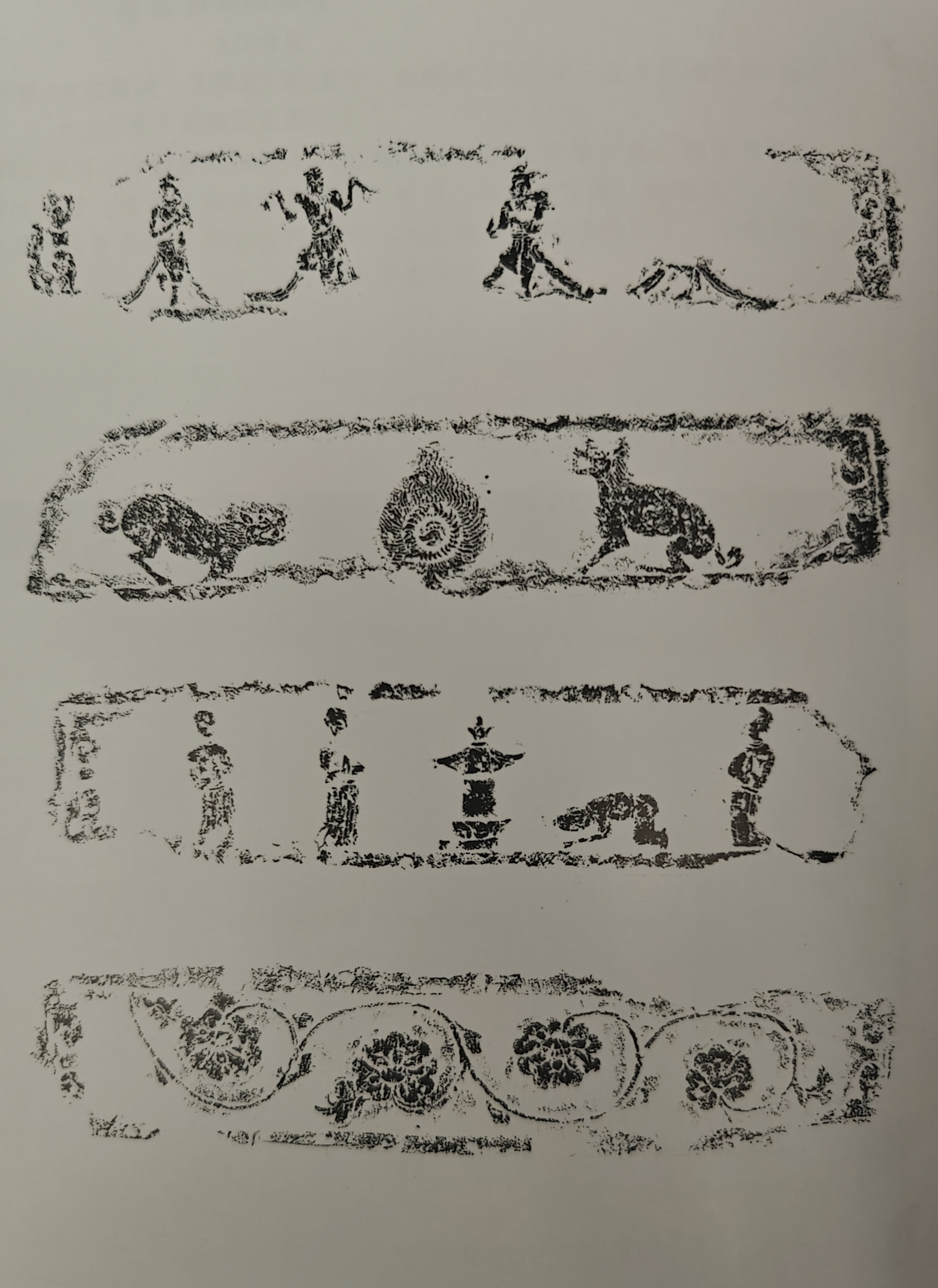
Taken from Selected Treasures of Liao Shangjing Antiquities, published by Yuanfang Publishing House, 1st edition, 2005.
The stone carving of a sheng player (916–1125 AD), was excavated in 1979 from LinDong Town, Baarin Left Banner, and is currently housed in the Baarin Left Banner Liao ShangJing Museum. The maximum length is 18.3 cm, and the maximum width is 11.6 cm. The carved figure of the musician has a full face with a relaxed expression. The figure is dressed in a sheer garment with fluttering colored ribbons, wearing short boots, and holding a sheng with both hands while playing it.
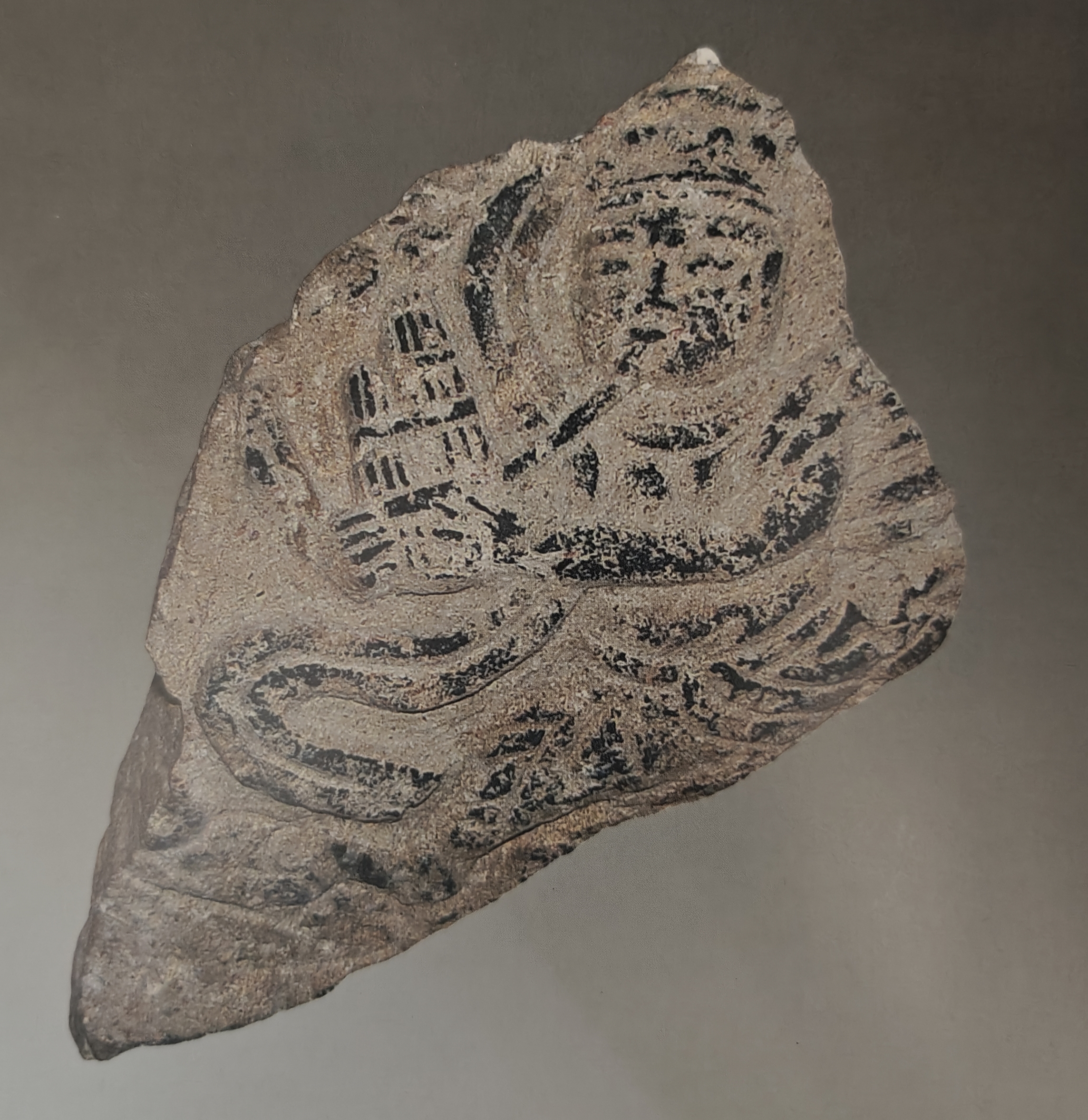
Taken from Selected Treasures of Liao Shangjing Antiquities, published by Yuanfang Publishing House, 1st edition, 2005.
The stone carving of a drum-playing music and dance scene, from the Liao dynasty (916–1125 AD), stands 53 cm tall and 32 cm wide. It was excavated in 1978 from the Liao ShangJing site and is currently housed in the Baarin Left Banner Liao ShangJing Museum. The stone carving depicts three women playing drums. The head of the woman on the left is damaged, the woman in the middle is holding a round drum, and the woman on the right is striking the drum. All three women are dressed in sheer skirts with colorful ribbons tied at the waist, wearing necklaces, and their clothing is marked by smooth flowing lines. They are stepping on auspicious clouds.
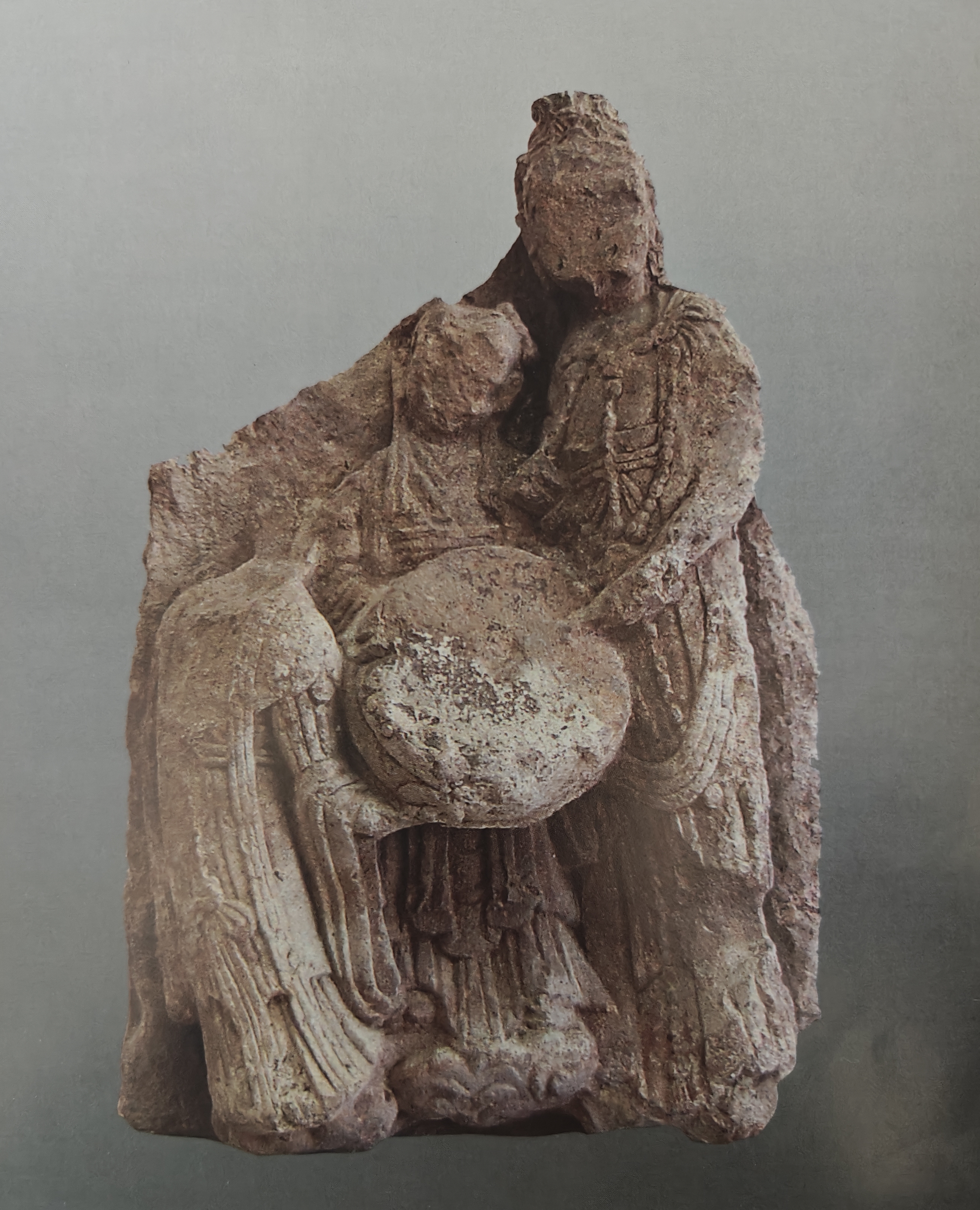
Taken from Selected Treasures of Liao Shangjing Antiquities, published by Yuanfang Publishing House, 1st edition, 2005.
The stone sculpture of a musician, from the Liao dynasty (916–1125 AD), stands 10 cm tall and was excavated from the Liao ShangJing HanCheng site. It is currently housed in the Baarin Left Banner Liao Shangjing Museum. The sculpture is made of grayish-white steatite. The surface is smooth, and the figure stands on a square base. The musician is wearing a rolled-edge hat, with wide-open eyes and a cheerful expression on the face, with the mouth slightly open as if singing. The figure is dressed in a round-collared long robe, wearing boots, and carrying a darag drum at the waist. The left hand is holding a clapper, and the right hand is striking the drum, with the legs in motion, suggesting a walking and performing posture. In the Khitan musical ensemble, each musician typically plays a single instrument, but this figure plays two instruments simultaneously, demonstrating the musician's exceptional skill.
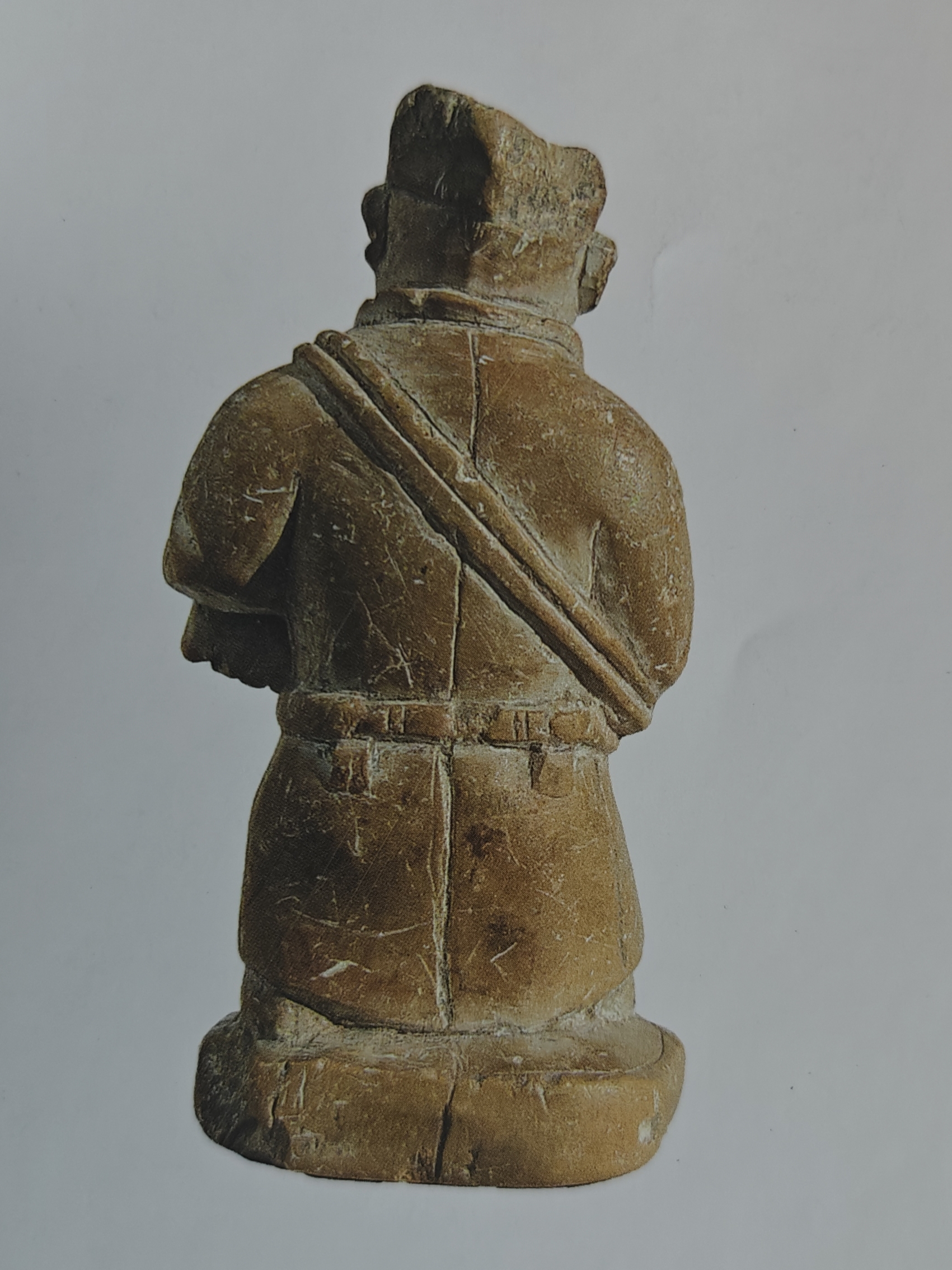
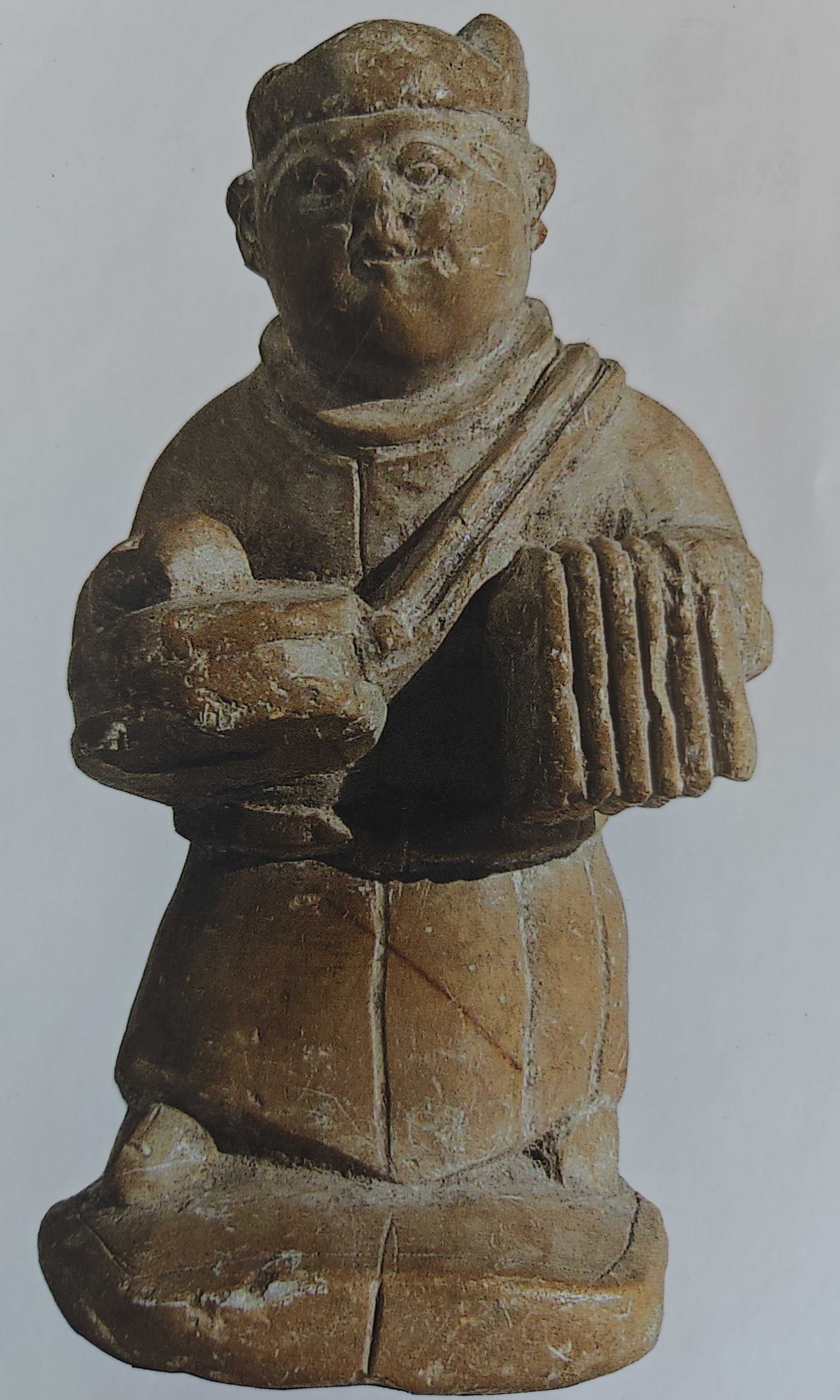
Taken from Selected Treasures of Liao Shangjing Antiquities, published by Yuanfang Publishing House, 1st edition, 2005.
1、Jade plaques: These jade carvings mostly depict Hu people performing music and dance. Through these, we can still glimpse the spirit and character of the people during the flourishing period of the Liao dynasty.
The jade plaque of a waist drum dancer, from the Liao dynasty (916–1125 AD), measures 4.8 cm in length, 4.5 cm in width, and 0.6 cm in thickness. It was excavated in 1978 from the Liao ShangJing HanCheng site and is currently housed in the Baarin Left Banner Liao ShangJing Museum.
The white jade is smooth on the surface and rectangular in shape, with a round hole at each of its four corners. The dancer depicted is male, with a high nose and deep-set eyes, typical of the Hu people. He is dressed in tight clothing, with broad shoulders and a slim waist, wearing high boots. He is seated cross-legged, with a small waist drum placed between his knees. One hand strikes the drum while the other hand raises, performing an alternating drumming motion. A long silk ribbon is draped over his shoulder and wraps around his elbow, fluttering with the movement of his drumming, creating a graceful yet bold and energetic posture. This is likely part of a jade plaque depicting Hu people’s music and dance, and the drumming dancer represents a realistic
portrayal of the Liao court’s music and dance absorbing influences from Western Region (XiYu) music and dance.
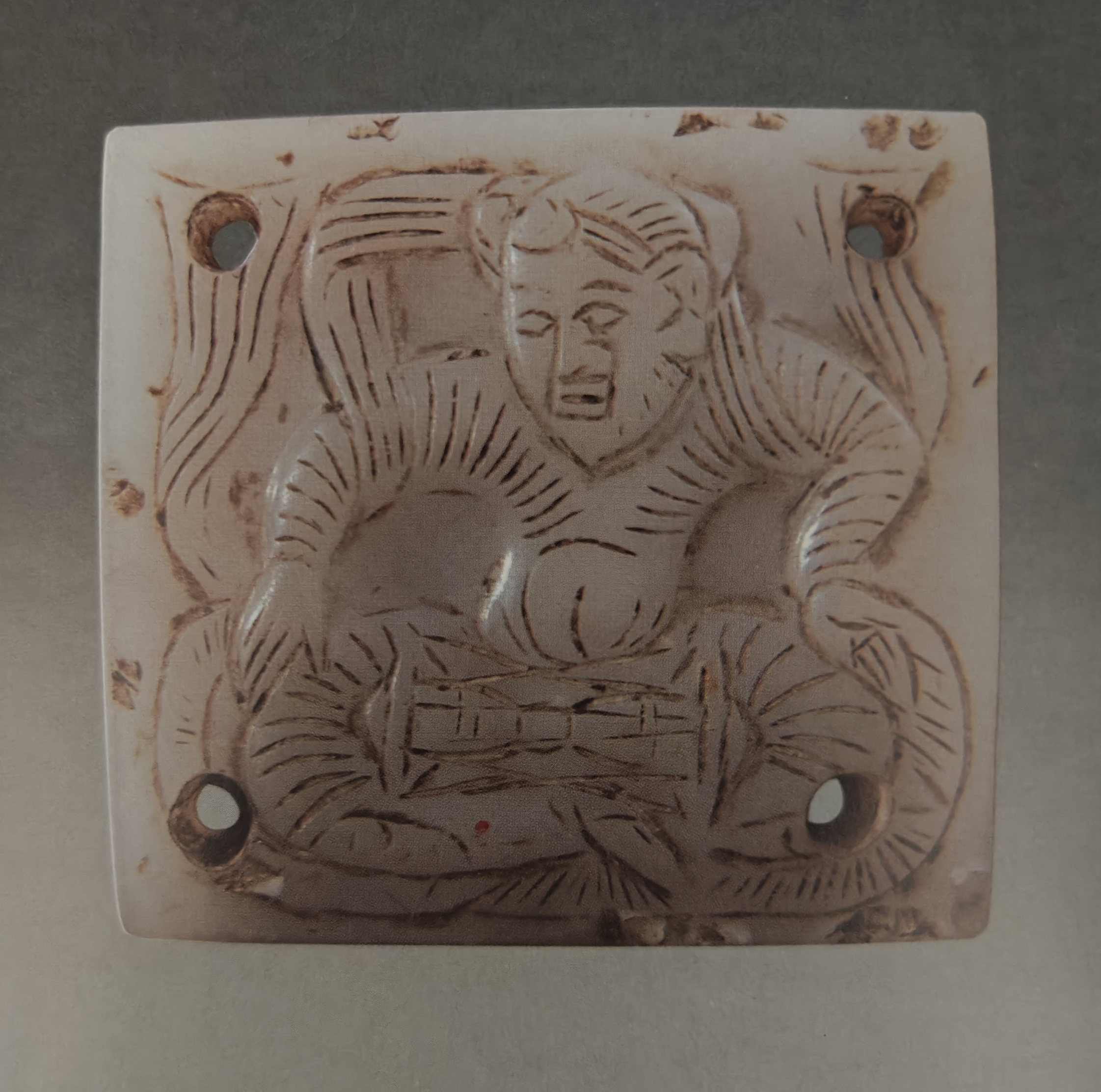
Taken from Selected Treasures of Liao Shangjing Antiquities, published by Yuanfang Publishing House, 1st edition, 2005.
The jade sculpture of a lion tamer, from the Liao dynasty (916–1125 AD), stands 13.8 cm tall and was excavated from the ManSaZiGou area in SiFangCheng, BiliuTai Town. It is currently housed in the Baarin Left Banner Liao ShangJing Museum. The sculpture is made of green jade and depicts a lion tamer wearing a monkey-face mask, barefoot and riding on a lion. He is dressed in a short-sleeved, square-collared robe, with a wide belt around his waist. The left hand holds a long pole, while the right hand holds food to feed the lion. The lion is standing and appears to be reaching for the food, with its tail in a swinging motion. The lion tamer is wearing a crown, and his clothing has a net-like pattern, suggesting it is a costume for performances. According to the Liao Shi (History of the Liao), various forms of entertainment were performed on important occasions and festivals, with lion taming often originating from the countries of the Western Regions . This jade sculpture of a lion tamer is likely a true portrayal of the lion-taming performance at the Liao Shangjing court.
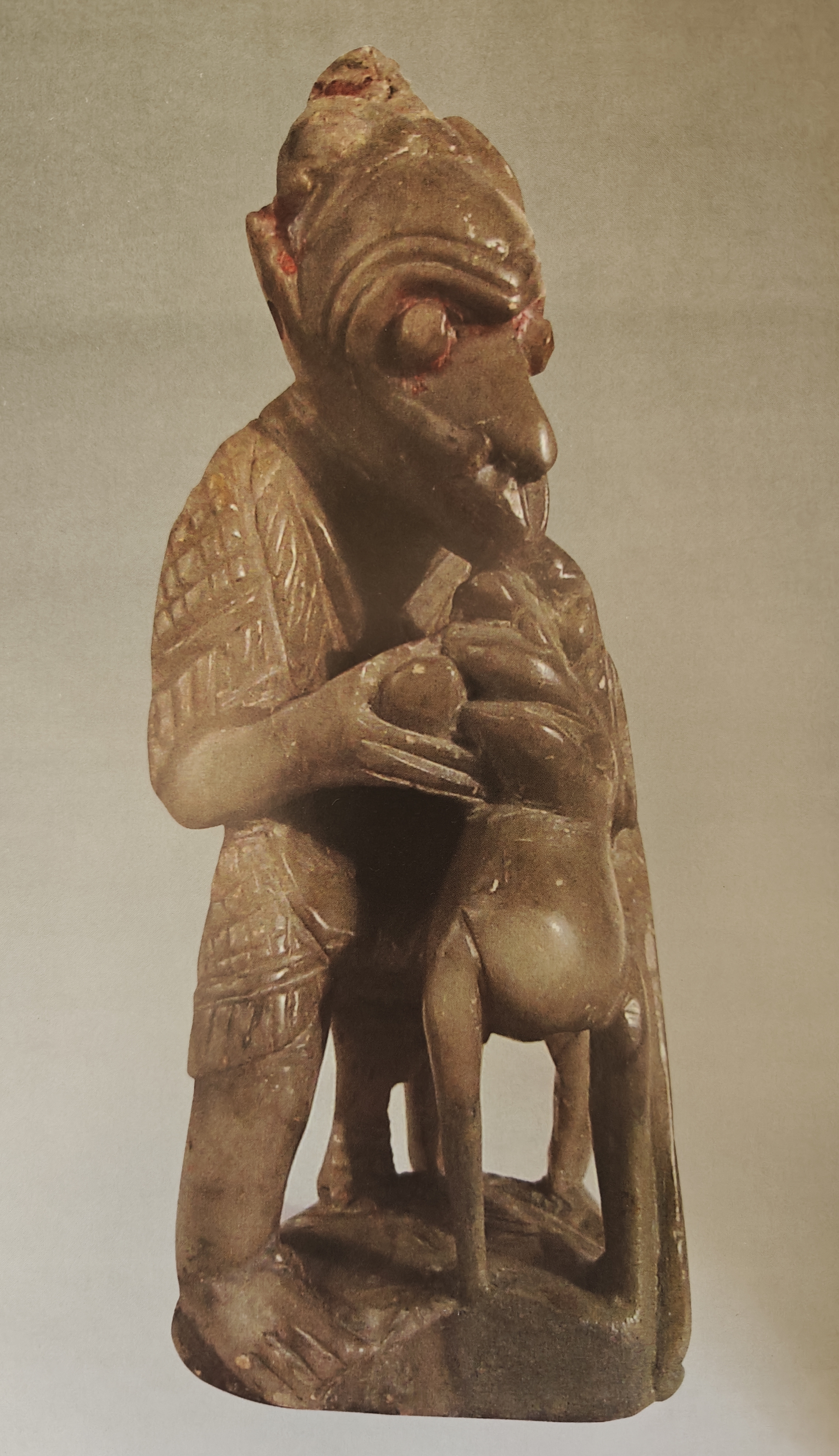
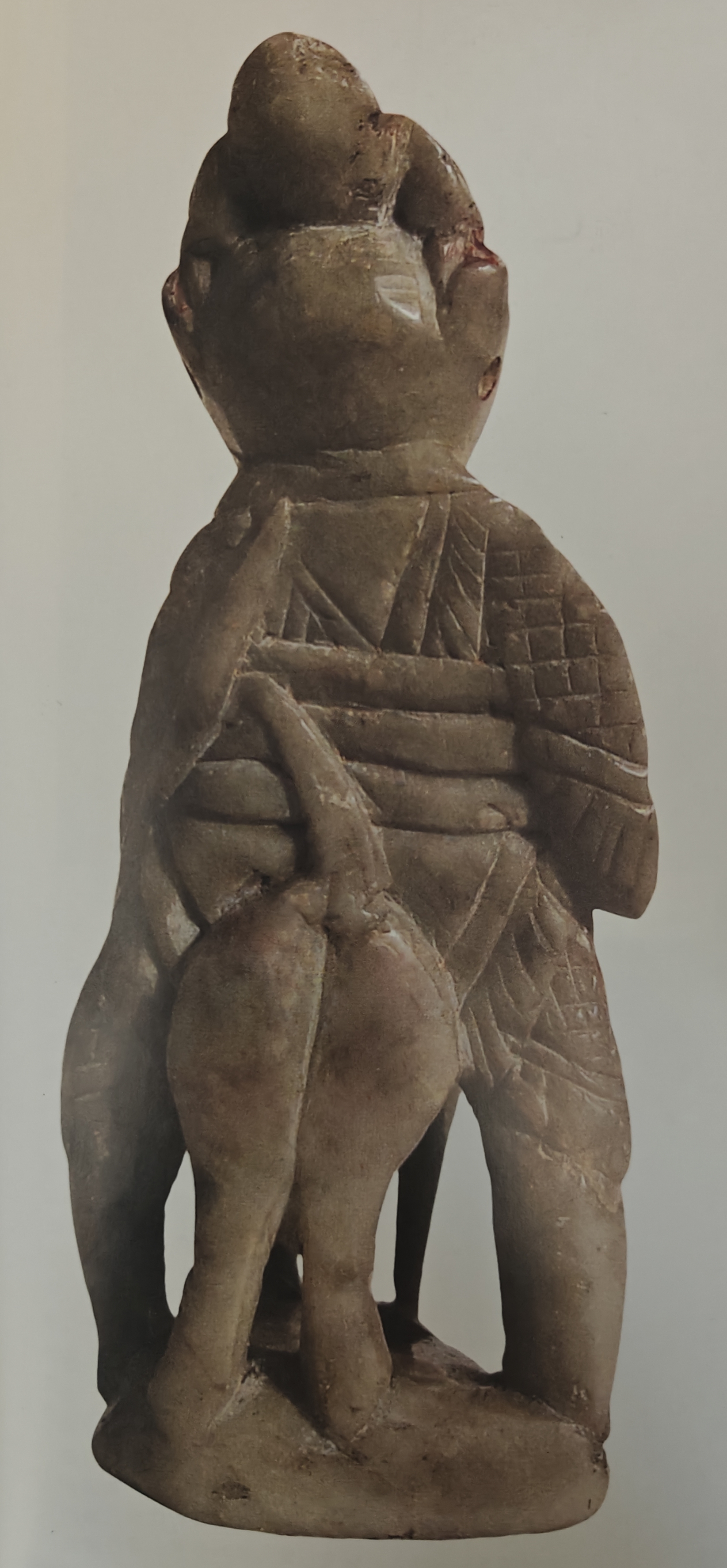
Taken from Selected Treasures of Liao Shangjing Antiquities, published by Yuanfang Publishing House, 1st edition, 2005.
The jade belt hooks with Hu people’s music and dance motifs, from the Liao dynasty (916–1125 AD), have a maximum tassel tail length of 12.6 cm, a width of 6.7 cm, and a thickness of 0.6 cm. The hooks generally range from 6.5 to 6.9 cm in length, with a width of 6 cm and a thickness of 0.8 cm. They were excavated in 2000 from the No. 1 Liao tomb in ZhangJiaYingZi village, SaLiBa Township, AoHan Banner, and are currently housed in the Aohan Banner Museum.The jade belt hooks consist of 8 individual hooks and 1 tassel tail, varying in shape and size, all crafted from the same piece of Hetian greenish-white jade. On the jade hooks, apart from one person drinking wine, the other seven figures are Hu people musicians. The clothing of the figures is somewhat similar, featuring high noses, deep-set eyes, large beards, and curly hair. They are dressed in tight-sleeved, round-collared garments with belts around their waists and long boots. The entire jade belt hook set depicts a scene of Hu people drinking wine and enjoying music and dance, accompanied by a seven-person band playing lively and uplifting music. The instruments include a sheng (mouth organ), a horizontal flute, a pipa (lute), a Mao Yuan drum, clappers, a Ji Lou drum, and a bili (ancient wind instrument). The dancers perform graceful and captivating movements, vividly representing the Hu Xuan dance. This ensemble likely formed part of the Liao imperial court's royal orchestra and represents the spread of Western Region (Xiyu) culture in the Khitan realm, serving as an artistic reflection of Khitan music and dance.
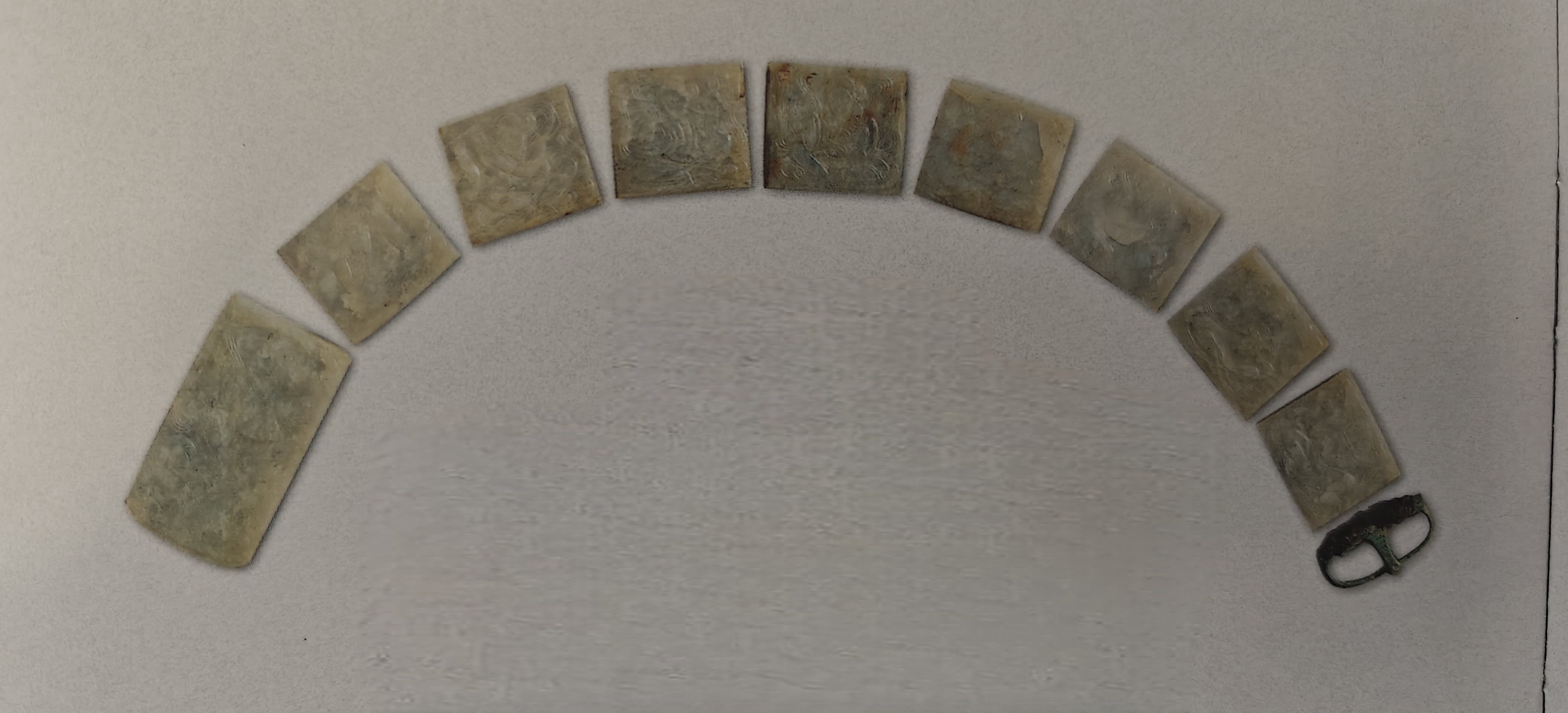
Taken from Essence of Ao Han Antiquities, 1st edition, 2004.
All articles/videos are prohibited from reproducing without the permission of the copyright holder.
SHARE THIS




 Thank you for your like.
You’ve liked this article. Please browse more articles you may like!
people have liked this article/video
Thank you for your like.
You’ve liked this article. Please browse more articles you may like!
people have liked this article/video
Welcome to leave a message:
Please Sign In/Sign Up as a member and leave a message