On Ecological Emotions from the Awakening of Insects
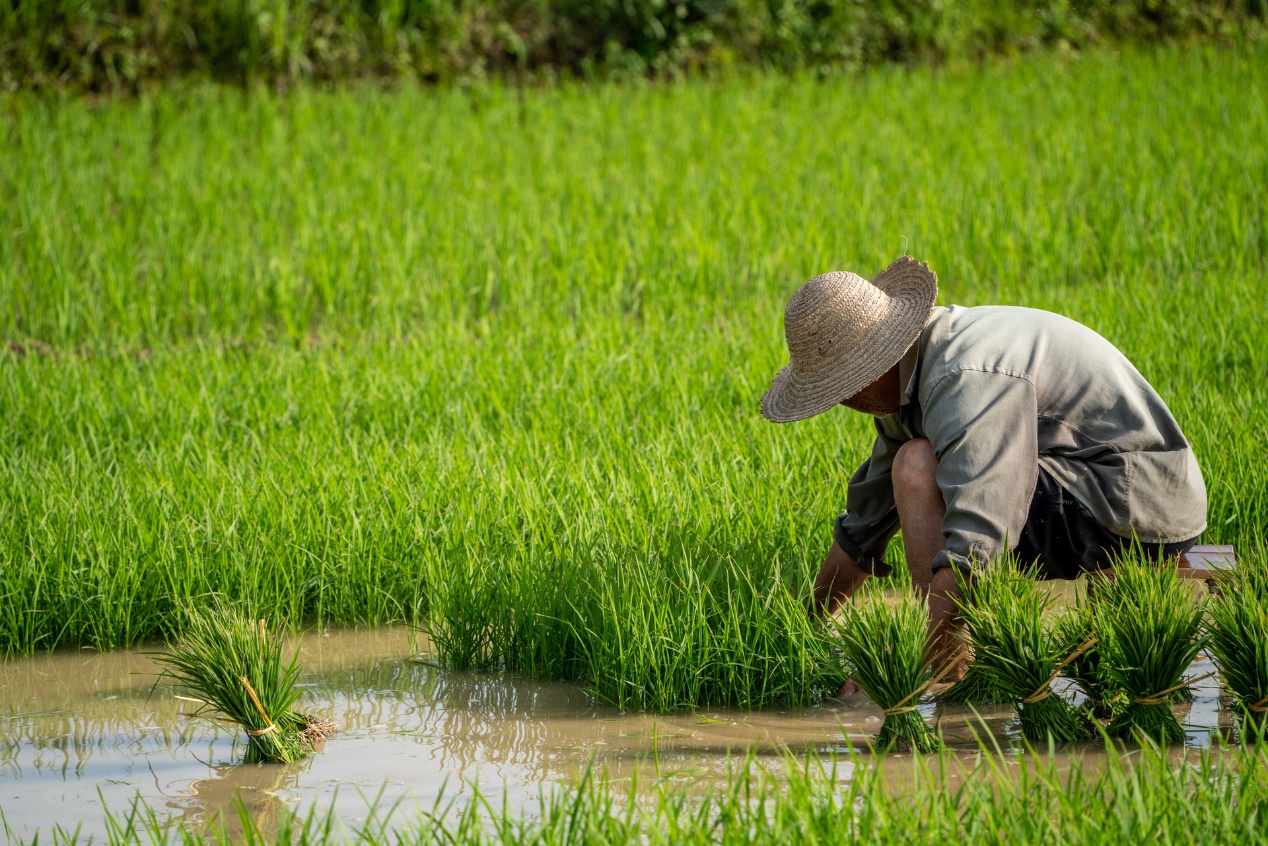
"Awakening of Insects (驚蟄, jīng zhé)", also known as "啟蟄" (qǐ zhé), ranks third among the twenty-four solar terms (二十四節氣). It symbolizes the nurturing of life and the revival of all things. After the long winter, a muffled thunder from nature summons all living beings as a new cycle of life quietly arrives, also reminding farmers to hurry and tend to their fields—it's time to begin work. Wei Yingwu (韋應物,737–792) wrote in his poem: "In the misty drizzle, all plants and flowers are renewed with fresh life; with a clap of spring thunder, the Awakening of Insects officially begins. How many days of leisure can farming families enjoy? The toil of spring plowing commences in full from this very day (微雨眾卉新,一雷驚蟄始。田家幾日閑,耕種從此起)." ("Observing The Farmer Household (《觀田家》)") He was talking about how the Awakening of Insects marks the beginning of farming. The significance of "Awakening of Insects" is never mere mechanical repetition; it silently and moistly carries out the grand narrative that "The greatest virtue between heaven and earth is to nurture life and allow all things to flourish endlessly (天地之大德若生). " In ancient China, people always appreciated heaven and earth artistically: at this time, pheasants respond to the thunder by flapping their wings and calling, wild geese migrate from south to north across the sky, fish rise to the frozen water surface to taste spring's warmth for the first time, otters display their catches on the shore as if making offerings, and orioles' chirping echoes throughout the valleys. Legend has it that during Awakening of Insects, hawks transform into turtle doves, and nature's benevolence permeates the mountains, forests, rivers, and marshes through this special metamorphosis. The tranquil environment is indeed conducive to birds incubating eggs and raising their young. Plants too are silently showing their charm: willows are striving to sprout tender buds, while plum, apricot, and wild peach trees are smiling and blooming! Sedge grass also eagerly bears its reddish-yellow fruits. The poetic and romantic sentiments of the ancients concretely manifest the life force of the universe and the beauty and moral meaning hidden within.1 The ancients always maintained a profound sense of awe, reverence, appreciation, and care for nature; pursuing harmony and balance in the entire universe is the artistic philosophy of the Chinese people.
How is the ancient concept of harmony manifested? "The Book of Changes (《周易》)" states: "The so-called "象" means to simulate, symbolize, and derive images from all things (象也者,像也)." The purpose of emulating nature is to create emotional resonance with heaven and earth and share the rhythm of life with all beings. Awakening of Insects is symbolized by thunder, which corresponds to the Zhen trigram (震卦) in the Eight Trigrams (八卦). Among the sequence of the Eight Trigrams, there is a pattern that unfolds clockwise from spring, called "All things come into being and emerge from Zhen, the trigram of thunder (萬物出乎震」)." Zhen (震) symbolizes the imagery of thunder stirring and all things awakening; it is the beginning of the order of life. We use drums to imitate the movement of thunder, as people in the Han Dynasty already held the belief that "Thunder is the sound of drums beating between heaven and earth (雷者,天地之鼓)." The "Rites of Zhou (《周禮》)" records: "When making drums, one must choose the day of the Awakening of Insects (凡冒鼓,必以啟蟄之日)," meaning that on the day of Awakening of Insects, leather is used to cover the drum cavity to make a drum for beating, echoing the startling thunder in nature. Drums are important ritual and musical instruments, also used in agriculture and military affairs. Beating drums at Awakening of Insects marks the beginning of spring plowing and carries the dual significance of ritual sacrifice and agricultural mobilization. The folk custom of covering drums with leather at Awakening of Insects persists to this day, symbolizing the expectation of welcoming spring with drum sounds, dispelling evil, and inviting blessings.
In the Qing Dynasty, Shanyin County (山陰縣) in Zhejiang (浙江) had a custom of worshipping the White Tiger in early spring. According to the "Shanyin County Gazetteer (《山陰縣志》)": " On the fourteenth day of the first lunar month, people would invite shamans to prepare livestock and sweet wine to offer sacrifices to the White Tiger deity. After the ritual was completed, the shamans would use red and green threads to affix a paper effigy of the white tiger to the main gate. This ritual is called 'Sending off the White Tiger' (正月十四日,用巫人以牲醴祀白虎之神,祭舉,以紅綠線釘虎於門上,謂之遣白虎)." The custom of worshipping the White Tiger during the Awakening of Insects has a long history. The so-called "Sending off the White Tiger (遣白虎)" means driving away the White Tiger2 to prevent gossip, bloodshed, and household unrest throughout the year. The White Tiger, along with the Azure Dragon (青龍), Vermilion Bird (朱雀), and Black Tortoise (玄武), are the four traditional auspicious beasts. "Da Dai Li Ji: Xia Xiao Zheng (The Xia Calendar, in Book of Rites by the Elder Dai 《大戴禮記·夏小正》)" states: "At dusk, the star Shen (參星, Zeta Orion) is positioned directly in the center of the southern sky. This is likely a method used to mark the seasons. The Dou Bing (斗柄, the Handler)3 hangs downward below. The reason for mentioning the handle is to use it as a marker indicating that the star Shen is precisely at its meridian position." During the Awakening of Insects solar term, the Shen constellation appears in the southern sky at night, with the Handle of the Big Dipper pointing downward toward it. Shen Su (參宿, the Three Star Mansion, Zeta Orionis) is the seventh mansion (宿) in the Symbol of White Tiger (白虎星區)4. The three bright stars of Shen constellation represent three generals and govern warfare and killing. Worshipping Shen Su (the Three Star Mansion) in early spring to pray for household peace and freedom from disputes is a perfectly normal wish. Although lacking documentary support, this hope filled with sentiment and faith is believed to have gradually evolved through sympathetic magic into the custom of " Villain hitting (打小人)" on the day of Awakening of Insects.
The ancients always expressed profound ecological sentiments toward the Awakening of Insects. Spring snow melts, ice thaws, gentle breezes pass by, vegetation sprouts, hibernating insects awaken—the world overflows with the breath of new life. Our ancestors understood the rhythm of spring and knew the intentions of all things; they did not violate the seasons nor disturb living creatures. The "Guanzi: Wuxing (《管子·五行》) " states: "In spring, cultivating and tilling the land must follow the seasons and not go against the proper timing; seedlings should be nurtured at their roots to ensure a solid foundation and vigorous growth (春辟勿時,苗足本)." Let plants and trees take root according to their nature, let young shoots grow freely at their own pace—neither rushing nor forcing, neither harming nor breaking. Such composure is the most fitting respect for life. "Do not kill young birds, do not harm young beasts, do not impose urgent and harsh decrees, and do not injure infants in swaddling clothes (不癘雛鷇,不夭麑䴠,毋傳速,亡傷襁葆)." Upon seeing newly hatched chicks or encountering stumbling fawns, harbor no thoughts of killing; do not harm a single new sprout or disturb any newborn life. Such compassion is an ecological sentiment etched in the bones—all things share the same origin, all beings are equal.
From "the Book of Rites" "Monthly Ordinance"(《禮記·月令》) also expresses the most profound consciousness of protection for spring. When offering sacrifices to mountains, forests, rivers, and marshes, female animals are not used, out of consideration for the female's responsibility in nurturing life; prohibiting the felling of trees, forbidding the overturning of nests, and not killing young insects, embryos, or eggs reflects cherishing the vitality of plants, trees, birds, and beasts, viewing the spring ecology as an organic whole of cosmic life. The ancients did not see themselves as masters of heaven and earth, but maintained a humble attitude, coexisting and co-prospering with all things, understanding restraint and knowing reverence, comprehending the philosophy of measured consumption and endless regeneration. The treasuring of every blade of grass and tree, the gratitude for every life, that mindset of adapting to the seasons and circumstances with devout reverence represents the Chinese people's poeticized goodness and beauty, their aestheticized sentiments and aspirations.

The traditional Chinese philosophy embodied in the Awakening of Insects solar term centers on the cosmic harmony of unity between heaven and humanity and a reverence for the endless cycle of life. It represents the artistic wisdom of ancient people in integrating natural rhythms with humanistic spirit. Taking the thunder that awakens all things and the revival of vitality during Awakening of Insects as an opportunity, the ancients glimpsed the essence of heaven and earth where "The most sublime and greatest virtue of Heaven and Earth is to give birth to all things and perpetuate life endlessly (大德曰生)." They regarded natural phenomena as concrete expressions of life force, and from subtle details such as the migration of birds and the sprouting of vegetation, they comprehended the life rhythm of the universe as a whole, upholding an ecological sentiment that all things share the same origin and all beings are equal.
This philosophy manifests as a practical principle of adapting to the times and circumstances, using the Zhen hexagram symbolizing thunder and the Awakening of Insects drumming to emulate the rhythms of heaven and earth, achieving harmony between heaven and humanity. The custom of beating drums during spring plowing further represents the unity of ritual customs and agricultural seasons. The folk practices of worshipping the White Tiger and "Villain hitting" are essentially prayers for peaceful living, as well as recognition of the connection between natural celestial phenomena and human social order.
This philosophical reflection on the Awakening of Insects is embodied in the humble guardianship of life. The principles found in "the Record of Rites by Dai the Elder (《大戴禮記》)", "the Record of Rites by Dai the Younger (《小戴禮記》)" and "Guanzi (《管子》)"—prohibiting the felling of trees and destruction of nests, not harming young life, and taking resources with moderation—demonstrate the ancestors' way of living that neither violated the natural seasons nor disturbed living beings. Rather than positioning themselves as masters of heaven and earth, they coexisted and co-prospered with all things, making reverence for nature and nurturing of life the spiritual foundation of Chinese culture, and transforming China's solar term culture into a philosophical vehicle that carries cosmological and life views.
Reference
1. The textual descriptions of phenology are based on The Xia Calendar, in Book of Rites by the Elder Dai (《大戴禮記·夏小正》) ".
2. In Chinese folk beliefs, the White Tiger (白虎) is considered an inauspicious deity believed to bring disasters and misfortune, therefore the White Tiger deity must be sent away to avoid calamity
3. The arc-shaped star group formed by the fifth star (Yu Heng [玉衡], Epsilon Ursae Majoris) to the seventh star (Yao Guang [搖光], Eta Ursae Majoris) in the Big Dipper (北斗七星), named for its resemblance to the handle of a wine ladle.
4. Ancient Chinese astronomers divided the sky ecliptic into four regions, collectively known as the Four Symbols, each assigned a mysterious animal. The White Tiger on the west, and the Symbol of White Tiger consists of the Legs Mansion (奎宿, Eta Andromedae), the Bond Mansion (婁宿, Beta Arietis), the Stomach Mansion (胃宿, 35 Arietis), the Hairy Head Mansion (昴宿, 17 Tauri), the Net Mansion (畢宿, Epsilon Tauri), the Turtle Beak Mansion (觜宿, Lambda Orionis) and the Three Star Mansion (參宿, Zeta Orionis)
All articles/videos are prohibited from reproducing without the permission of the copyright holder.
SHARE THIS




 Thank you for your like.
You’ve liked this article. Please browse more articles you may like!
people have liked this article/video
Thank you for your like.
You’ve liked this article. Please browse more articles you may like!
people have liked this article/video
Welcome to leave a message:
Please Sign In/Sign Up as a member and leave a message