On Horses in the Year of Bingwu
Ancient Chinese cultural narratives about horses resemble Jiu Fanggao(九方皋)'s horse appraisal method of "Overlooking their colors and capturing their spirited elegance (略其玄黃,取其俊逸)." Whether a swift horse (千里馬) is of any particular color is not the point; its spiritual state is key. Similarly, when Gu Kaizhi (顧愷之, 344-406) painted human figures, he would leave the eyes unpainted for years. When asked why, he explained: "The beauty or ugliness of the limbs has nothing to do with the marvelous essence; conveying the spirit lies precisely in the pupils (四体妍蚩,本无关妙处,传神写照,正在阿睹中)." Spot on! The body is merely form; it is the eyes that convey the soul. It is said that after Gu Kaizhi painted the eyes on the figures in his paintings, the figures actually came to life. Chinese literati often paint with poetry, using words to sketch with immediate effect. Through such highly abstract "spirit-conveying portraiture (傳神寫照)," the "spirited elegance (俊逸)" of horses penetrates through the paper and appears before our eyes. Du Fu (杜甫, 712-770) wrote two lines about the Ferghana horse (大宛馬): "(Fang’s Ferghana) born with a robust frame of sharp angles and sinewy strength (鋒棱瘦骨成)" and "The ears are as sharply tapered and upright as trimmed bamboo, with a crisp contour (竹批雙耳峻)." (from "Adjutant Fang’s Ferghana horse (《房兵曹胡馬》)"), miraculously bringing to life the image of a steed with prominent bones and vigorous strength, pointed ears and slender head, excellent at running and refined in capability. Envying Du Fu’s vigorous brushwork. Li He (李賀, 790-816) loved horses and wrote "Twenty-Three Horse Poems (《馬詩二十三首》)," the fourth of which states: "Taping the horse's lean frame, one could hear the sound like striking bronze (向前敲瘦骨,猶自帶銅聲).," bringing alive on paper the horse's iron-tough constitution and proud, resounding character. Admiring how the "The Ghost of Poetry (詩鬼)" Li He possessed such implicit metaphorical skill. Li Bai (李白, 701-762), unrestrained and carrying an indomitable boldness, wrote: "The horse's back bears markings like tiger stripes, with ridges between its bones resembling dragon wings; raising its head to whiny among the azure clouds, its mane rippling with an emerald sheen, its muscles vigorous and bearing extraordinary, it gallops swift as flight, vanishing from sight in an instant (背為虎文龍翼骨。嘶青雲,振綠髮,蘭筋權奇走滅沒)." (from "Song of the Heavenly Horse (《天馬歌》)"), vividly depicting the heavenly horse's protruding forehead sinews, divinely handsome skeleton, heaven-shaking neighs, flowing mane, and lightning-swift gait. Even "the Immortal Poet (詩仙)" Li Bai wrote about horses with such spirited vigor and heroic energy. Through poetic embellishment, the horse's brave and vigorous bearing, its divinely handsome and extraordinary demeanor, has become an artistic symbol of Chinese culture's robust uprightness and powerful strength.
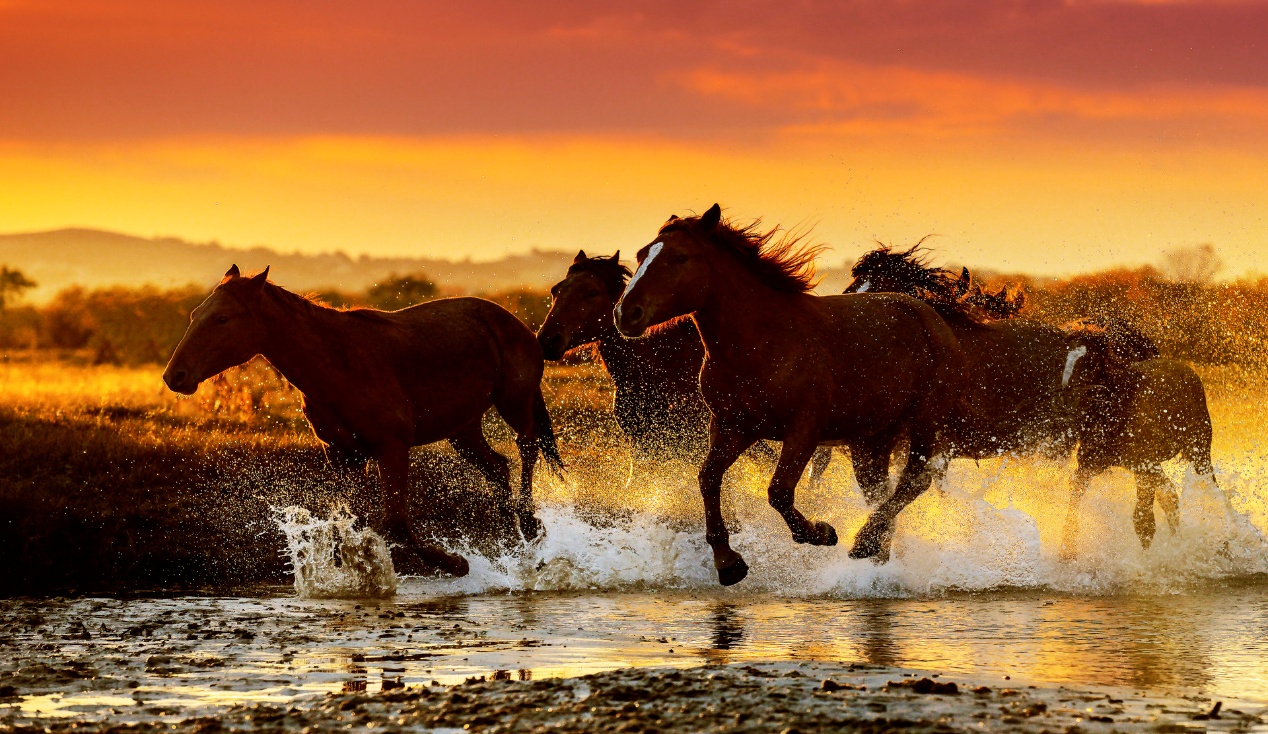
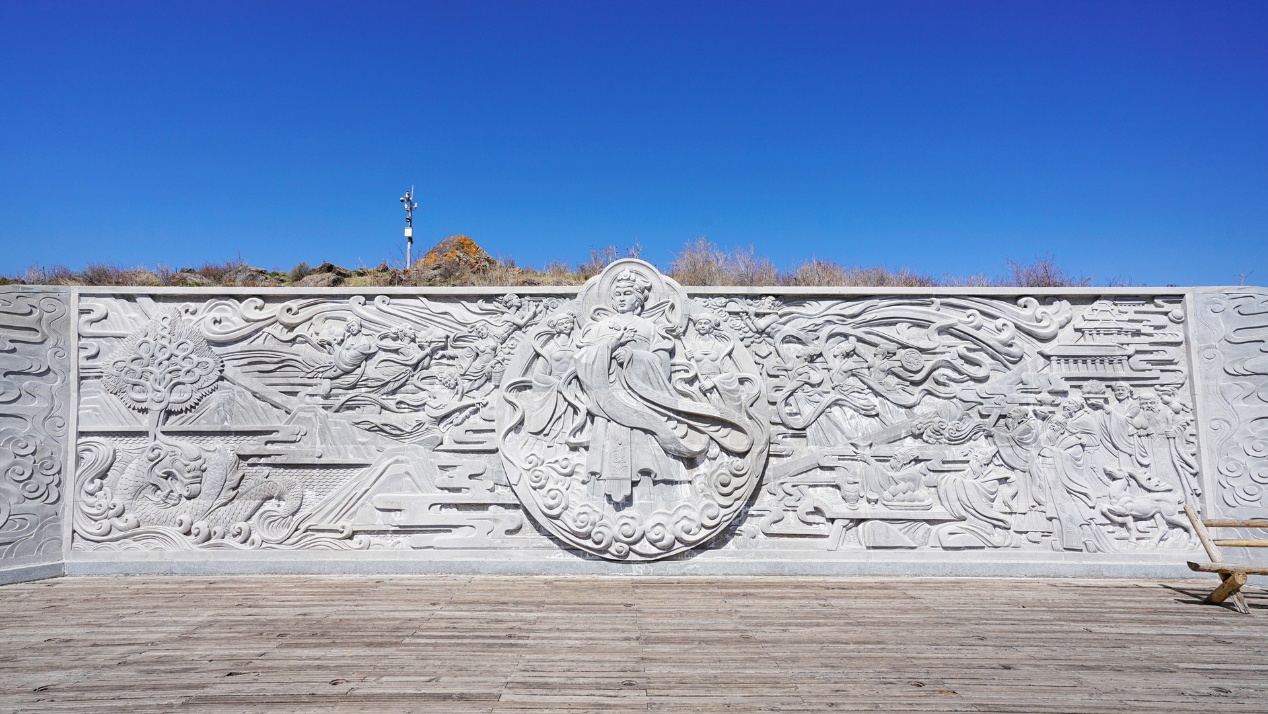
The horse's spirited and elegant bearing is naturally inseparable from its mythological origins. Under the shimmering, vast firmament, the Eastern Azure Dragon (青龍) constellation has seven stars, with the fourth in sequence being the Fang Su(房宿), which is the Tian Si Star (天駟星), also known as the Celestial Horse (天馬). It is said that horses are the essence of the Fang Su descended to earth. Li He's verse "This horse is no ordinary horse, the Fang Su is its true origin (此馬非凡馬,房星是本星)" proves that by the Tang Dynasty (唐代), the belief that horses were the essence of the Fang star had become widely disseminated. In "the Biography of King Mu of Zhou (《穆天子傳》)", unearthed from a Warring States tomb in the Western Jin Dynasty, there is a record of King Mu of Zhou (周穆王, 976 BC – 922 BC) driving eight fine steeds westward to ascend Mount Kunlun and visit the Queen Mother of the West (西王母). The eight steeds refer to: Chiji, Daoli (盜驪), Baiyi (白義), Yulun (踰輪), Shanzi (山子), Quhuang (渠黃), Hualiu (華騮), and Lüer (綠耳). It is believed that the Queen Mother of the West witnessed King Mu's entourage with her own eyes and certainly knew of the eight steeds. As propriety demands reciprocity, later the Queen Mother of the West paid a return visit to China during the reign of Emperor Wu of Han (漢武帝, 156 BC – 87 BC), more than eight hundred years after last visit. Additionally, a story circulates in Chinese classics and history that in the time of Fuxi, a dragon-horse (龍馬) emerged from the river bearing the River Chart on its back. Thus, Fuxi (伏羲) studied the River Chart and drew the Eight Trigrams. The dragon-horse is an auspicious beast with a horse's body and dragon scales, standing eight feet five inches tall. The "Rites of Zhou (《周禮》)" records that horses eight feet and above are called dragons, while those six feet and above are called horses. The dragon-horse was presumably a great horse over eight feet tall. It was a messenger dispatched by the Supreme Deity to inform Fuxi of the Eight Trigrams that would unveil the mysteries of the universe and human existence. Through the Five Emperors (五帝時期) and the Xia (夏朝) and Shang dynasties (周朝), King Wen of Zhou (周文王, 1112 BC – 1050 BC) doubled the trigrams to derive the sixty-four hexagrams and composed the "Book of Changes (《周易》)". In later generations, the principles of Qian (乾) and Kun (坤) came to embody the horse's unique spiritual significance.
Qian and Kun are variants of Yin and Yang, symbols of Heaven and Earth. The gender of the horse embody the dual virtues of Qian and Kun. The "Shuo Gua (《說卦》)" records: "Qian is the horse, the excellent horse (乾,馬也、良馬也)." The "Qian horse (乾馬)" represents vigorous progress, elevating the natural attributes of the horse to the spiritual character of the noble person, establishing the philosophical foundation of " forceful and upright (剛健中正)." Kun symbolizes the "mare," representing gentle obedience and vigorous action, elevating the feminine nature of the mare to the inclusive virtue of the noble person, establishing the philosophical foundation of profound Kun virtue. The mare is obedient yet not weak, travels the earth without boundaries, carries firmness with gentleness, embodying the spirit of "carrying all things with great virtue (厚德載物)." She follows Heaven's vigor with a gentle demeanor, nourishing all things with profound sustaining virtue, transforming the principle of harmonious union of Yin and Yang into the standard for the noble person's conduct—moving in accordance with the times, manifesting uprightness and righteousness, complementing Qian's tireless self-improvement, together constituting the constant Way of Heaven and Earth. The ancients cast the horse as a spiritual totem of Qian and Kun virtues, materializing the principle of mutual opposition and completion, of indivisible unity, into the form of the horse. From this, the Chinese people's affection for and esteem of horses is clearly evident.
Using horses as metaphors for gentlemen is a tradition in Chinese culture. As early as in the "Classic of Poetry (《詩經》)": "The radiant white steed, nibbling at the tender shoots in my garden. I tether it and tie it fast, only to hold onto this beautiful moment. The one I long for in my heart, can they stay here at ease and roam free (皎皎白駒,食我場苗。縶之維之,以永今朝。所謂伊人,於焉逍遙)?"—the white horse is used as a metaphor for a virtuous gentleman (The one, 伊人). Confucius (孔子, 551 BC – 479 BC) said: "A swift horse is never praised for its strength, but rather commended for its character and virtue (驥不稱其力,稱其德也)." Confucius used the swift horse as a metaphor for the gentleman, emphasizing that "morality" is higher than "ability," directly linking the horse's character with human virtue, thereby expressing the core Confucian spirit of "virtue first (以德為先)." Cao Cao (曹操, 155 - 220) also sang: " Though the aged swift horse lies by the manger, its ambition still yearns to gallop a thousand miles; a person of great aspiration, even in old age, never ceases in their heroic resolve (老驥伏櫪,志在千里;烈士暮年,壯心不已). ", using the "aged swift horse (老驥)" as a metaphor for gentlemen with unfulfilled ambitions, strengthening the ideological tendency of using horses to represent aspirations. Wen Tianxiang (文天祥, 1236-1283) further stated: "A fine steed is comparable to a gentleman of noble character, and a gentle breeze is like an old friend arriving from afar (良馬比君子,清風來故人). ", directly proposing the thesis that "A fine steed is comparable to a gentleman of noble character (良馬比君子)," linking the horse's loyalty with the gentleman's character, which consequently became a consensus in traditional culture.
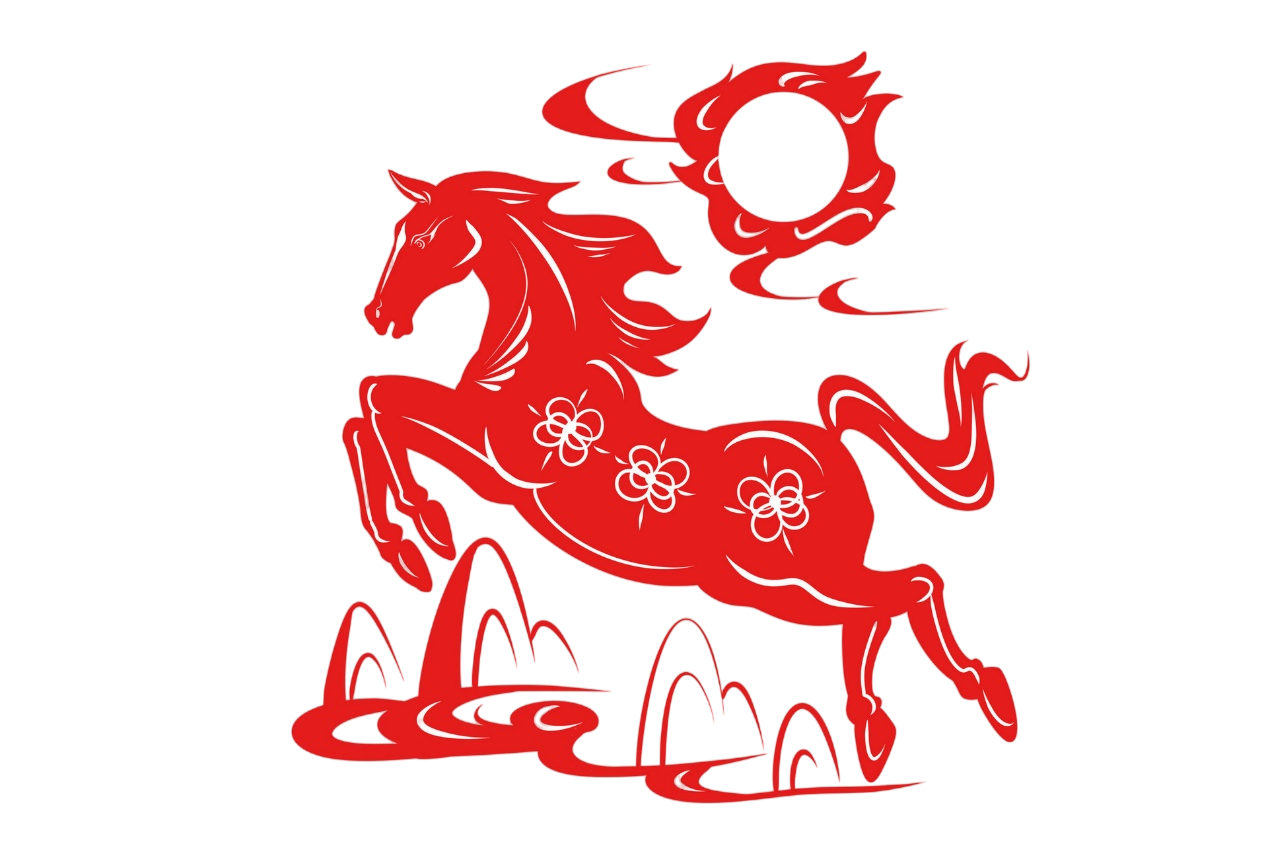
In summary, throughout the long river of Chinese culture, the spiritual image of the horse is vivid and dynamic, rich and diverse, encompassing: the mythological horse (神話之馬), the ethical horse (義理之馬), the literary horse (文學之馬), and the gentleman's horse (君子之馬), which together construct the unique connotation of Chinese horse culture. Bidding farewell to the old and welcoming the new, the Year of the Bingwu (丙午) Horse is approaching. May all Chinese descendants share the three realms of life in the Year of the Horse, using the horse's hooves as metaphor:
First, striving upward with vigor (奮發向上): "The steed shakes its mane, neighing loudly toward the distant horizon; with light hoofbeats and vigorous strides, it yearns to forge ahead and take the lead (振鬣長鳴向遠天,輕蹄健步欲爭先)." (Ge Yuancheng, "Horse Allegory in Response to Weixin's Question" [葛元承,《馬喻答惟曉問》])
Second, brimming with the spring breeze (春風滿懷): "The spring breeze caresses my face, my heart brimming with joy and satisfaction. Even my horse's hooves gallop with exceptional lightness, as if in a single day I have beheld all the blooming flowers throughout the city of Chang'an(春風得意馬蹄疾,一日看盡長安花)." (Meng Jiao [751 - 814], "After Passing the Imperial Examination" [孟郊,《登科後》])
Third, leisurely and content (安閒適意): "Wispy clouds drift along the horizon, and under the slanting sun, the mountains appear exceptionally clear; soft green grass covers the moist sandy banks, and by the path beside the stream, horses' hooves tread past with light and leisurely steps (淡雲斜照著山明。細草軟沙溪路馬蹄輕)." (Su Shi [1037 - 1011], "Song of the South: Rain Darkens, At First Mistaking Night" [蘇軾,《南歌子·雨暗初疑夜》])
Finally, I want extend New Year greetings to all readers, wishing you the spirit of dragon-horses (龍馬精神), immediate success in all endeavors (馬到成功), auspicious horses bringing fortune (瑞馬呈祥), galloping steeds in full vigor (駿馬奔騰), and swift strides like the horse(馬步生風)! May our Chinese nation enjoy great fortune in the Year of the Horse, with a prosperous country and peaceful people!
All articles/videos are prohibited from reproducing without the permission of the copyright holder.
SHARE THIS




 Thank you for your like.
You’ve liked this article. Please browse more articles you may like!
people have liked this article/video
Thank you for your like.
You’ve liked this article. Please browse more articles you may like!
people have liked this article/video
Welcome to leave a message:
Please Sign In/Sign Up as a member and leave a message