Winter Solstice at the Equator
Traditional Chinese folk festivals follow the seasonal cycles of the northern hemisphere homeland, with corresponding celebrations for spring, summer, autumn, and winter. When the calendar reaches the end of the year in December, it is the depths of winter in the north. Yet the Nanyang (南洋, A term for Singapore, Thailand, Malaysia and other countries in Southeast Asia in Chinese) Chinese living along the equator still observe winter festivals according to the traditions their ancestors brought with them.
This refers to the Winter Solstice.
The so-called Winter Solstice is one of the twenty-four solar terms, marking the time when the sun reaches its southernmost point with the shortest day and longest night. However, for Malaysia, which sits near the equator, winter exists only in the ancestral memories of those who came from the south; it simply doesn't exist in daily life. As the year draws to a close and Christmas approaches, the two or three days before it often coincides with the Winter Solstice remembered by our ancestors. As the Winter Solstice approaches in this tropical land without falling snow, the elderly, carrying forward the memories of their forebears, will gaze at the clear blue cloudless sky under the northeast monsoon and say: Winter is here, and then the New Year will come again...
The experience of "Winter Solstice" in the tropical life of Nanyang is not a scene of white snow covering the landscape where "all becomes a vast white expanse truly clean (落得個白茫茫大地真乾淨)," but rather the whistling northeast winds brought by the monsoon, with scorching sun unobscured by clouds during the day, and at night the ceaselessly howling monsoon winds with a slight chill shaking the trees outside, while the humidity in the air is relatively low, causing the callused skin on fingertips to become dehydrated, hardened, and even cracked—this is the seasonal weather. Of course, along the east coast of the Malay Peninsula bordering the South China Sea, seasonal high tides and flooding represent another regional manifestation.
There is no true winter solstice here, yet the ancestral symbols from the homeland remain stubbornly persistent, such that the older generation cannot understand why young people celebrate Christmas, and simply say: Oh, after our winter solstice comes the "Red Hair Winter Solstice (紅毛冬至, “Red Hair, 紅毛” is the collective term for Westerners and Europeans during Qing Dynasty)"; by "Red Hair Winter Solstice" they mean Christmas. Their labeling of foreign festivals according to their own ethnic symbols is perhaps a kind of Geyi (格義, categorizing concepts)-style cross-cultural cognition?
Chinese people in the Nanyang region also celebrate the Winter Solstice naturally without the Nine-Nine Cold-Dispelling Chart, yet tangyuan(湯圓) are indispensable.
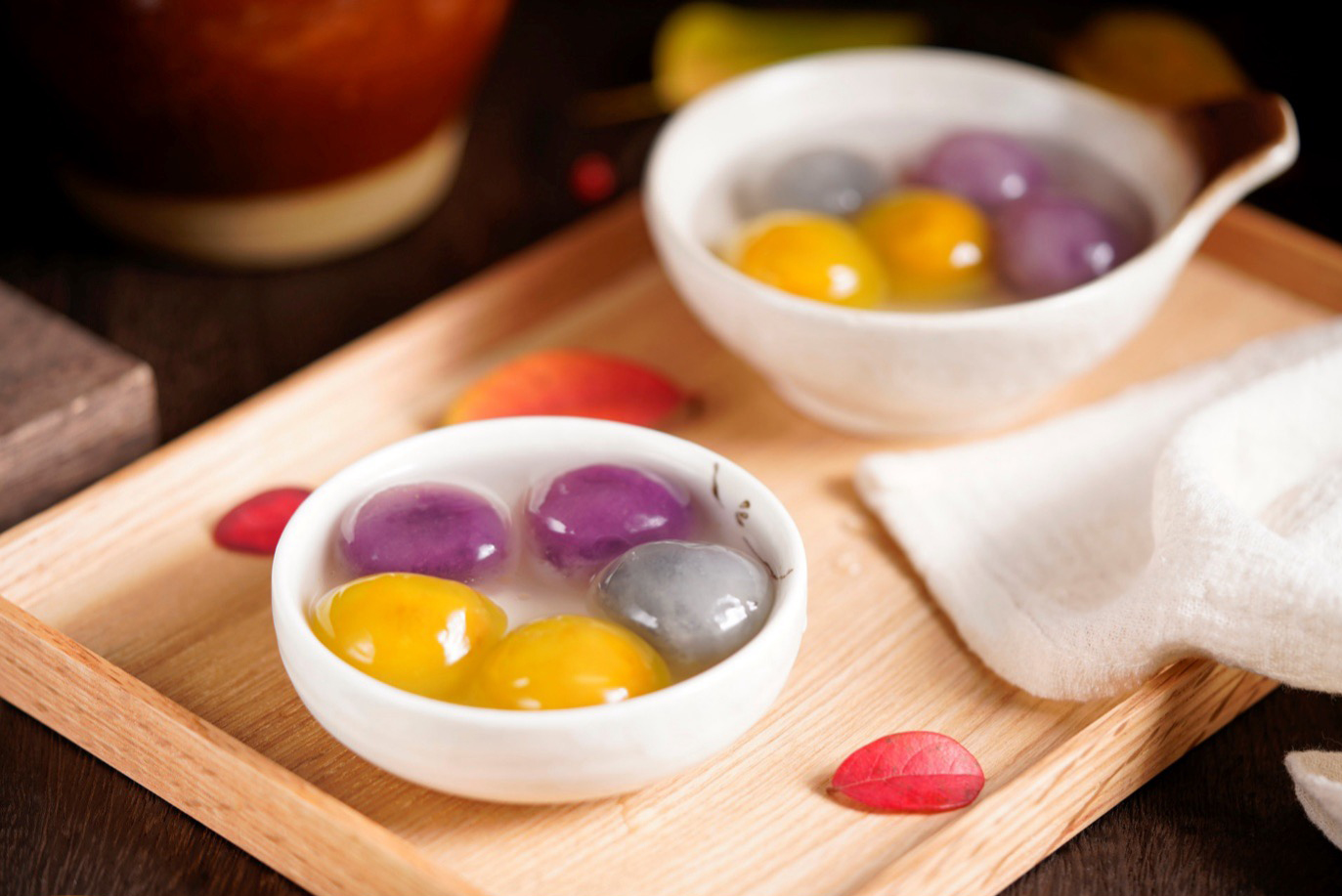
The folk traditions of Malaysian Chinese are inherited from South China; during the winter solstice they don't eat dumplings but make tangyuan instead. The tradition of eating tangyuan during the winter solstice is part of the “Winter celebration (做冬)” culture brought by ancestors who came south, but has it incorporated tropical local elements? Yes, it has. Traditional winter solstice tangyuan are at least two colors—red and white—or may include other colors such as yellow and blue, all made with food coloring added to glutinous rice flour. However, it is not due to modern people's emphasis on natural and healthy living concepts; in fact, long ago, the older generation had already been using natural materials from their tropical surroundings to color the winter solstice tangyuan.
The green tangyuan of Nanyang, when homemade, is typically made by extracting juice from pandan leaves (called pandan in Malay, also transliterated as "ban lan, 班蘭" in Chinese) picked from outside the home, using the chlorophyll from these fragrant leaves to create a natural green color with a rich, fresh aroma. This way, these green tangyuan are not only naturally translucent green but also fill the mouth with the fragrance of pandan when chewed.
For winter solstice tangyuan, the use of pandan leaves extends far beyond making green glutinous rice balls. In Malaysia, when people cook the sweet soup for tangyuan, they invariably pick three or four pandan leaves, tie the long strips into a knot, and let them tumble in boiling water with added sugar. The sweet soup cooked this way carries the fragrance of pandan, and the tangyuan that follows, whether green or not, is filled with the aroma of pandan with every bite.
In recent years, with the concept of natural and healthy eating, people have become more creative in using colorful vegetables and fruits around them to dye tangyuan. For example, red tangyuan is colored with the bright red flesh of dragon fruit; golden tangyuan is made by mixing in pumpkin flesh. As for blue tangyuan, Nanyang has always had Nyonya kueh (娘惹糕) or butterfly pea flower rice (蘭花米飯) colored with blue orchids, so now it's simply being applied to tangyuan—what's so unusual about that?
Another type of sweet tangyuan is cooked in a sweet broth made from brown sugar and ginger chunks. This sweet brown sugar broth tangyuan carries the rich sweet fragrance of brown sugar along with a spicy ginger kick, making it another popular choice for Winter Solstice tangyuan. As for Cantonese and Hakka families in Guangdong, they have the tradition of bringing out savory tangyuan from the kitchen. Celebrating the Winter Solstice truly showcases the wonderful diversity of different regional customs.
Winter Solstice tangyuan are made by the whole family sitting together and rolling them by hand. On the early morning of Winter Solstice, a bowl of steaming hot tangyuan is first offered before the household deities and ancestral tablets, then everyone in the family, young and old alike, eats tangyuan to add to their age—this is how the winter is observed.
All articles/videos are prohibited from reproducing without the permission of the copyright holder.
SHARE THIS




 Thank you for your like.
You’ve liked this article. Please browse more articles you may like!
people have liked this article/video
Thank you for your like.
You’ve liked this article. Please browse more articles you may like!
people have liked this article/video
Welcome to leave a message:
Please Sign In/Sign Up as a member and leave a message