How to understand the "blood" in Traditional Chinese medicine
In Traditional Chinese Medicine, "qi" and "blood" are energy elements that continuously circulate within the human body. What is visible is blood, while the invisible is qi. In Traditional Chinese Medicine theory, blood is a vital substance that constitutes the human body and sustains life activities. It is interdependent with qi to jointly promote human life activities. In traditional Chinese medicine, blood not only refers to blood itself, but also includes other physiological functions, such as nourishing the whole body, providing energy, and being associated with spirit and consciousness.
Discussion of Blood in the Yellow Emperor's Classic of Internal Medicine
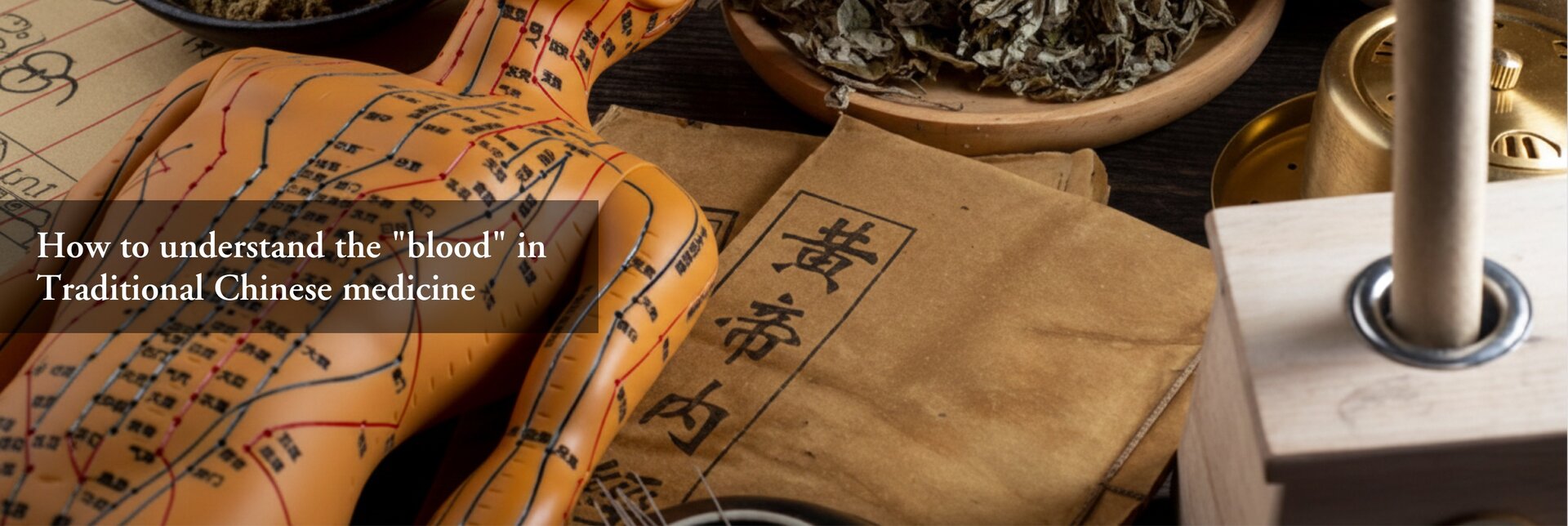
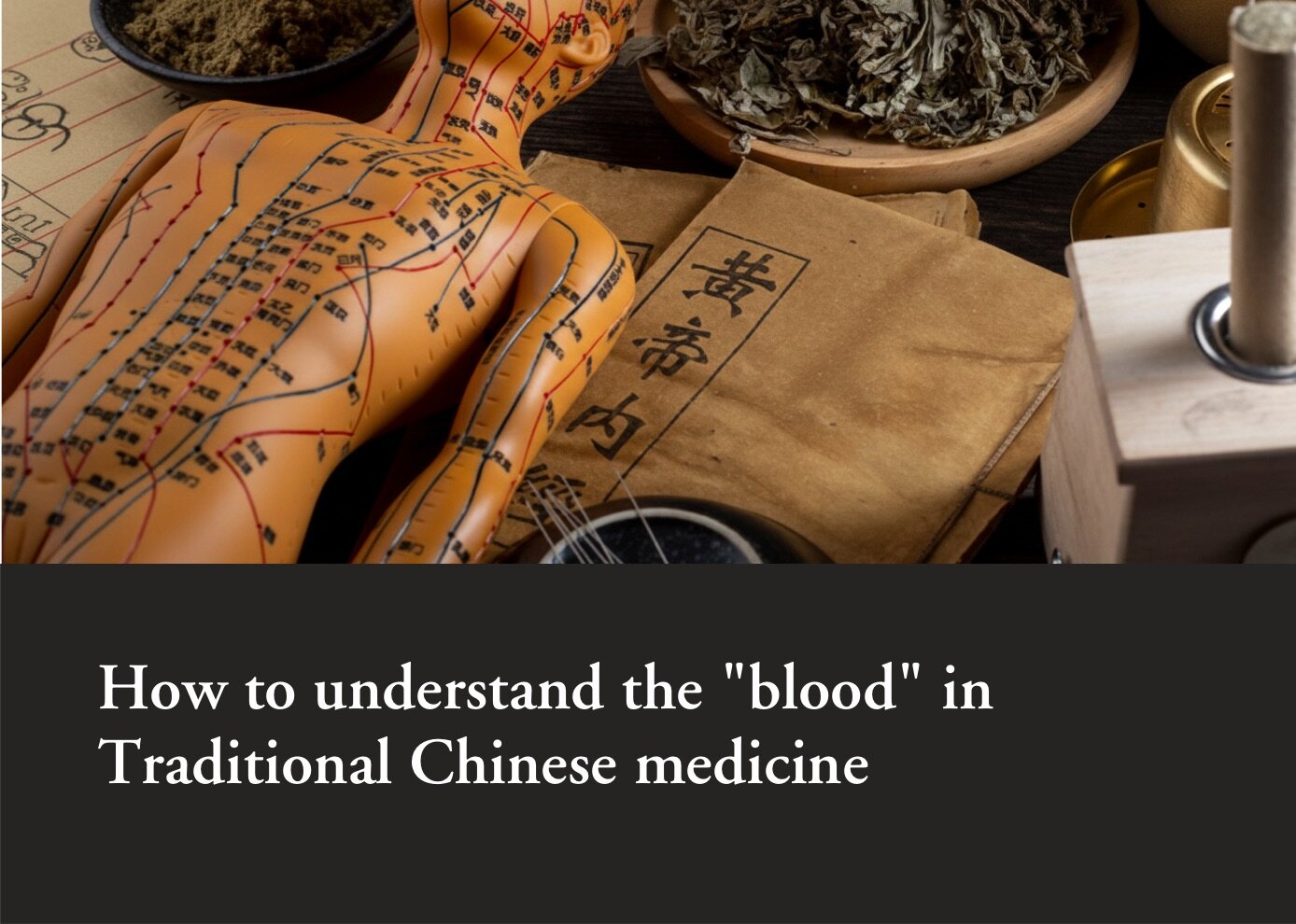
As early as the discussion of blood in the " The Yellow Emperor Neijing黃帝內經", there has been contents on the formation of blood, the function of blood and its relationship with the internal organs:
1. "The Yellow Emperor Neijing. Lingshu. Jue Qi黃帝內經 靈樞·決氣" states “The middle burner receive qi, and the juice changes and becomes red, which is called blood. 中焦受氣,取汁變化而赤,是謂血”. "Middle burner中焦" refers to the spleen and stomach, "receive Qi" refers to the nourishing qi after digesting food, and "the juice" is taken from the body's fluids. The body fluids enter the veins and turn into red blood, which nourishes the internal organs and tissues throughout the whole body.
2. "The Yellow Emperor Neijing. Lingshu. Ordinary People's Deprivation of Grain 黃帝內經 靈樞·平人絕谷篇" states “When blood vessels are harmonious then the spirit is at rest血脈和利精神乃居" meaning that only when the blood supply is adequate can the mind function normally. Therefore, blood is the substance that not only nourishes the body but also the mind.
3. "The Yellow Emperor's Inner Canon Suwen Ancient Innocence Theory黃帝內經 素問·上古天真論" states “The kidney governs water. It receives and stores the essence of the five internal organs and six bowels, thus governing water. Water stored in the kidney nourishes the bones, thus kidney governs bone and bone marrow, which produce blood. 腎者,主水,受五臟六腑之精而藏之,故能主水;水藏於腎,則骨得養,故能主骨生髓,化血。” This emphasizes the relationship between kidney essence, bone narrow and blood production, demonstrating that blood production is closely linked to kidney essence, which in turn originates from the essences of the five internal organs and six bowels.
In Traditional Chinese Medicine, blood is primarily produced from three sources: water and grain essence (nutrients produced by the spleen and stomach after digesting food and water), kidney essence (substances synthesized by the bone marrow), and body fluids (substances secreted by the human body).
2.1 Essence of water and grain:
Traditional Chinese medicine believes that the spleen is responsible for transportation and transformation, and the stomach is responsible for intake. After food is digested by the spleen and stomach, it is converted into the essence of water and grain and becomes part of the blood.
2.2 Kidney essence turns into blood
Traditional Chinese Medicine believes that the kidneys store essence and control bone marrow, and the bone marrow produces blood, so the kidneys are the main organ for hematopoiesis.
2.3 Body fluid
Traditional Chinese medicine believes that all water and other secretions in the human body belong to body fluid. Body fluid and blood are transformed from each other (body fluid and blood have the same origin).
Traditional Chinese Medicine believes that the three key elements for proper blood circulation are unobstructed meridians, the push of qi, and the coordinated functioning of the internal organs. Blood circulates throughout the body through the blood vessels. Heart qi propels blood, and the lung qi, through its function of dispersing and descending, helps blood flow throughout the body, both internally and externally. The liver stores blood and regulates its volume. The spleen participates in the regulation of blood flow, ensuring its smooth circulation within the blood vessels and preventing bleeding.
Blood is an important substance that constitutes the human body, and together with qi, it constitutes the human body and sustains life. Blood runs in the meridians, transporting nutrients converted by the spleen and stomach to all parts of the body, nourishing internal organs, tissues, and other body parts. Heart qi drives blood flow, which carries fresh Qi inhaled by the lungs to maintain the life activities of the human body. Kidney yang and heart yang warm the blood, and blood circulation throughout the body helps maintain a constant body temperature. The heart governs the mind and blood vessels, so the abundance of blood influences a person's mental and conscious activities.
"The heart governs blood": The heart promotes the circulation of blood, supplying nutrients throughout the body. "The lung governs qi and promote its diffusion and descent": Lung qi helps the heart circulate blood, and through this promotion, blood is distributed throughout the body. "The spleen governs transportation, transformation, and blood regulation": The spleen digests food, transports nutrients throughout the body, and regulates the flow of blood within the blood vessels. "The liver stores blood": The liver regulates the distribution of blood volume to various parts of the body and prevents bleeding. "The kidneys store essence and govern the marrow": The kidneys transform essence into blood, and the kidneys govern the bone marrow, promoting hematopoiesis. The five Zang-Fu organs are all involved in the production of blood, the circulation of blood through the blood vessels, the nourishment of nutrients within the blood throughout the body, and the influence of blood on mental consciousness.
6.1 Blood deficiency
Blood deficiency refers to insufficient blood, resulting in a lack of nourishment for the body. Blood deficiency can be caused by congenital deficiency, spleen and stomach weakness, nutritional deficiencies, chronic illness, or parasites. Symptoms include pale complexion, dizziness, palpitations, insomnia, scanty menstruation, or amenorrhea.
- Blood-nourishing foods: carrots, pig hearts, longan meat, grapes, dog meat, Polygonum multiflorum, peanuts, donkey-hide gelatin, spinach, cuttlefish, lychees, mulberries, and pig liver.
- Blood-nourishing Chinese herbs: angelica, Rehmannia root, Polygonum multiflorum, white peony root, donkey-hide gelatin.
- Blood nourishing food dietary: peanut pork liver egg soup, spinach pork liver soup.
- Blood-nourishing medicinal diet: Angelica ginger mutton soup, four-ingredient chicken soup (angelica, Chuanxiong, white peony root, Rehmannia root, and chicken).
6.2 Blood stagnation
Blood stagnation refers to poor blood circulation, resulting in blood stagnation. It can occur in the meridians or within the internal organs. Symptoms include pain, swelling, dark complexion, bleeding, and localized pain.
- Foods that promote blood circulation and dissipate blood stasis: Root of Chinese cabbage, peach kernel, rapeseed, vinegar, mushrooms, hawthorn, black fungus, peach kernel, safflower, and wine.
- Chinese herbs that promote blood circulation and dissipate blood stasis: Chuanxiong, Corydalis yanhusuo, Danshen, Leonurus japonicus, Millettia reticulata, Achyranthes bidentata, Panax notoginseng, Salvia miltiorrhiza
- Food dietary that promotes blood circulation and dissipates blood stasis: Chuanxiong fish head soup, hawthorn and rose tea.
- Medicinal diet that promote blood circulation and dissipates blood stasis: Angelica sinensis Panax notoginseng black chicken soup, Leonurus japonicus porridge.
7.1 Blood in Traditional Chinese Medicine
- Definition of Blood: "Blood" is the fundamental substance that constitutes the human body. It is interdependent with "Qi" and together they are essential for maintaining and driving life activities.
- Formation of Blood: Blood is closely related to the functions of the major internal organs. The spleen and stomach transform food into food essence (nutrients), which is then supplemented with clean Qi (oxygen) from the lungs. The kidney transforms innate essence into blood (the bone marrow produces blood). The liver regulates blood distribution, and the heart propels blood through the blood vessels to the entire body. All organs work together to form the components of blood and nourish the body.
- Functions of Blood: It nourishes the internal organs, viscera and bowels, five senses, and five limbs, maintaining physiological functions and mental consciousness. It also participates in the body's defense and regulatory functions.
- Pathologies of Blood: These are primarily manifested as blood deficiency, blood stasis, blood heat, and blood cold. These disorders can affect the functions of the internal organs and lead to various clinical symptoms.
7.2 Blood in Western medicine
- Definition of blood: Blood is a concrete substance composed of red blood cells, white blood cells, platelets, and plasma that carry oxygen, nutrients, and immune functions. Blood is defined as a liquid tissue composed of red blood cells, white blood cells, platelets, and plasma, with a well-defined composition and physical properties.
- Formation of blood: Red blood cells, white blood cells, and platelets are produced in the bone marrow and then enter the blood circulation.
- Blood function: carries oxygen, nutrients, hormones and metabolic waste, and maintains body temperature, has blood clotting and immune functions.
- Blood pathologies: manifested by changes in blood composition, such as anemia, leukemia, hemophilia, thrombocytopenia, etc., as well as diseases related to blood circulation, such as atherosclerosis, thrombosis, etc.
There are fundamental differences in the understanding and treatment of blood between Western and Chinese medicine. Western medicine views blood as a fluid within the body, focusing on the diagnosis and treatment of disease. Traditional Chinese medicine, on the other hand, considers blood as part of the Qi and body fluid systems, emphasizing its relationship to internal organs and overall body functions, including the human spirit and consciousness, and employing a holistic approach to treat disease.
All articles/videos are prohibited from reproducing without the permission of the copyright holder.
SHARE THIS




 Thank you for your like.
You’ve liked this article. Please browse more articles you may like!
people have liked this article/video
Thank you for your like.
You’ve liked this article. Please browse more articles you may like!
people have liked this article/video
Welcome to leave a message:
Please Sign In/Sign Up as a member and leave a message