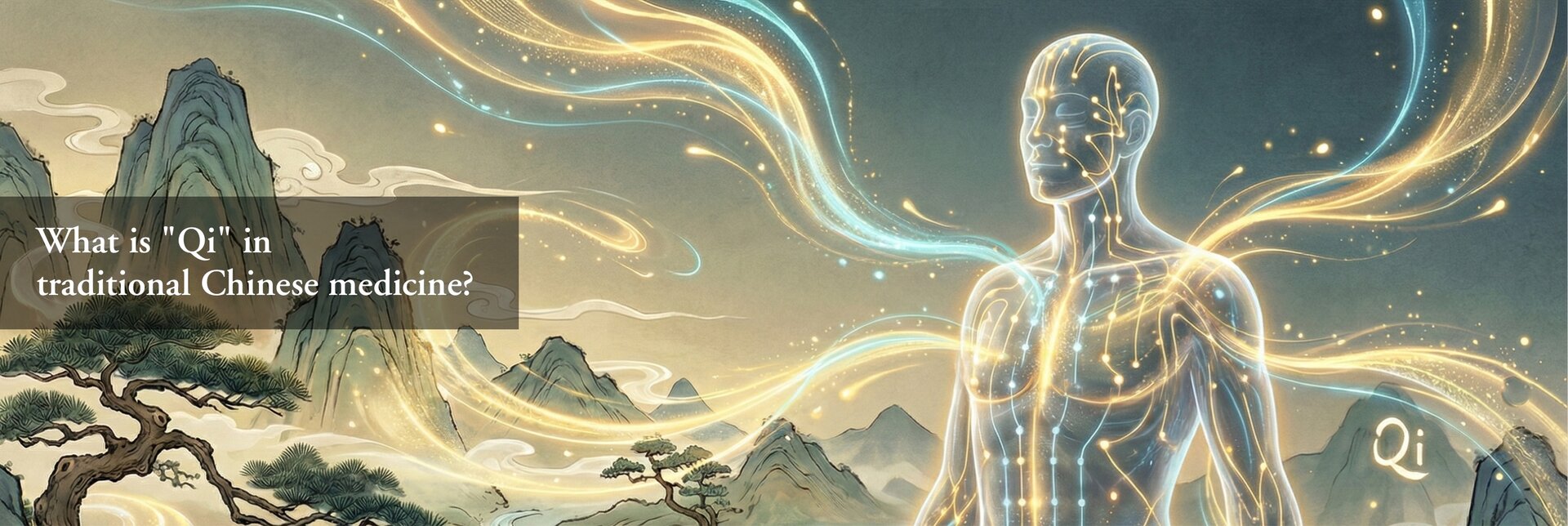
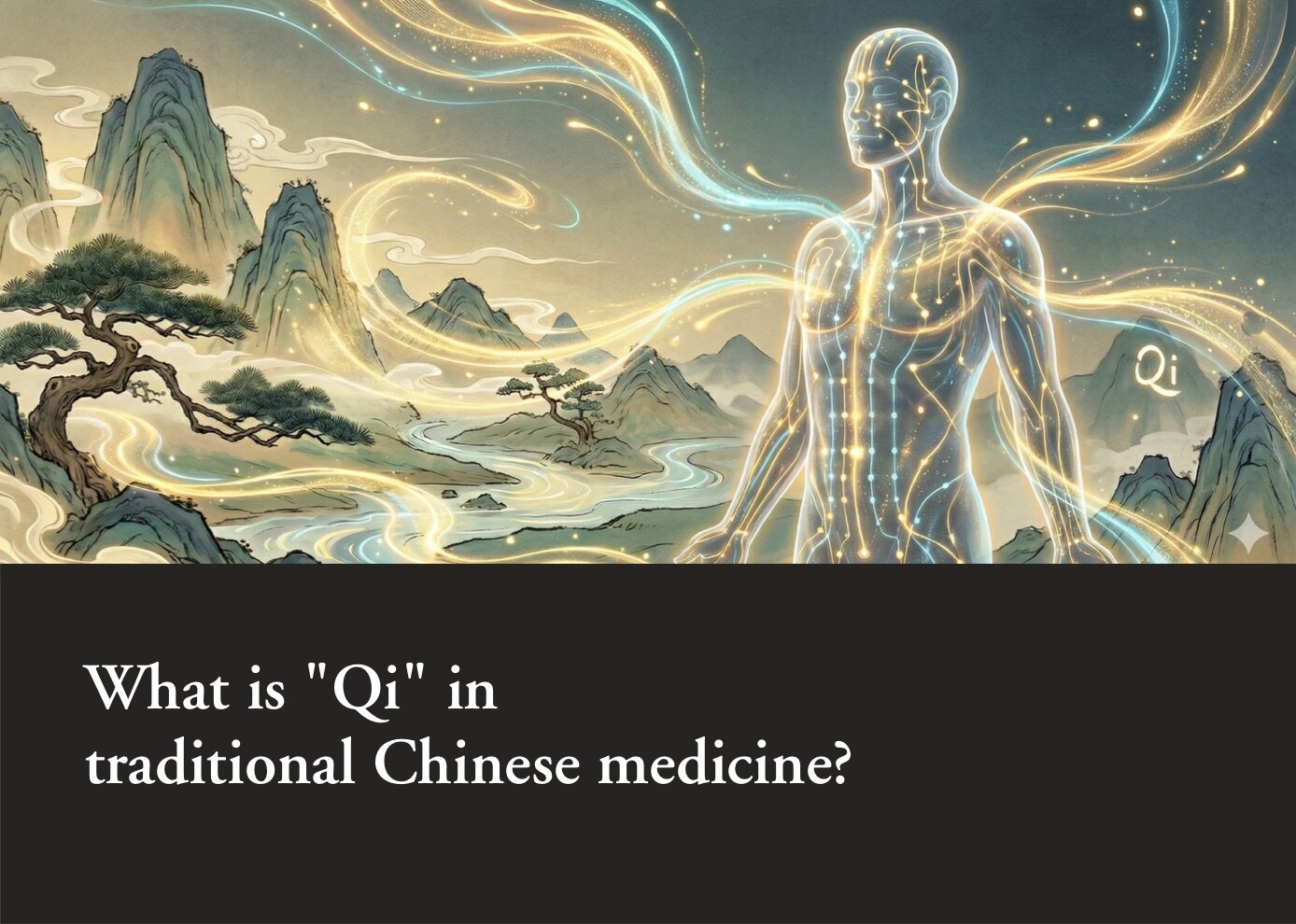
What is "Qi" in traditional Chinese medicine?
The Yellow Emperor's Neijing Su Wen Jue Qi《黃帝內經 靈樞•決氣》: "I heard that people have essence, qi, body fluid, liquid, blood, and pulse, and I thought it was just one Qi, but now it is distinguished into six substances." It shows that the six qi of "essence, qi, body fluids, liquide, blood and pulse" originate from the Qi of the unity (Vitality元氣). Due to different functions, the vitality is further differentiated into six names. "Vital energy元氣" is the basic substance that constitutes human life, and maintain human growth, activity, and life. The depletion of the six qi in "Vital energy元氣" will lead to disease and eventually death. “Qi” in traditional Chinese medicine is not only a substance, but also the basic energy of life activities and the power system that maintains physiological functions of human.
Qi in traditional Chinese medicine is not only the basic energy of life activities, but also a dynamic system that maintains physiological functions. Qi can be explained from three levels: philosophical origin, physiological functions, and pathological mechanism.
2.1 The Origin of Philosophy
The Yellow Emperor's Neijing黃帝內經" states that "man is born from the qi of heaven and earth", and "Qi is the foundation of man", Qi is the basic substance that constitutes all things, and it is also an important substance for man. "Qi of Heaven and earth" refers to the subtle substances and energies that make up the human body and sustain life activities. It can be understood as various energies and substances that exist in nature and in the human body.
2.2 Physiological functions
Qi has multiple functions such as promoting, warming, defending, consolidating and gasification.
- Promoting effect: promoting the operation of various internal organ systems, such as the respiratory system of the lungs and the digestive system of the spleen and stomach.
- Warming effect: warming body temperature and supplying energy to all parts of the body.
- Defense effects: resisting external evils and enhance the body's immune function.
- Consolidating effect: controlling and fixing the body's body fluids, blood, and essence to prevent excessive or insufficient loss.
- Gasification effect: promoting and transforming various substances in the human body, so that all parts of the body can function normally. Examples include respiration, food digestion and absorption, water metabolism, blood circulation, and the transformation and metabolism of subtle substances.
2.3 Pathological mechanism
Imbalance and depletion of Qi can lead to deficiency syndrome or excess syndrome of physical illness.
Deficiency syndrome of Qi refers to insufficient depletion of vital energy, weakened body functions, weakness, and common symptoms include thin body, fatigue, low voice, and weak breath. Deficiency syndromes include deficiency of Qi, sinking of Qi, and adverse flow of Qi.
Excess syndrome of Qi is mainly manifested by stagnation or hyperactivity of Qi, leading to physical discomfort and functional disorders. Excess syndrome includes Qi stagnation, Qi reversal and Qi obstruction. "Replenish the deficiency and purge the excess" is the treatment principle of traditional Chinese medicine. It means that when the body functions (Qi deficiency) are in a weak state, it should be replenished, and when the body is in a state of sickness due to evil Qi, the evil Qi should be eliminated.
The classification of "Qi" in traditional Chinese medicine theory: 1. The source of qi (innate qi and acquired qi), 2. The function of qi (qi of the organs and the qi of the meridians).
3.1 Innate Qi (元氣):
Vitality is the most fundamental and important qi of our human body, which is transformed by the innate essence given to us by our parents, hidden in the kidney essence, and maintains human physiological functions. It is responsible for regulating human growth, development and reproduction, and determining the physiological activities of various organs, meridians, facial features and nine orifices.
3.2 Acquired Qi
Includes clear qi, subtle qi of water valley, ancestral qi, ying qi, wei qi and righteous qi. The lungs inhale the "clear qi" of nature, and the subtle qi of water and grains produced by the spleen and stomach digesting food and water is combined to form the "ancestral qi". "Ying Qi" is the essence of water valley, which can nourish the internal organs and metabolize the function of blood. "Wei Qi" also comes from the essence of water and grain, and its function is to warm the surface of the muscles, defend against external evils, and is the body's immune system. "Righteous Qi" is the comprehensive embodiment of the human body's ability to resist disease and self-healing, formed by the integration of innate qi and acquired qi, and righteous qi has the functions of defending against evil and regulating physical health.
3.3 Qi of the internal organs
It is the subtle substances and functional activities in the 5 internal organs, the basic substances and power that maintain human life activities. The qi of the organs (heart, liver, spleen, lungs, kidneys, small intestine, gallbladder, stomach, large intestine, bladder) is produced by each organ and then runs in the meridians.
Examples of qi in the viscera:
- Heart Qi: It is to maintain the beating function of the heart, promote blood to run in the veins, flow into the whole body, and exert nourishing and moisturizing effects. The face is pale and palpitating, and the face is blue and purple when the heart is stasis. The available effect of dietary therapy is to nourish the heart qi, and the food or traditional Chinese medicine that returns to the heart meridian, such as ginseng, astragalus, roasted licorice, lotus seeds, sour jujube kernels, longan, oats, grapes, etc., are all nourishing the heart qi and benefiting the heart.
- Spleen Qi: it is for digests food, absorbs nutrients, and distributes nutrients throughout the body. Spleen Qi deficiency can cause loss of appetite, fatigue, weight loss, and other symptoms. Diet therapy can be used to tonify the spleen Qi. Foods or Chinese medicines belonging to the spleen meridian, such as ginseng, astragalus, roasted licorice, yam, pork, pork tripe, beef, mullet, scallops, chestnuts, etc., can tonify the spleen Qi and benefit the spleen and stomach.
- Lung Qi: It is the function of breathing, gas exchange, inhaling clear air, expelling turbid gas, and immune defense. Lung qi deficiency is manifested by weakened respiratory function, easy fatigue, weak cough, thin sputum, and pale complexion. Dietary therapy Can be used to replenish lung qi, Food or traditional Chinese medicine that belongs to the lung meridian, such as astragalus, codonopsis, yam, lentils, licorice, honey, loach, grapes, glutinous rice, pig lungs, goose meat, etc. are all nourishing lung qi and benefiting the lungs.
- Kidney Qi: The kidney is the innate foundation, responsible for the growth and development of the human body, reproductive function, regulating water metabolism and endocrine in the body, and maintaining the dynamic balance of the human body. Kidney qi deficiency is manifested by growth retardation, physical weakness, asthma, premature aging, ear whimning, waist and knee soreness and other problems. The available effect of dietary therapy is to nourish kidney qi, food or traditional Chinese medicine belonging to the kidney meridian, such as ginseng, yam, chestnut, pig kidney, eel, cowpea, cordyceps, walnut kernel, shrimp, sea cucumber, grapes, eucommia ulmoides, leeks, dodder, raspberries, etc. are all kidney qi nourishing kidney qi and benefiting the kidneys.
- Liver Qi: Liver Qi refers to the function of the liver and essence, especially the impact on emotions, Qi and blood, tendons and veins, etc. Insufficient liver qi can lead to physical discomfort, resulting in muscle and vein malnutrition, limb numbness, convulsions and other problems. Dietary therapy can be used to replenish liver Qi, Foods or traditional Chinese medicines that belong to the liver meridian, such as pork liver, wolfberry, spinach, black sesame, Polygonum multiflorum, bupleurum, schisandra, white peony, and Artemisia capillaris, are all to regulate liver qi and benefit the liver.
3.4
The Qi of the meridians refers to the qi that runs in the channels of the twelve meridians and the eight extraordinary meridians, which are responsible for connecting the internal organs and distributing qi and blood. It is mostly used in acupuncture.
"Qi" can be summarized into several points: 1. Qi is the basic substance that makes up the human body: essence, qi, body-fluid, liquid, blood, veins and other substances. 2. Qi promotes the body's metabolism and maintains the functional activities energy of organs, meridians and other organs. 3. Qi is the power system that maintains the physiological functions of the human body. 4. Qi is constantly running in the human body, coordinating with each other to maintain balance. Once it is out of balance, it will lead to the occurrence of disease. 5. Qi has different types and functions. 6. Qi can be converted into other substances to maintain the human body's vital activities.
All articles/videos are prohibited from reproducing without the permission of the copyright holder.
SHARE THIS




 Thank you for your like.
You’ve liked this article. Please browse more articles you may like!
people have liked this article/video
Thank you for your like.
You’ve liked this article. Please browse more articles you may like!
people have liked this article/video
Welcome to leave a message:
Please Sign In/Sign Up as a member and leave a message